

Have you ever had a Turkish breakfast? It’s one of the most enjoyable ways to start the day, and definitely something you don’t forget once you try it.
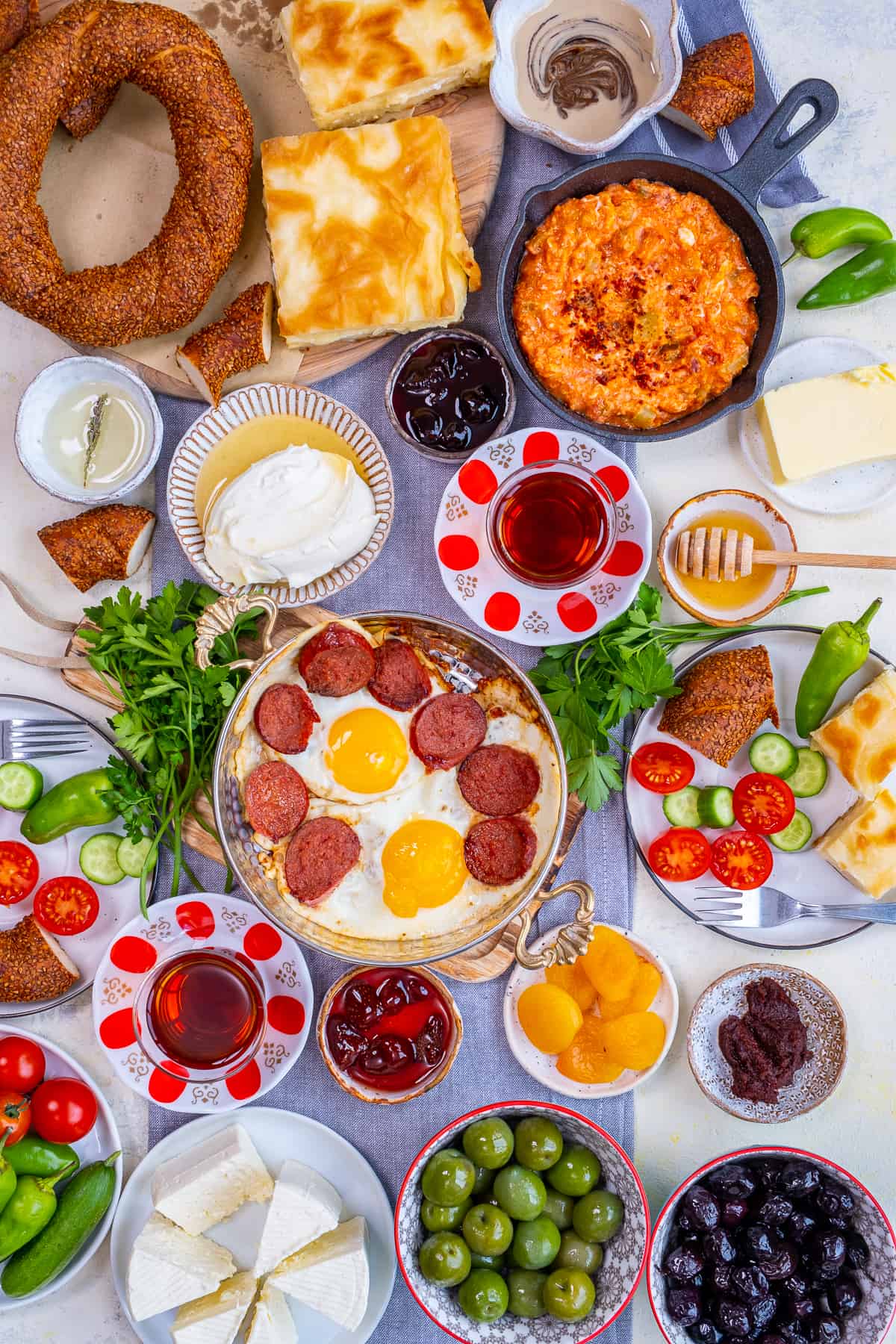
A traditional Turkish breakfast, or kahvaltı, is never just one thing on a plate. It’s always a mix of different foods; a little bit of this, a little bit of that, all served with a pot of Turkish tea. It’s what we call a Turkish breakfast spread, where everything is served together and shared. And somehow, it makes your morning feel much better.
As a Turkish family, breakfast has always been the most enjoyable meal of the day for us. Especially on weekends, it turns into something we look forward to all week.
So we wanted to share what Turkish breakfast means to us and everything you need to know about it.
What Is Turkish Breakfast, Kahvaltı?
The word kahvaltı means breakfast in Turkish. It comes from two words: kahve (coffee) and altı (before), which together mean “before coffee”. The food you eat before having your coffee in the morning.
But what does it really mean? What makes it special?
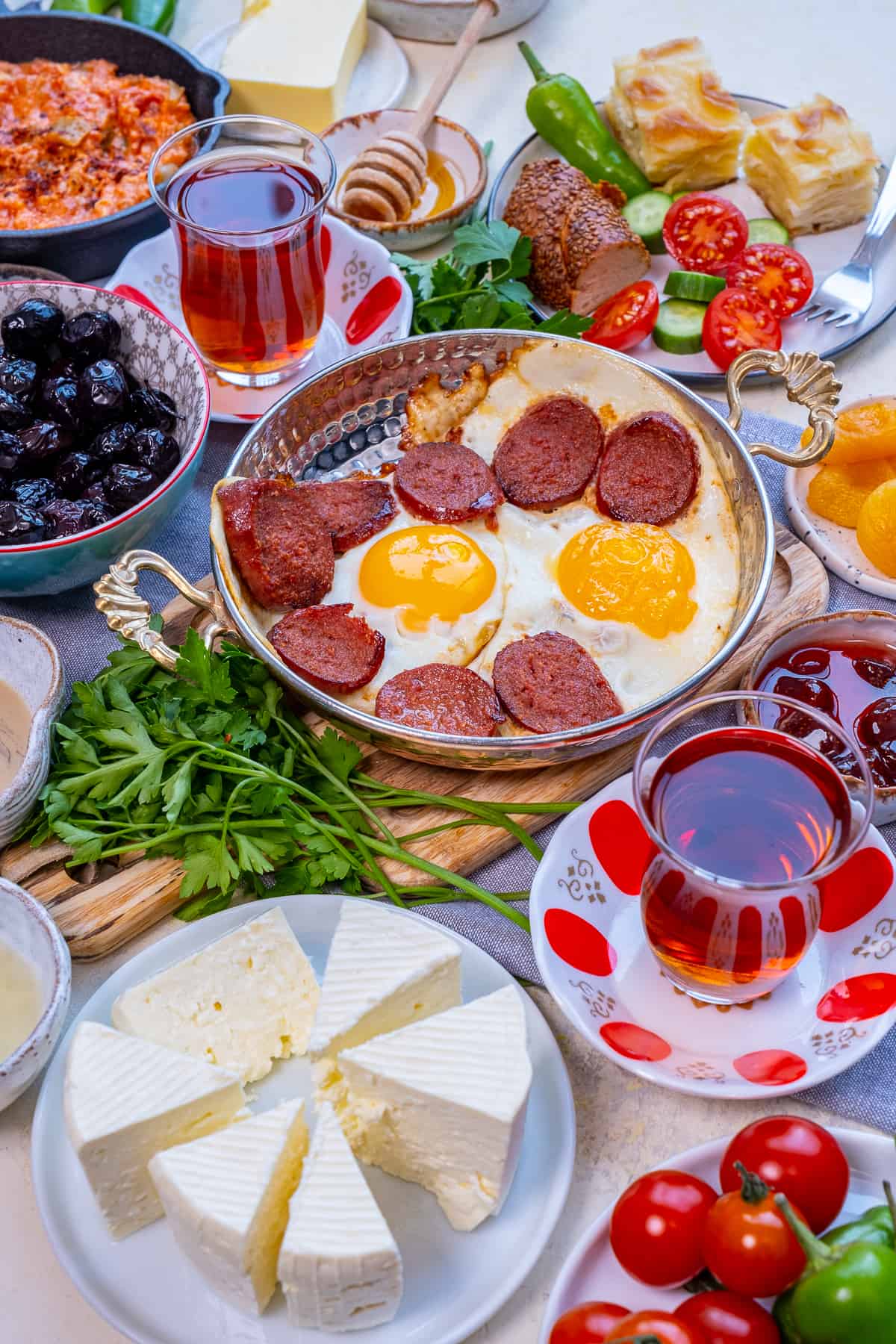
Turkish breakfast is a way of socializing. It’s a meal that families always have together. No one grabs a plate and leaves. You sit around the table, have your food and tea, and start the day together.
On weekends, it becomes even more special. You might invite friends over or go out for breakfast, and it can easily last for hours. And yes, it often ends with a cup of Turkish coffee.
So for Turkish people, breakfast is not just about the food. It’s about sharing, talking, and slowing down. And that’s exactly what makes Turkish breakfast so special.
Serpme Kahvaltı and Köy Kahvaltısı
You might hear terms like serpme kahvaltı or köy kahvaltısı in Turkey. So what are they?
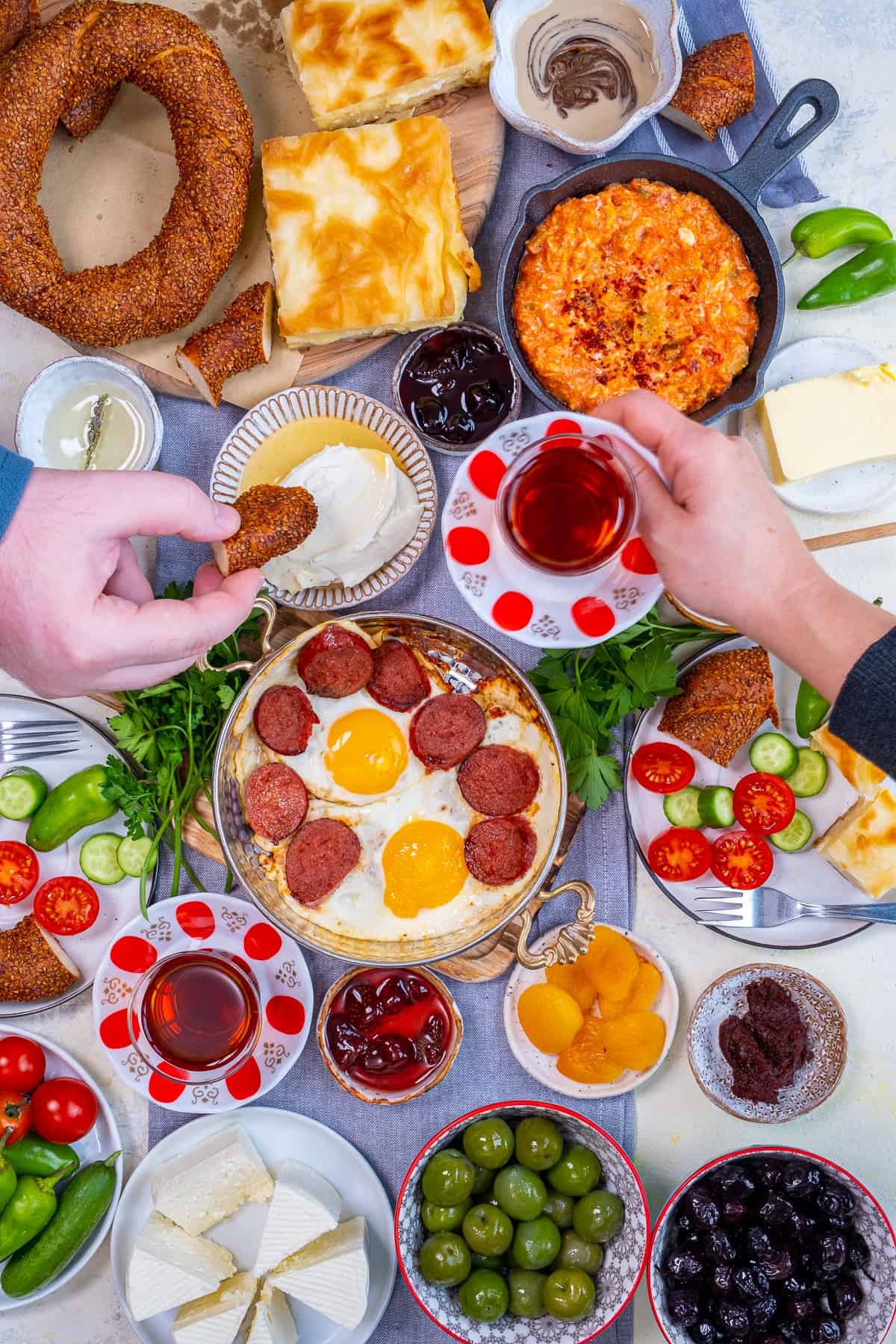
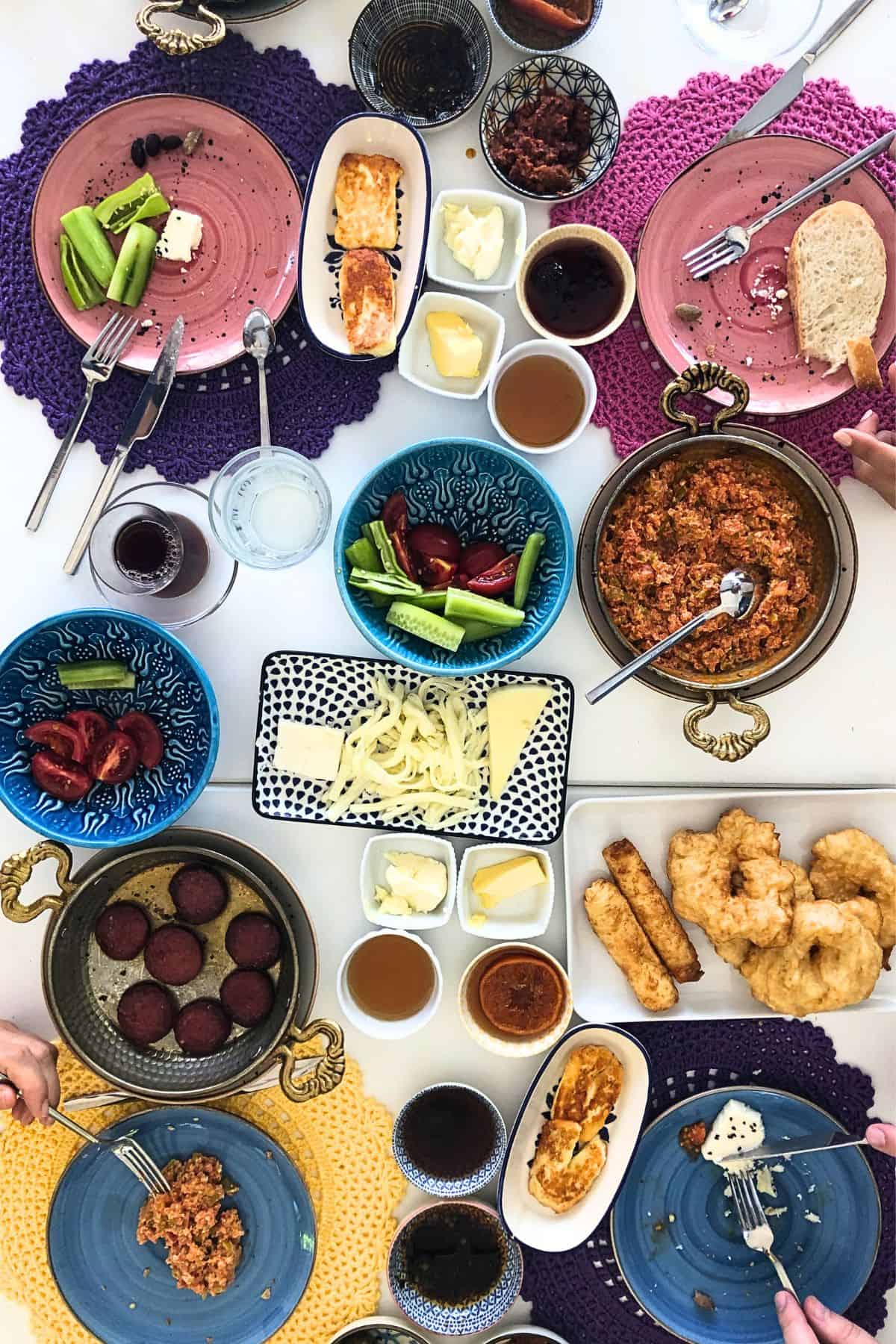
Serpme kahvaltı (Turkish breakfast spread) is a style of serving where many small dishes are brought to the table and shared. It’s very common in cafés and restaurants, and it shows what a full Turkish breakfast looks like.
Köy kahvaltısı (village breakfast) usually refers to a more traditional, homemade-style breakfast with fresh and local ingredients, often served in countryside settings.
At home, most Turkish breakfast is a simpler version of these, but the idea is the same: a table with a variety of foods to share.
What Is Included in a Turkish Breakfast?
Before we go into the details, one thing to keep in mind: not everything you see below has to be on the table at the same time.
A Turkish breakfast is all about variety, but it’s also flexible. You can mix and match depending on how much time you have and what you feel like eating that day.
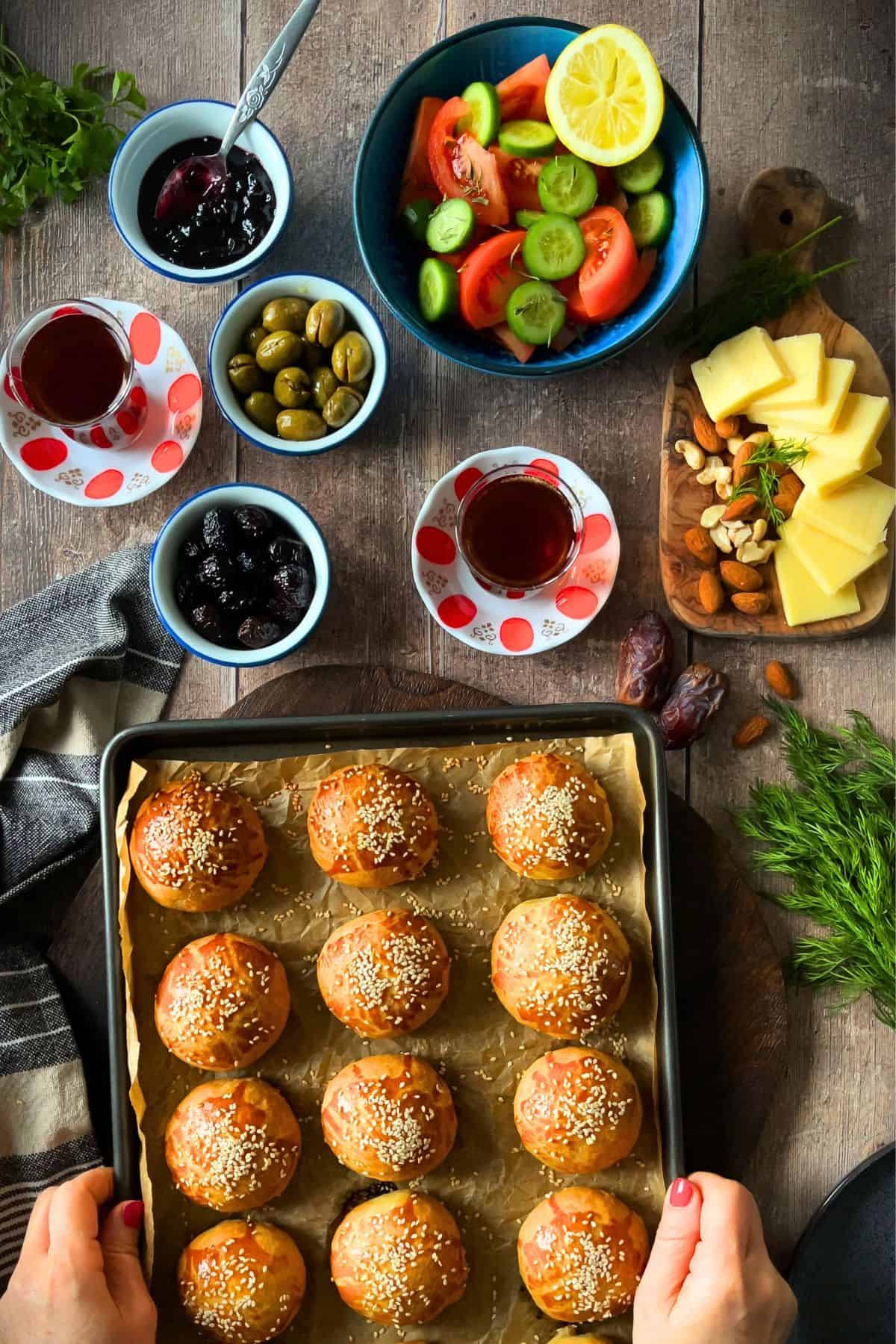
On weekdays, breakfast is usually more modest. Even then, it still includes a few essentials. There is almost always some cheese, olives, sliced tomatoes and cucumbers, bread, and tea. Eggs are also very common, either boiled or fried. If you like something sweet, you might add a jam, honey, or butter.
Weekends are when things get more generous. That’s when you might add a warm dish like menemen or eggs with sucuk, maybe some börek or gözleme, and a few extra items to make the table feel more complete. These are the kinds of traditional Turkish breakfast dishes that turn a simple table into a full experience.
So think of the foods below as options rather than a fixed list. You don’t need everything, just pick what works for you.
Egg Dishes
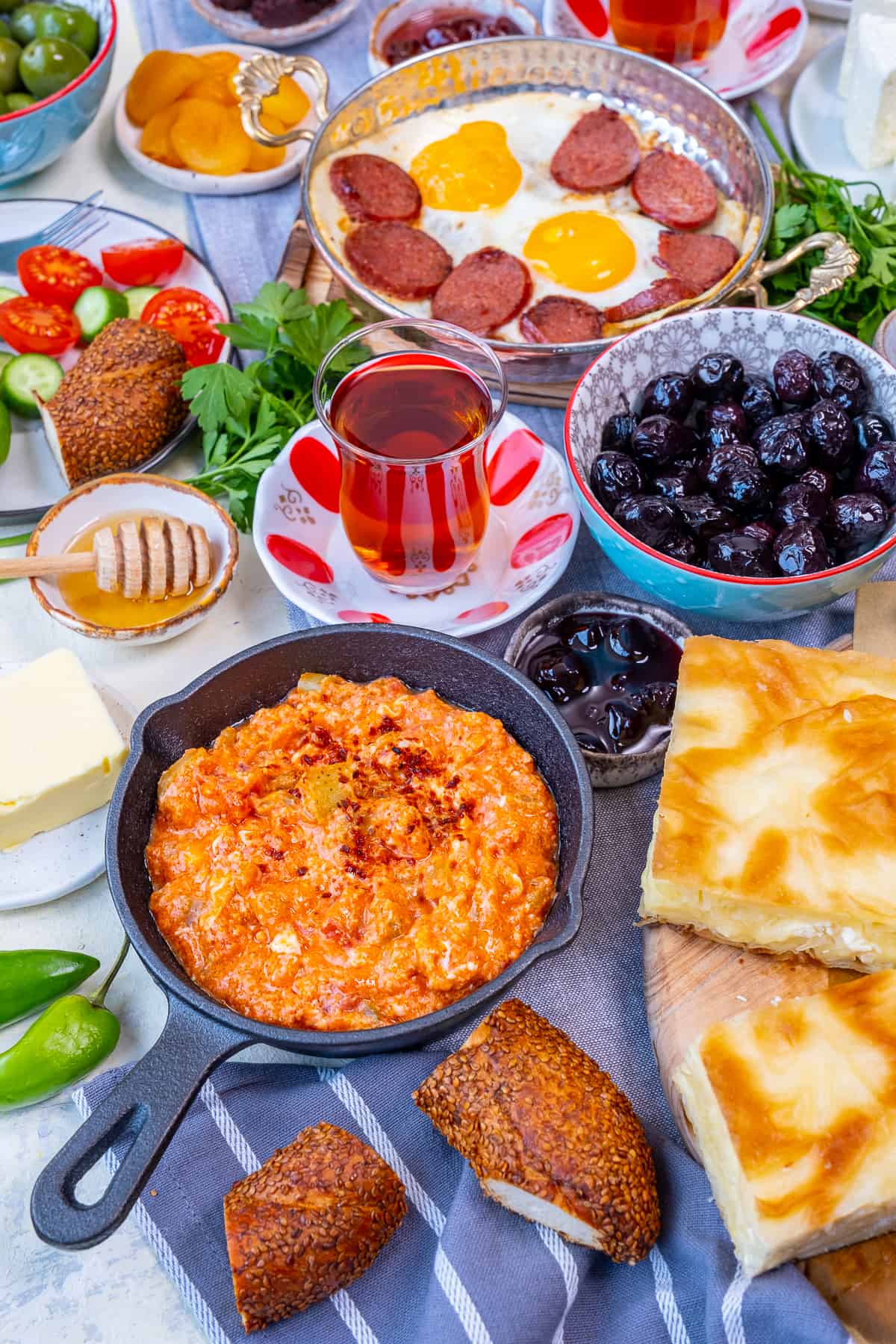
Eggs are usually the only hot dishes on a Turkish breakfast table, especially on weekends. They are easy to make but can turn a simple breakfast into a real feast.
Menemen is the egg dish that most people think of first in Turkey. Eggs are cooked with tomatoes and peppers (and onions for some people) until soft and juicy. It’s the kind of dish you eat by dipping bread straight into the pan.
Çılbır (Turkish eggs) is another well-known egg dish. It is made with poached eggs served over garlicky yogurt and topped with a buttery sauce. It might sound unusual at first, but once you try it, it’s hard to forget. Interestingly, it seems to be more popular in the UK—and even across Europe—than it is in Turkey.
At home, we also often make simpler dishes like Turkish egg salad or sucuklu yumurta (eggs cooked with slices of Turkish sausage).
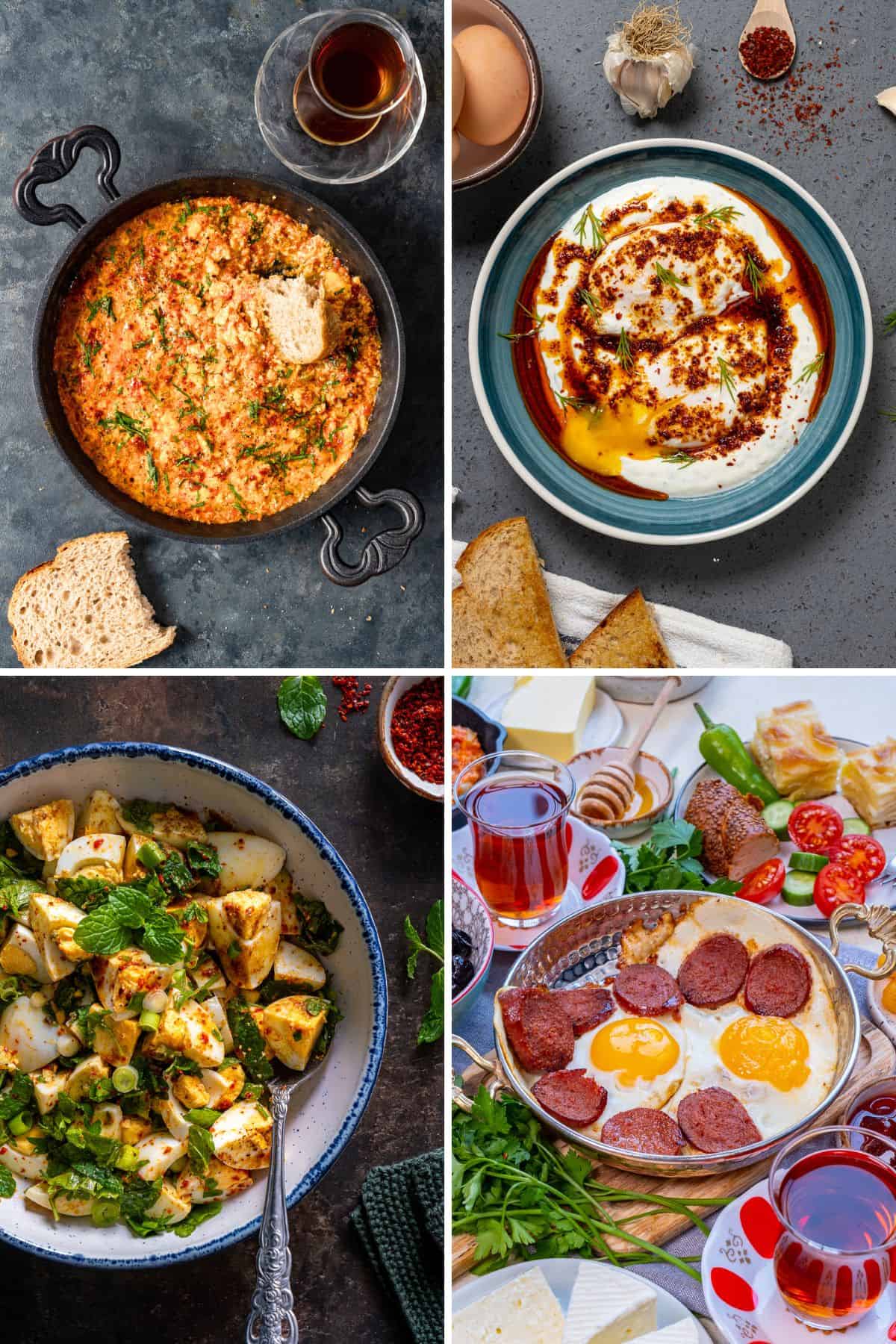
If you want something more filling, there are also a few meat-based egg dishes that are quite common, especially on weekends:
- Kıymalı yumurta (ground beef and eggs)
- Pastırmalı yumurta (eggs with cured beef)
- Kavurmalı yumurta (eggs with sautéed meat)
These are all classic Turkish egg dishes, enjoyed in different ways across Turkey.
Breads & Pastries
Bread is always part of a Turkish breakfast.
One of the most common options is simit, aka Turkish bagel. These are bread rings coated with sesame seeds. They are crispy on the outside and slightly chewy inside.
There are also pastries like börek, which can be filled with cheese, spinach, or potatoes, and gözleme, a stuffed flatbread cooked on a pan.
At home, we often go for bazlama, a soft flatbread that’s perfect for spreading butter, honey, or dipping into egg dishes.
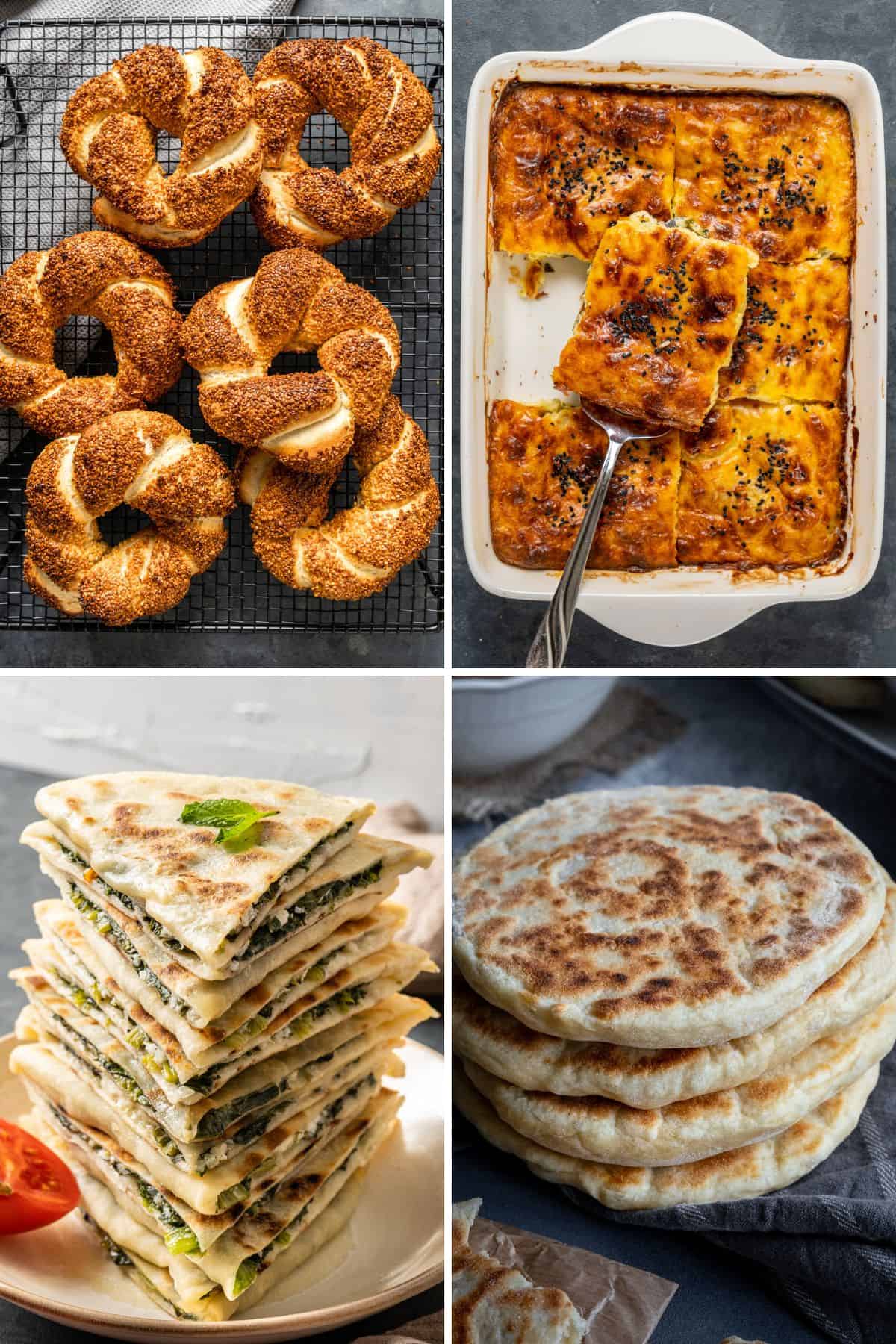
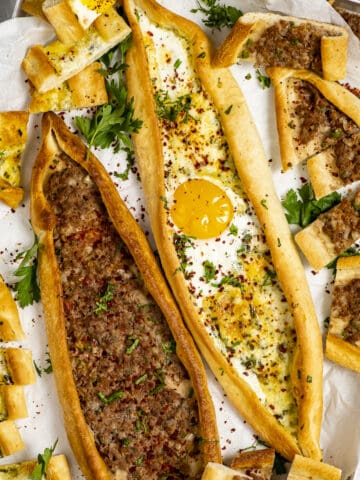
Fresh pide bread is also a great addition to breakfast. If we were in Turkey, we would probably grab it straight from a bakery, but here in the UK, we usually make it ourselves.
Another very common pastry is poğaça. These are soft savory pastries that are usually filled with cheese, olives, or potatoes. They are especially popular for a quick breakfast or as a snack.
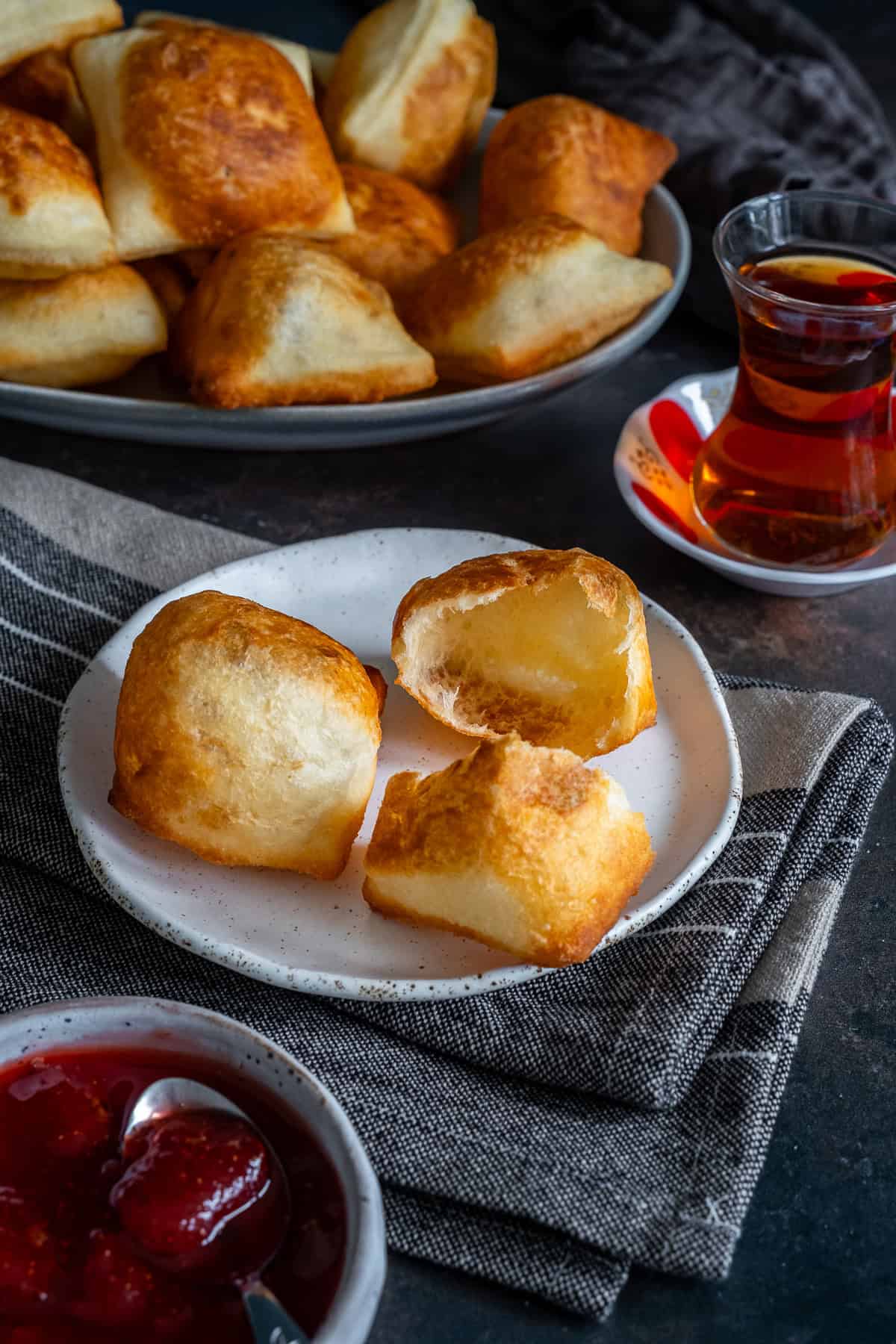
And then there’s pişi, one of our favorite treats for a weekend Turkish breakfast. These golden, puffy pieces of fried dough are served warm, often in place of bread, and are perfect with cheese, jam, or honey and kaymak.
Jams & Spreads
There are always a few types of jam on the table, like sour cherry jam, strawberry jam, orange jam, mulberry jam, or fig jam.
Turkish jams are usually made with larger pieces of fruit and without pectin.
Another classic sweet spread is tahin pekmez, a simple mix of tahini and grape molasses.
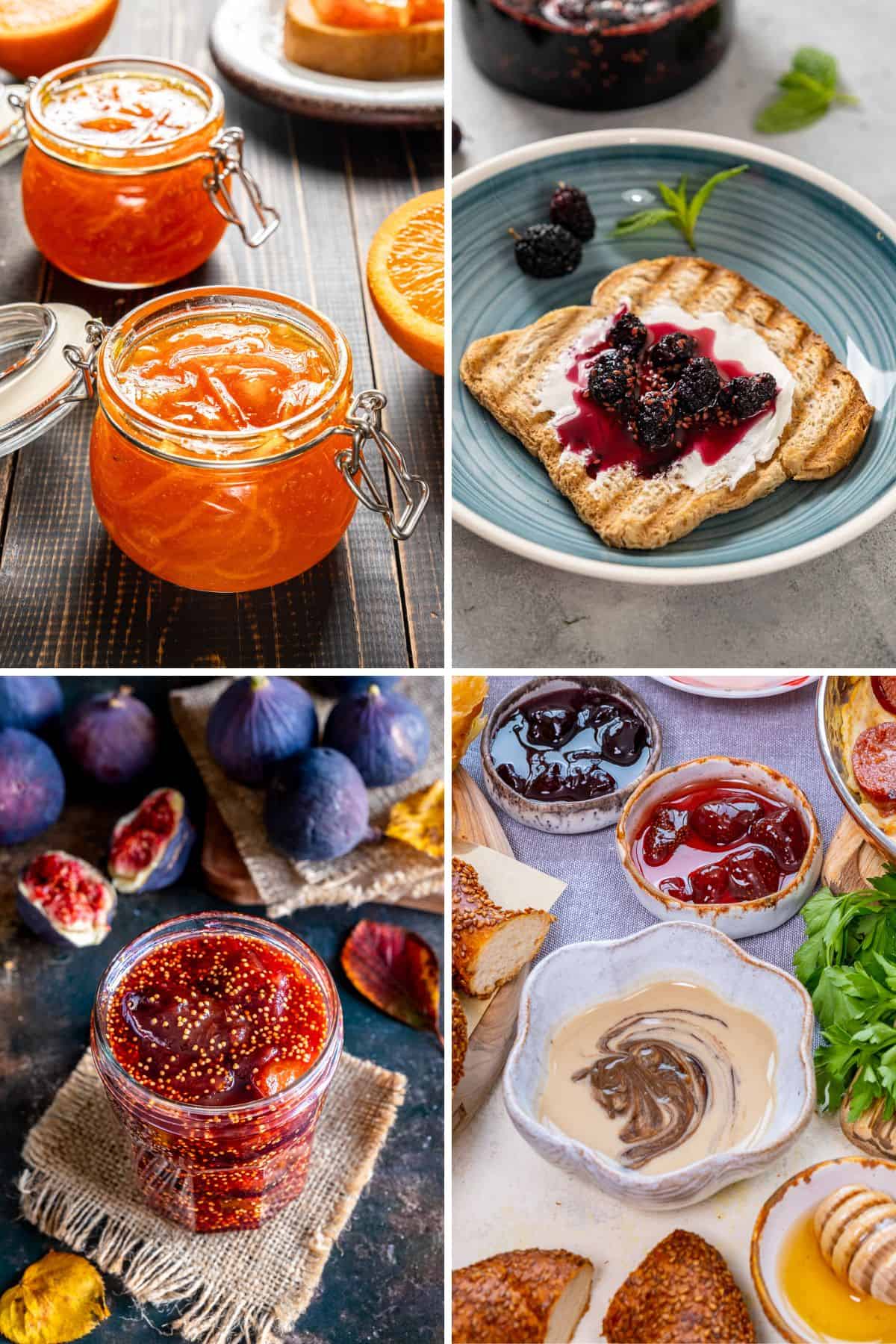
You will often see bal kaymak (honey and Turkish clotted cream) served together, sometimes in the same bowl, sometimes separately. Some people also enjoy honey with butter instead of kaymak. Either way, this combination is rich and delicious.
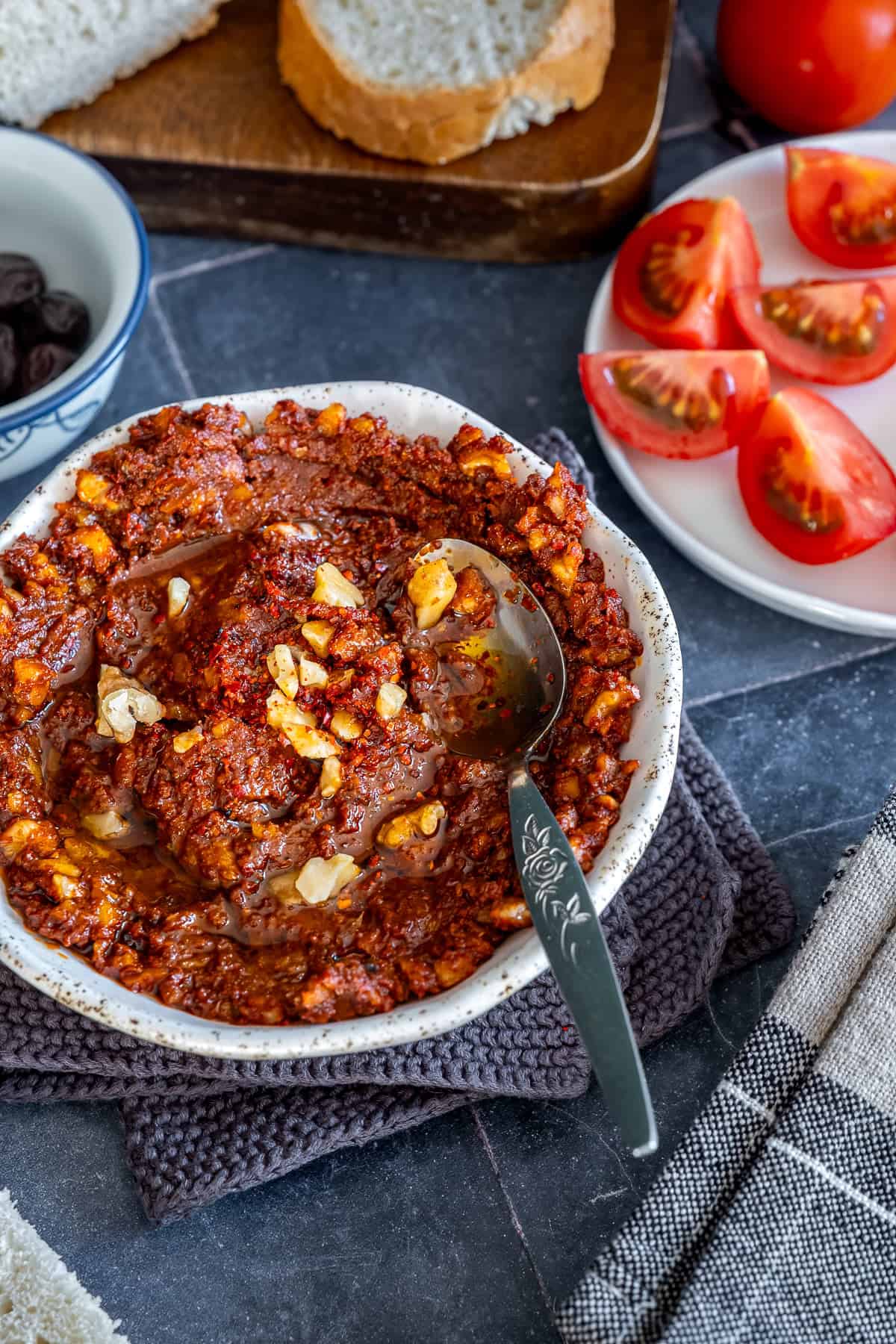
And then there is acuka, which is not sweet at all. It’s a savory spread made with tomato paste, walnuts, and spices.
Cheese & Olives
This is the part of breakfast that never changes.
There is almost always some kind of cheese and olives on the table. The most common cheese is white cheese, which is similar to feta. You might also see kashar cheese, which has a milder taste and melts well.
Olives are just as important. Both black and green olives are served, and everyone has their favorite.
Fresh Vegetables
Turkish breakfast doesn’t include heavy salads. Instead, you get simple, fresh vegetables on the side.
Sliced tomatoes and cucumbers are almost always there. Sometimes you’ll also see green peppers or a plate of fresh herbs like parsley, mint, or dill.
Extras on the Table
There are also a few extra things you might see on the table, depending on the season or what’s at home.
You might find fresh fruits like oranges or watermelon and dried fruits like figs or apricots, and a small bowl of nuts.
A good quality olive oil is sometimes served as well, especially for dipping bread or drizzling over cheese.
Drinks
Turkish tea is a big part of Turkish breakfast. It’s always black tea, served hot in small glasses, and refilled several times throughout the meal. Even kids in the family drink tea at breakfast.
Turkish coffee is usually not part of breakfast itself, but it’s often enjoyed right after. And that’s exactly why it’s called kahvaltı, the meal before coffee.
More Turkish Breakfast Dishes
There are many more dishes you might see depending on the region or the home:
- Yumurta kapama– boiled eggs in a spiced butter sauce
- Turkish eggy bread – Turkish style French toast
- Spinach and Eggs
- Kuymak / mıhlama – melted cheese and cornmeal, very popular in the Black Sea region
- Açma – soft, slightly sweet bakery-style bread
- Boyoz – a flaky pastry from İzmir, usually enjoyed with boiled eggs and tea
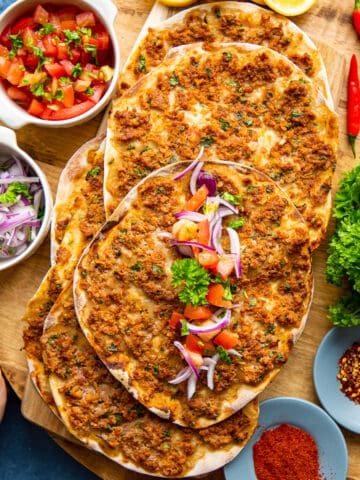
- Biberli ekmek– a pizza like bread or pastry topped with red peppers and sesame seeds.
How to Serve a Turkish Breakfast
If you’re new to Turkish breakfast, the biggest question is usually this: where do you even start?
The good news is, you don’t need to make everything.
On a typical weekday, breakfast is quite simple. You put the tea on first, since it needs time to brew. If you’re having eggs, you can boil them at the same time.
Meanwhile, take out what you already have in the fridge—some cheese, olives, butter, maybe a jam. Slice a tomato and a cucumber, add some bread, and that’s already a complete Turkish breakfast.
Weekends are when things change.
That’s when the table starts to feel more like a full Turkish breakfast spread. You might cook something warm like menemen or eggs with sucuk, add a pastry like börek or gözleme, and include a few extra items like jams or honey.
It doesn’t have to be everything, but there’s usually more variety and more time to enjoy it.
Everyone takes a little bit of everything, builds their own plate, and adds more if they want.
If you’re building a full spread, check out our Turkish Breakfast Dishes for more ideas.
A Simple Turkish Breakfast for One
If you’re making a Turkish breakfast plate just for yourself, it can be very simple but still delicious and healthy.
A typical plate might include a boiled egg with a pinch of salt, black pepper, and pul biber (red pepper flakes), along with some cheese, olives, sliced tomatoes, and cucumbers on the side.
Add a piece of bread and a glass of Turkish tea, and that’s already a complete Turkish breakfast.
And if you have a bit more time, you can always add one warm dish to make it feel more like a weekend breakfast.
Sign up for the FREE Give Recipe Newsletter to get the new recipes into your inbox!
And stay in touch with us on Facebook, Pinterest, YouTube and Instagram for all the latest updates.





Dre says
I LOVE Turkish breakfast like this. Sucuklu yumurta used to be my favorite when I was there last summer.
Zerrin & Yusuf says
Hi Dre,
Turkish breakfast is the best, isn't it? And sucuk and eggs are always a hit!
Nisa says
I am so happy to have found your site. Looking forward to making many of the recipes.
Zerrin & Yusuf says
Hi Nisa,
We are glad you are here 🙂 Enjoy the recipes!