

Kuru fasulye is one of the most loved comfort foods in Türkiye. This traditional Turkish white bean stew is made with tender beans, beef, tomato paste, and a few simple ingredients, all simmered together until rich and flavorful.

Growing up in Türkiye, we had kuru fasulye with rice, kuru fasulye pilav, countless times, usually with some pickles on the side.
And you know what? We never got tired of it! It's still one of those dinners that makes us happiest. It's simple, comforting, and everything we love about a good home-cooked meal.
What Is Kuru Fasulye?
In Turkish, kuru means "dry" and fasulye means "beans." But kuru fasulye is also the name of one of Türkiye's most popular home-cooked dishes. It's a hearty white bean stew made with a tomato-based sauce, either with or without meat. Our version is etli kuru fasulye, made with tender chunks of beef.
Kuru fasulye is so loved in Türkiye that it's often considered our national dish. It's also a staple in Turkish lokantas, traditional eateries where you can enjoy home-style cooking. You'll find them all over Türkiye, and kuru fasulye is one of the classics on their menus.
At these lokantas, a popular way to serve it is pilav üstü kuru, which literally means bean stew served over rice. You can order it as a meal on its own or as a side dish to go with another main dish.

About the Ingredients
You don't need anything fancy to make kuru fasulye. Here's what you should know about the main ingredients.
- Dried white beans: In Türkiye, we commonly use Dermason or İspir beans for kuru fasulye. If you can't find them, cannellini or navy beans work well too. We use dried beans because we love the texture and flavor they give the stew.
- Beef or lamb: We use diced beef for our etli kuru fasulye. Lamb works well too and usually cooks faster. You can also leave out the meat for a vegetarian version.
- Olive oil and butter: We start with a tablespoon of olive oil to cook the beef, then add butter for richness.
- Green pepper: We normally use Turkish green peppers, such as sivri biber or çarliston biber, but green bell peppers are a good substitute. You can also use a mix of red and green peppers.
- Tomato paste and red pepper paste: These give the stew its rich color and much of its flavor. We use both domates salçası (tomato paste) and biber salçası (red pepper paste). If you can't find Turkish red pepper paste, simply replace it with an equal amount of tomato paste and add a little extra paprika.
- Spices: We use cumin, black pepper, paprika, and salt.
You'll find the full list of ingredients and exact measurements in the recipe card below.

How to Make Kurufasulye
Making kuru fasulye is quite straightforward. We cook the beans and beef separately first, then bring everything together in a rich tomato sauce.
1. Soak the Beans
Rinse the dried white beans and place them in a large bowl. Cover with plenty of water (we use about 8 cups for 400 g of dried beans) and leave them to soak overnight, or for at least 8 hours.

2. Cook the Beans
Drain the soaked beans and discard the soaking water. Transfer them to a large pot and add 4 cups of fresh water.
Bring to a boil uncovered, then reduce the heat to medium-low. Partially cover and simmer for about 35–40 minutes, or until the beans are tender but still hold their shape. Start checking after 30 minutes, as cooking times can vary depending on the beans.
Skim off any foam that rises to the surface while they cook.
Important: Don't drain the cooked beans! We'll use their cooking water in the stew too.

3. Cook the Beef
While the beans are cooking, heat the olive oil in a large pot over medium heat. We use a Dutch oven, but a clay pot (called güveç in Turkish) or a regular pot works just as well. Add the diced beef, increase the heat to medium-high, and cook for about 5 minutes, until it releases its juices.
Stir, reduce the heat to medium-low, cover, and cook for about 20 minutes. If the liquid has evaporated, add about ¼ cup of water. Continue cooking for another 20–25 minutes, checking occasionally and adding a little more water if needed, until the beef is tender.
If using lamb instead, it will usually cook faster, in about 30 minutes.

4. Make the Stew
Once the beef is tender, add the butter and let it melt. Add the diced onions, cover, and cook over medium-low heat for about 5 minutes, stirring occasionally, until softened.
Stir in the tomato paste and red pepper paste. Cook for 2–3 minutes, stirring frequently.
Add the diced green pepper and tomato. Stir, cover, and cook for another 3 minutes.
Pour in ½ cup of water and stir to loosen everything from the bottom of the pot.

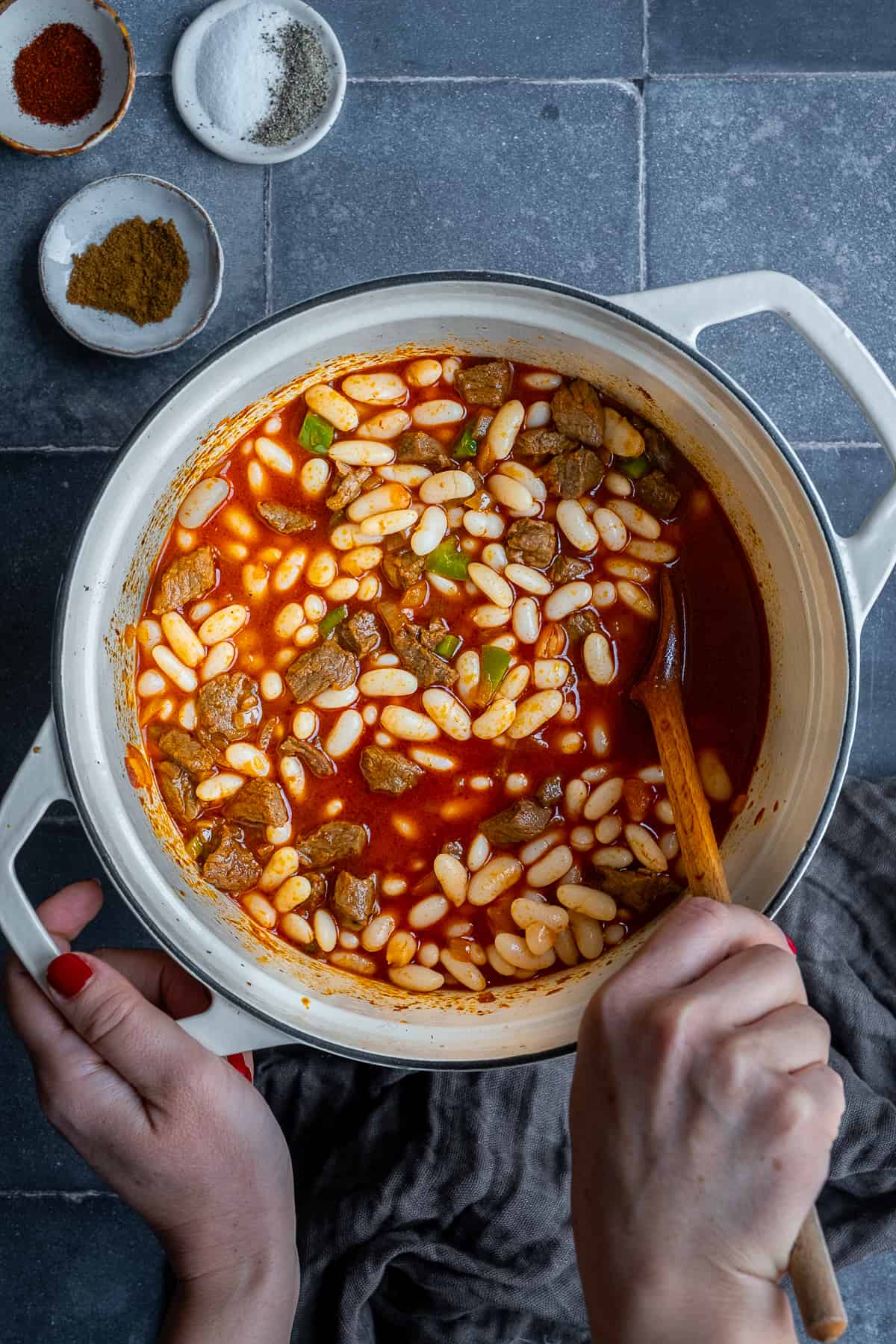
Add the cooked beans along with all their cooking water, followed by the salt, cumin, black pepper, and paprika. Stir gently to combine.
Bring to a boil over medium-high heat, then reduce the heat to medium-low. Cover and simmer for 10 minutes to let the flavors come together.
Turn off the heat and let the stew rest for about 15 minutes before serving.

Why Soaking Beans Overnight?
Soaking dried beans overnight is a common practice in Turkish homes and lokantas when making kuru fasulye. It's a simple step, but it makes a real difference.
We soak the beans overnight, drain them, and then cook them in fresh water. Soaking helps the beans cook faster and more evenly. Without it, they can take much longer to soften.
Also, If you cook dried beans without soaking them first, their skins can split and peel off, which isn't what we want in our stew. We want our beans to be soft and tender, but still hold their shape with their skins intact.
As the beans cook, they release starch into the water. Don't throw this cooking water away! We use it in the stew because it adds flavor and helps give the sauce a lovely consistency.

What to Serve with Kuru Fasulye
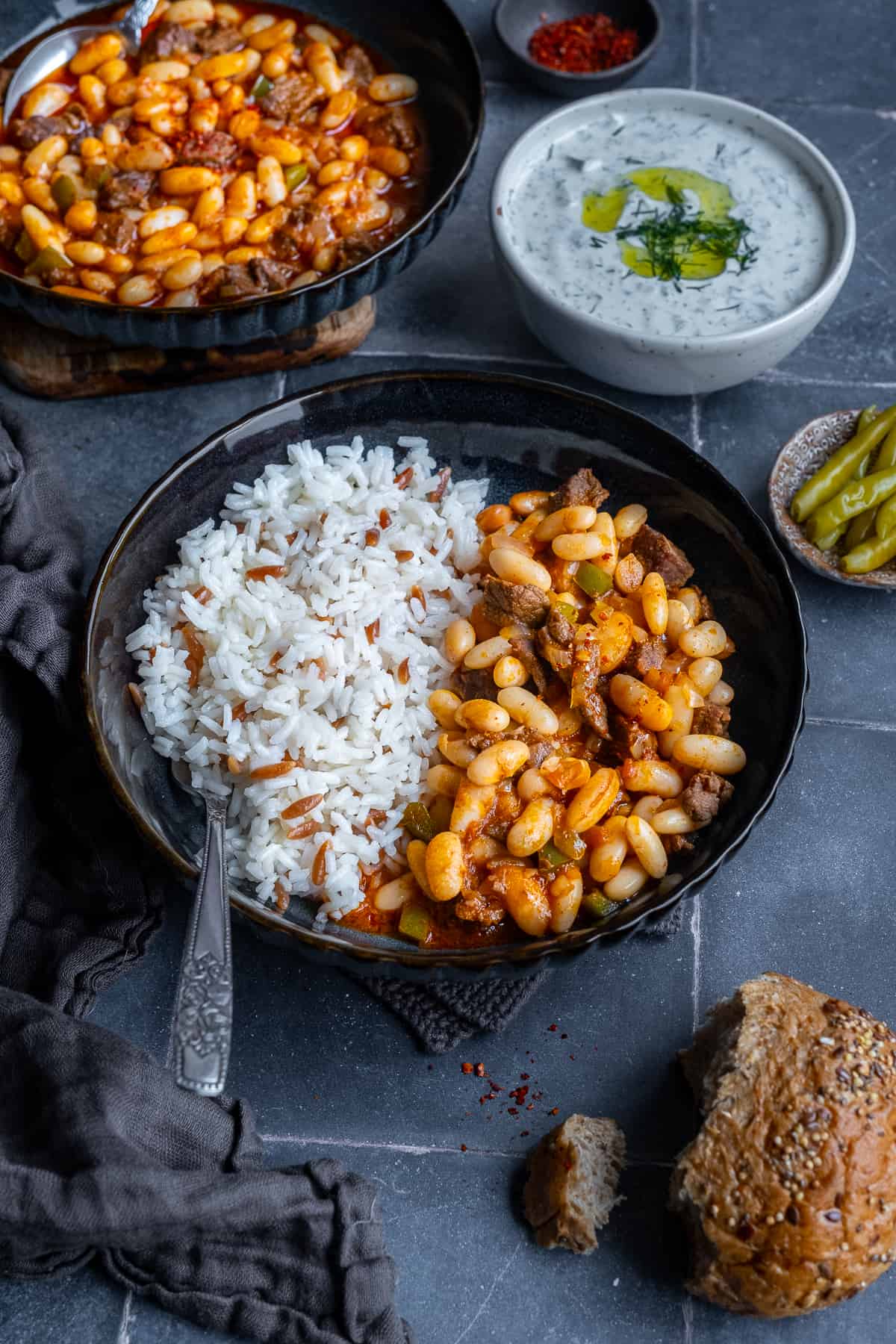
If you want to enjoy kuru fasulye the way we do in Türkiye, serve it with a few simple sides. Here are our favorites:
Pilav: Kuru fasulye and Turkish rice pilaf are a classic combination! We also love it with bulgur pilaf.
Cacik: This refreshing yogurt and cucumber dish is a lovely contrast to the warm, hearty stew.
Pickles: A few crunchy, tangy pickles on the side make this meal even better. Try our Turkish pickled red cabbage or quick beet pickles.
Bread: Fresh Ramazan pidesi is perfect for scooping up the beans and soaking up the sauce.
Salad: A simple Turkish shepherd salad or Turkish Green Salad adds freshness to the meal.
Raw onion: In Türkiye, it's also common to serve kuru fasulye with wedges of raw onion. Just take a bite of onion between spoonfuls of beans and rice!
And one more thing we always do: sprinkle some Turkish red pepper flakes (pul biber) over our kuru fasulye for a little extra heat.
You don't need all these sides, of course. For us, a plate of kuru fasulye, rice, and a few pickles is already a perfect dinner.
Can I Use Canned Beans?
Yes, if you're short on time, you can use canned white beans to make kuru fasulye. Cannellini or navy beans both work well. You can use two 400 g cans.
Since canned beans are already cooked, there's no need to soak or boil them first. Prepare the beef and tomato sauce as directed in the recipe.
Add the canned beans along with about half the liquid from one can, then add enough hot water to get the right consistency. Simmer gently for 10–15 minutes to let the flavors come together.
Canned beans are usually softer than dried beans cooked from scratch, so stir gently to keep them from breaking apart.
Can I Cook The Beans In A Pressure Cooker?
Yes, you can cook the beans in a pressure cooker, which will significantly reduce the cooking time. To do so, follow these steps:
- After soaking the beans overnight or for at least 7 hours, drain and rinse them.
- Place the beans in the pressure cooker and add enough water to cover them by about 1-2 inches (2.5-5 cm).
- Close the pressure cooker, making sure the lid is locked in place and the pressure valve is closed.
- Cook the beans on high pressure for 10-15 minutes (depending on the type of bean and desired tenderness). For a softer texture, cook closer to 15 minutes.
- Allow the pressure to release naturally for about 10 minutes before carefully opening the pressure valve to release any remaining pressure. Once the pressure is fully released, open the lid.
- Set them aside.
After cooking the beans in the pressure cooker, follow the recipe from the step where you add the pre-cooked beans.

Variations
There are several ways to make kuru fasulye in Türkiye. Here are some popular variations:
With Lamb chops: Cook the lamb chops in a pot until tender, about 30 minutes. Add a little water if the pot gets too dry, then continue with the recipe as directed.
With pastırma (Turkish cured beef): Add sliced pastırma after cooking the onions, peppers, and tomato paste. Sauté for a minute or two to release its flavor, then continue with the recipe.
With sucuk (Turkish spicy sausage): Slice the sucuk into rounds and add it after cooking the onions, peppers, and tomato paste. Sauté briefly before continuing with the recipe. Don't add any butter when using sujuk as it already has its own fat.
Vegetarian: Simply leave out the meat and follow the rest of the recipe. In Türkiye, vegetarian kuru fasulye is usually made without adding extra vegetables, although some people add carrots along with the tomatoes and peppers. We also like adding a little diced celery sometimes, even though it's not a traditional addition.

Make Ahead, Storing and Reheating
Make ahead: Kuru fasulye is a great dish to make ahead. In fact, we think it tastes even better the next day, once the flavors have had time to come together. Just refrigerate it and reheat when you're ready to serve.
Storing: Let the stew cool, then transfer it to an airtight container or cover the pot with a tight-fitting lid. Store in the refrigerator for up to 3–4 days.
Freezing: Kuru fasulye freezes well! Once cooled, divide it into portions and transfer to freezer-safe containers or bags, leaving a little room for expansion. Freeze for up to 3 months.
Reheating: Reheat the stew in a saucepan over medium-low heat, stirring occasionally until piping hot. It may thicken in the fridge, so add a splash of water if needed. If frozen, thaw it overnight in the refrigerator before reheating. You can also defrost it in the microwave.
Want More Turkish Stews?
If you are a fan of comforting stews like etli kuru fasulye, we have several of them on the blog. Here are a few of our favorite Turkish meat dishes:
- Turkish Chickpea Stew - Vegetarian
- Turkish Beef Stew (Dana Guvec)
- Turkish Lamb Stew (Kuzu Guvec)
- Turkish Meatball Stew with Veggies (Sebzeli Kofte) - Our son's favorite!
- Kapuska (Cabbage Stew)
- Zucchini Stew
More Turkish Dinner Recipes
Sign up for the FREE Give Recipe Newsletter to get the new recipes into your inbox!
And stay in touch with us on Facebook, Pinterest, YouTube and Instagram for all the latest updates.
📖 Recipe

Kuru Fasulye (Turkish White Bean Stew)
INGREDIENTS
- 400 grams (14 oz) dried white beans, (cannelini beans or navy beans)
- 1 tablespoon olive oil
- 400 grams (14 oz) diced beef
- 50 grams (3 tablespoon) butter
- 2 small onions, diced
- 2 tablespoons tomato paste
- 1 teaspoon pepper paste, see the note 5 below
- 1 tomato
- 1 green pepper, medium, Turkish green pepper or a small bell pepper
- 125 ml (½ cup) water
- 1½ teaspoons salt
- 1 teaspoon cumin
- 1 teaspoon black pepper
- 1 teaspoon paprika
- 1 litre (4 cups) water
INSTRUCTIONS
Soaking the Beans
- Thoroughly rinse the white beans.
- Place the rinsed beans in a large pot or bowl.
- Cover the beans with a generous amount of water (we use 8 cups) and allow them to soak for a minimum of 8 hours or overnight. This process helps the beans cook faster.
Cooking the Beans
- Drain and set aside the soaked beans, discarding the water used for soaking.
- In a large pot, add the beans and cover them with 4 cups of room temperature water. Bring to a boil without a lid.
- Once boiling, lower the heat to medium-low. Partially cover the pot and simmer until the beans are tender, which should take about 35-40 minutes. Start checking at 30 minutes as cooking times can vary based on bean type.
- Skim off any foam from the surface once or twice during cooking.
Cooking the Meat
- In a large saucepan or Dutch oven, heat olive oil over medium heat.
- Add diced beef and cook on medium-high heat for about 5 minutes or until it releases its juices.
- Stir well, then lower the heat. Cover and simmer on medium-low for approximately 20 minutes, ensuring there's enough juice in the pan. If dry, add ¼ cup of water and continue to cook covered for an additional 20-25 minutes until tender. Regularly check and add water if needed.
- Note: If using lamb, cooking time is typically shorter, around 30 minutes.
Assembling the Stew
- When the meat is tender, add butter to the pot, stirring until melted.
- Add diced onion, cover, and cook on medium-low heat about 5 minutes or until soft, stirring occasionally.
- Mix in tomato paste and red pepper paste, cooking for 2-3 minutes with constant stirring.
- Now add the diced pepper and tomato, stir well, and cook covered for 3 minutes on medium-low heat.
- Add ½ cup of water to the pot, stirring thoroughly.
- Now add the cooked beans along with their cooking water and all spices, stirring well.
- Bring the mixture to a boil over medium-high heat, then reduce to medium-low and simmer for 10 minutes.
- Allow the stew to rest for 15 minutes before serving.
- Serve with Turkish Rice or Bulgur Pilav and Cacik.
NOTES
- After soaking the beans, throw out the water. Cook them in fresh water. Otherwise, your stew won't taste good and the beans will cause gas.
- Don't skip removing the foams from the surface of the beans while cooking.
- If the meat gets dry when cooking, add a little water and keep cooking until tender.
- Keep in mind that lamb cooks faster than meat.
- Red pepper paste adds great flavor, but it might be hard to find. The popular Turkish brand "Öncü" is available internationally. Look in Middle Eastern stores or on Amazon. If unavailable, simply use the same amount of tomato paste instead.
- Storing: Cool stew, put in airtight containers, keep in the fridge for 3-4 days. To store in the freezer, cool the stew, divide into portions in freezer bags, and freeze up to 2-3 months.
- Reheating: Heat on stove or microwave until warm. To reheat from the freezer, thaw in the fridge or microwave, then reheat as above.
NUTRITION
Nutrition information is automatically calculated, so should only be used as an approximation.

Peggy McGagh says
I made this using diced beef and added pul biber - absolutely delicious.
Zerrin & Yusuf says
Hi Peggy,
We are glad you enjoyed it. Pul biber is always a great addition. We can add it on any dish!
Amy says
The best dish for winter days! I make it vegetarian and it is still a hit. Thank you for the recipe!
Claudine says
Hi, I like the recipe but I have a vegetarian friend coming for a meal - suggestions to make this dish vegetarian… normally I add minced meat or suxuk?
Zerrin & Yusuf says
Hi Claudine,
You can absolutely make this vegetarian! We often make kuru fasulye without any meat as well, and it's just as delicious. Simply skip the meat and start by cooking the onions in butter and olive oil, then follow the rest of the recipe. You can also add some diced carrots or celery if you like. Hope you and your friend enjoy it!
Claudine says
Hi this recipe looks great, I will be trying it very soon - perfect timing as it is winter here in Switzerland. I had a few questions: would it be possible to do this with minced meat rather than chunks? I also love the idea of using sujuk. Thank you for your fabulous blog. And, A very happy New Year.
Zerrin & Yusuf says
Hi Claudine,
It’s perfect for cold winter days, isn’t it? 😊
Traditionally, kuru fasulye is made with diced meat, sujuk, or vegetarian – minced meat is not commonly used. That being said, we think it could work if that’s what you have on hand! About 250 grams should be fine. If your minced meat has more than 5% fat, we recommend reducing the butter by around 20 grams to keep the dish balanced. The same applies when you’re using sujuk if it is quite fatty.
We hope you enjoy it, and a very Happy New Year to you as well!