

Love beans? Love dips? Then this Fava Bean Dip might be just your thing. Made with dried fava beans, olive oil, lemon juice, and dill, it’s a simple and delicious meze. We usually make a batch, let it chill, and serve it as a simple appetizer or meze with some bread on the side.
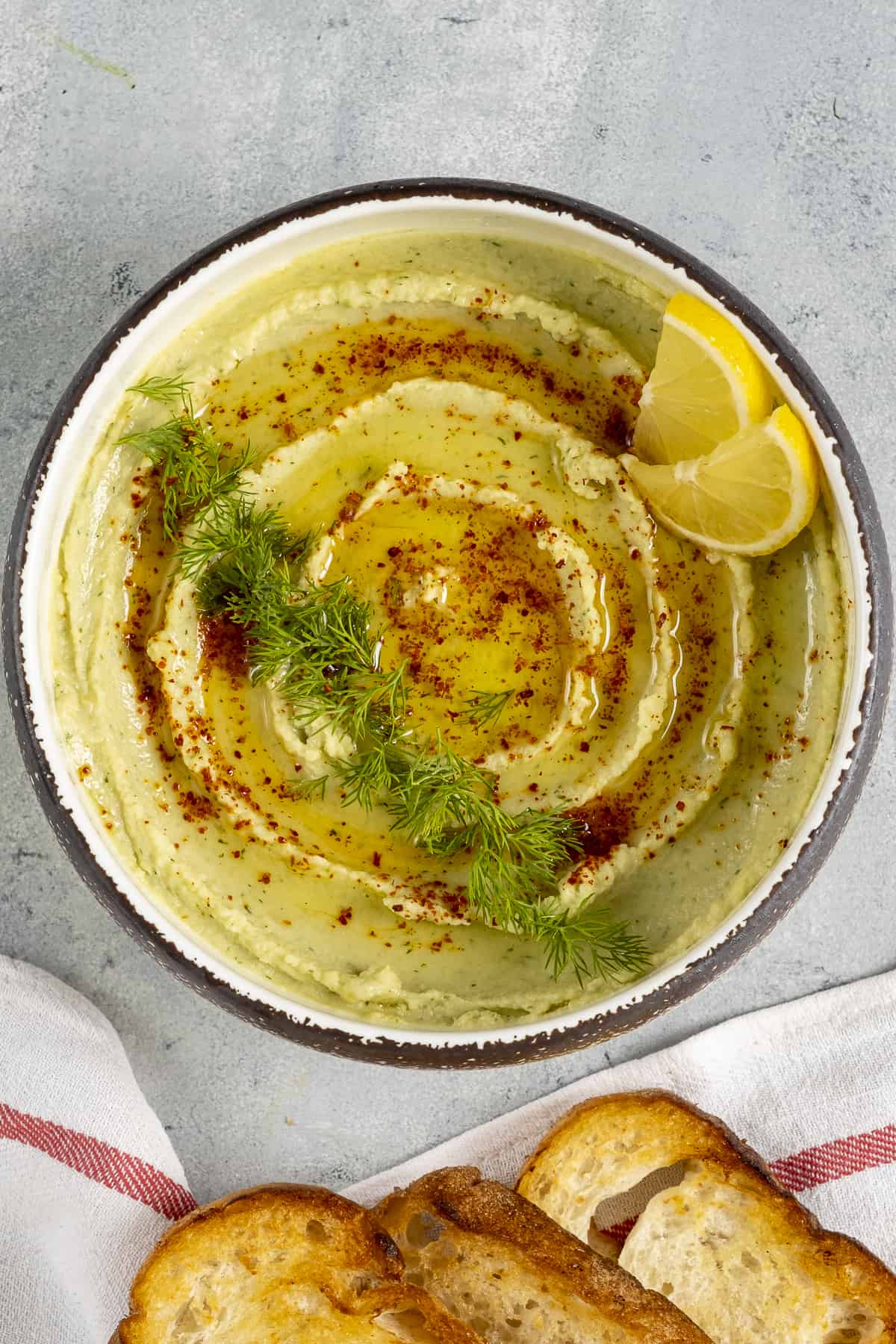
New to Fava Beans? Try This Dip!
If you’ve ever seen dried fava beans (also called broad beans) on the shelf and didn’t know what to do with them, you’re not alone.
We first had this fava bean dip years ago at a small family restaurant on the Aegean coast in Turkey during a summer holiday, and we loved it right away. It was one of the mezes we couldn’t stop eating that night. Since then, it has become one of those mezes we make at home quite often.
It’s simple and a great way to try fava beans for the first time. Once you make it, you might find yourself buying them more often too.
What Are Fava Beans?
Fava beans, also known as broad beans, are a type of legume. They are widely used in Mediterranean and Middle Eastern cooking. They have a unique, earthy flavor.
You’ll often find fava beans dried, canned, or fresh (in season). For this fava bean dip recipe, we use dried fava beans, which need to be soaked and peeled before cooking.
If you’re new to fava beans, you can also check out our detailed posts on what fava beans are and how to cook fava beans.
About the Ingredients
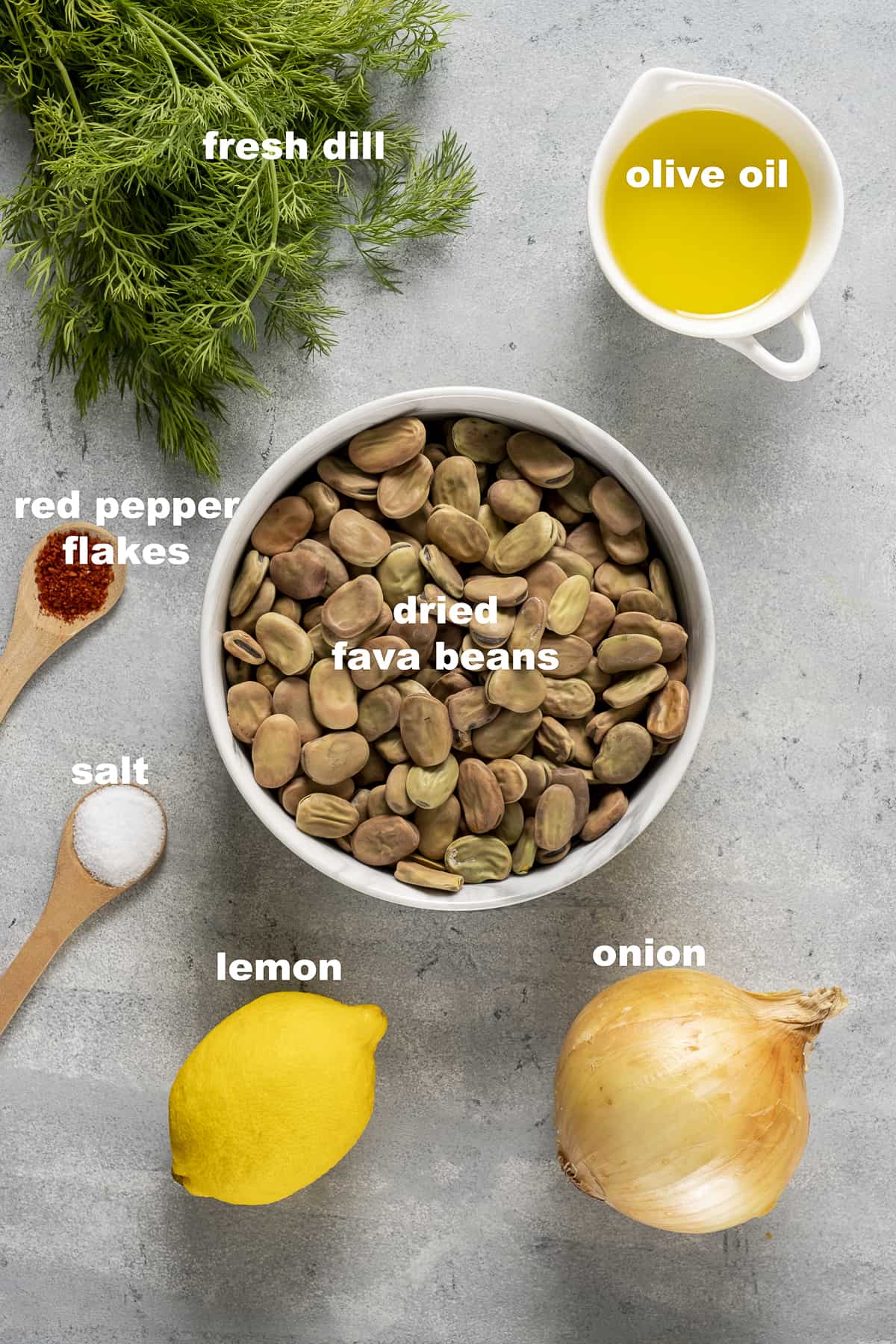
This fava bean dip has all those Mediterranean flavors we love. It’s light and somehow addictive. Here are the ingredients we need for this recipe:
Dried fava beans: We use large whole dried fava beans. They need to be soaked and peeled before cooking. You can also use split fava beans if that’s what you find. These are already peeled, so you can skip that step. If you’re short on time, you can use canned fava beans too, although they’re not always easy to find.
Onion: Adds a nice natural sweetness.
Lemon juice: Gives the dip a fresh and tangy taste. You can always add more when serving, we usually do.
Olive oil: Don’t be shy with it. We use it both while cooking and for drizzling on top before serving.
Red pepper flakes: Great for a little heat. We use pul biber (Turkish red pepper flakes), but Aleppo pepper or regular red pepper flakes work fine too.
Fresh dill: Adds a fresh, herby flavor. We think it pairs really well with the earthy flavor of fava beans, so we don’t usually substitute it. But you can try other fresh herbs like fresh mint, parsley or even cilantro leaves if you prefer.
You can find the full list of ingredients with exact measurements in the recipe card below.
How to Make Fava Bean Dip
Making this fava bean dip is quite simple, but it takes a bit of time.
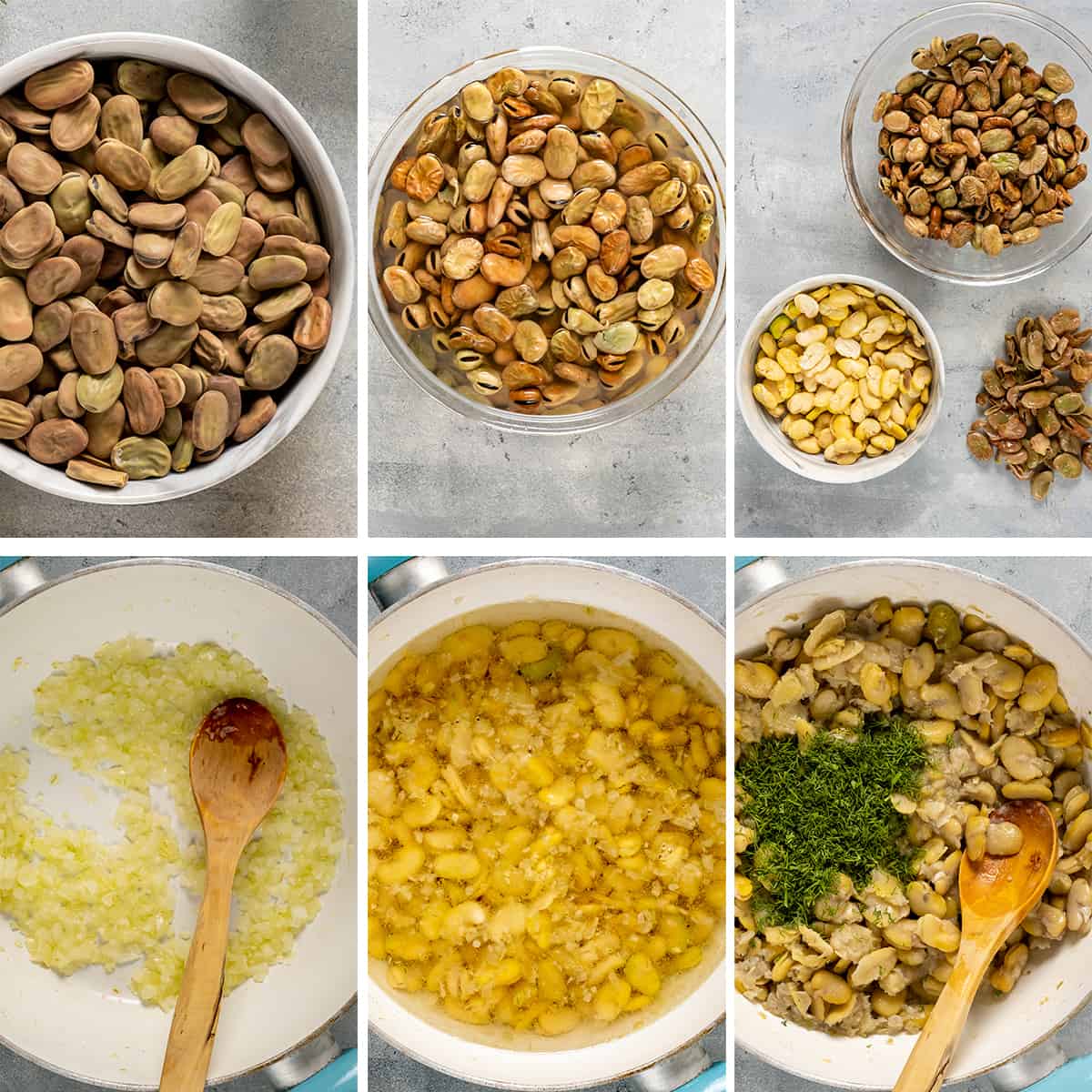
First, soak the dried fava beans for 6–7 hours or overnight. This softens them and makes peeling much easier. Then drain and rinse them, and peel each bean by gently pinching off the skins.
Next, cook the peeled beans with chopped onion and water until they are nice and tender. If the water cooks off too quickly, you can always add a little more.
Once everything is cooked, transfer it to a food processor. Add in lemon juice, olive oil, salt, and fresh dill, and blend until you have a smooth and creamy puree. If it feels too thick, just add a bit of water to loosen it.
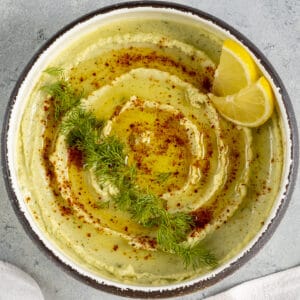
Finally, let it chill in the fridge before serving. We like to finish it with a drizzle of olive oil and a sprinkle of dill and red pepper flakes.
You can find the full instructions in the recipe card below.
Don’t Skip Peeling the Fava Beans!
It might feel a bit time-consuming, but don’t skip peeling the fava beans. Their skins are quite thick and can affect the texture of the dip.
Once peeled, they blend into a smooth and creamy puree. It takes a little extra effort, but it’s absolutely necessary for the right texture.
Serving Suggestions
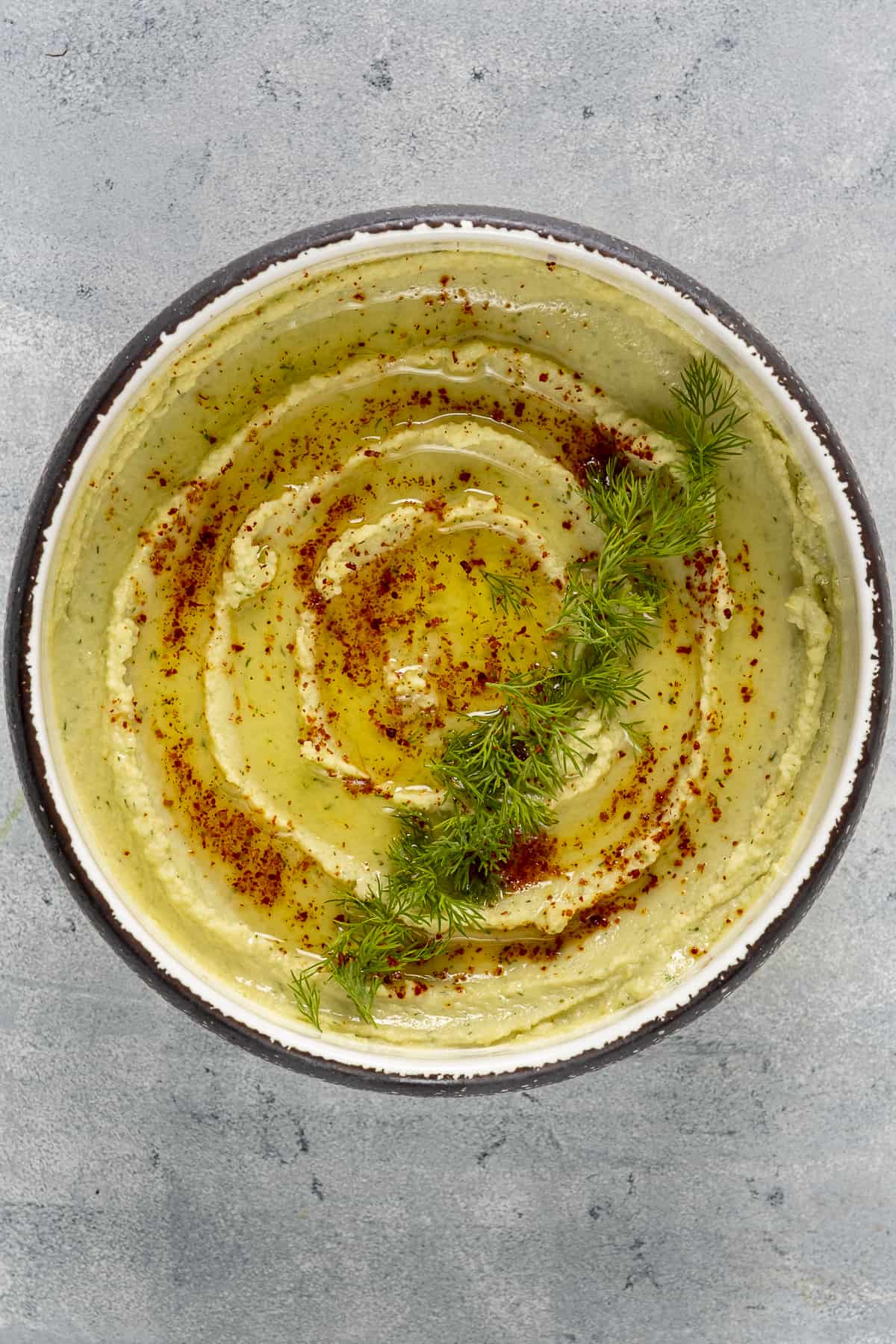
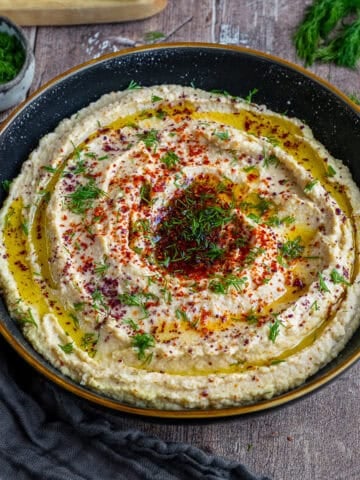
We usually serve this fava bean dip cold or at room temperature. A generous drizzle of extra virgin olive oil on top is a must, along with some fresh dill and a pinch of red pepper flakes. Finely chopped red onion or green onions on top work really well too.
It goes really well with fresh bread on the side. We love it with crusty bread or pide bread.
We love serving it as part of a meze spread, alongside dishes like:
You can also spread it on toast or serve it with crackers. If you have a bigger portion, it can even make a light meal on its own.
Storage
Store any leftovers in an airtight container in the fridge. It keeps well for up to 3–4 days.
The dip might thicken as it sits. Just give it a good stir before serving, and if needed, add a little water or olive oil to loosen it.
Is It the Same as Greek Fava?
Not exactly. Greek fava is usually made with yellow split peas, not fava beans. This dip is made with fava beans and has a slightly different flavor and texture.
More Dip Recipes
Sign up for the FREE Give Recipe Newsletter to get the new recipes into your inbox!
And stay in touch with us on Facebook, Pinterest, YouTube and Instagram for all the latest updates.
📖 Recipe
Fava Bean Dip
INGREDIENTS
- 450 grams fava beans, (1 pound)
- 60 ml olive oil, (¼ cup)
- 1 large onion, finely chopped
- 720 ml hot water, (3 cups)
- 1 lemon, juice only
- 1 teaspoon salt
- 15 grams fresh dill, (¼ cup), chopped
- ½ teaspoon red pepper flakes, for garnish
- 1 tablespoon fresh dill, for garnish
For garnish:
- ½ teaspoon red pepper flakes
- 1 tablespoon fresh dill, chopped
- 1 teaspoon extra virgin olive oil
INSTRUCTIONS
- Soak the dried fava beans for 6–7 hours or overnight. Drain and rinse well.
- Peel the skins off by pinching each bean between your thumb and forefinger. Set them aside. You will have about 1½ cups of peeled beans.
- Heat the olive oil in a pan and cook the chopped onion until translucent.
- Add the peeled fava beans and pour in the hot water. Bring to a boil, then reduce the heat and cook covered over medium-low heat until the beans are tender, stirring occasionally. This might take about 1 hour. Skim off any foam that forms on the surface.
- If the water is absorbed before the beans are tender, add more (start with ¼ cup / 60 ml and add more if needed).
- Remove from the heat. Transfer to a food processor and add lemon juice, salt, and chopped dill. Blend until smooth and creamy. If it’s too thick, add a little cold water (start with 1–2 tablespoons) until you reach the desired consistency.
- Taste and adjust the salt and lemon juice if needed.
- Refrigerate for at least 30 minutes before serving.
- Serve with a drizzle of extra virgin olive oil, fresh dill, and red pepper flakes.
NUTRITION
Nutrition information is automatically calculated, so should only be used as an approximation.


Richard says
Very clear recipe, easy to follow, great result
Zerrin & Yusuf says
Hi Richard,
We are happy to hear that you liked the recipe. Thank you for leaving a comment and giving a 5-star rating!
Ian Kilbey says
I used 500gm of dried beans, but I ended up with well over 1 litre of beans, 4 metric cups, not a cup and a half as you say. Cooking 1& half cups of these with the onion for an hour led to a very watery result although the beans were nice and mushy. I turned up the heat and needed to cook them for another 1/2 hour to thicken sufficiently. It also took me hours to shell the beans, not a pleasant experience.
Zerrin & Yusuf says
Hi Ian,
We are sorry to hear that you had an unpleasant experience. Thank you for sharing your thoughts with us here.
The shells of dried fava beans are thick and they take up too much space. So when we remove them, we often have one and a half to two cups of shelled beans. Not sure why you ended up way more than this. If this is more than you need, you can always freeze some of it.
So when we cook 1 and half cups of it with 3 cups of water, we sometimes have to add a little extra water as the beans don't get tender yet. We have no idea why yours came out mushy and too watery. So did they thicken after another 1/2 hour? How was the result? Still watery after it is pureed and cooled? Normally, cooked fava beans absorb the water and thicken as they cool down.