

Coban Salata, or Turkish Shepherd Salad, is light, refreshing, and full of tangy flavor. This is our ultimate go-to salad for any meal, and we make it almost every day to pair with whatever is on the dinner table. The best part? You can make it in just 5 minutes!
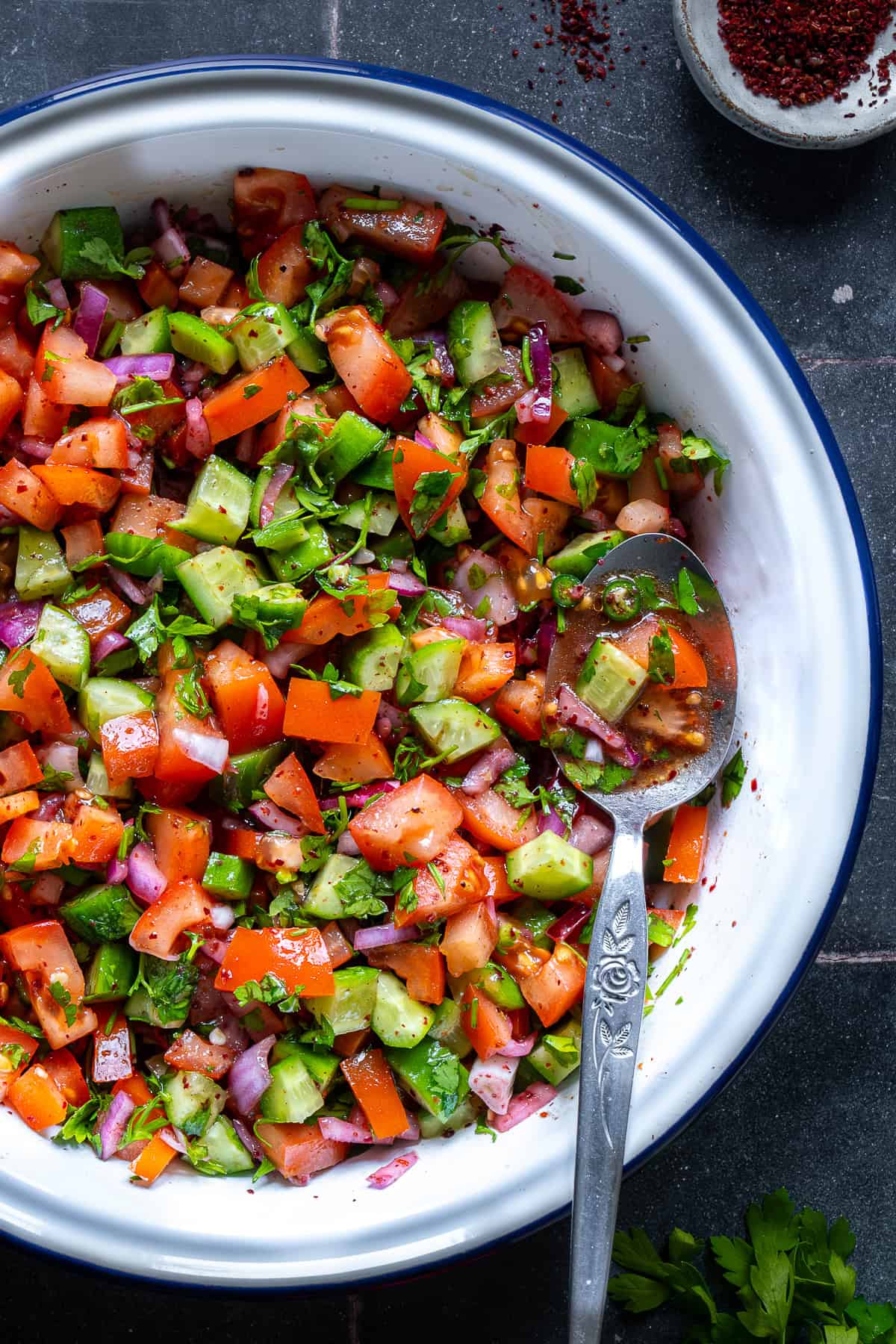
If you’re looking for a quick side salad to pair with chicken, meat, or even vegetarian dishes, Coban Salata is exactly what you need. It never disappoints!
And don’t forget to grab a spoon for the irresistible juice at the bottom of the bowl—you won’t want to miss a single drop!
In Turkey, when someone says “salad,” two options usually come to mind: Coban Salata and Mevsim Salatası (Seasonal Salad).
These aren’t the only salads you can find in Turkey, but they are the most common and popular ones. Whether you’re at a family dinner or a restaurant, you’ll almost always find one of these delicious salads on the table.
What is Coban Salata?
Coban Salata, pronounced cho-BAHN sa-lah-tah, is one of the most popular and frequently made salads in Turkey—perhaps even the most common. Its popularity comes from how easy it is to prepare with simple, everyday ingredients like tomatoes, cucumbers, onions, and peppers, which are staples in almost every kitchen.

You’ll also find Coban Salata on nearly every restaurant menu in Turkey. It’s especially common in places that serve kebabs, lahmacun, and pide, as well as in traditional diners (lokanta) offering homemade dishes like soups and stews (güveç).
The Story Behind the Name "Çoban Salata"
The name "Coban Salata," meaning "Shepherd’s Salad," comes from its roots in Turkish village life.
A çoban (shepherd) is the person responsible for looking after the sheep and cows of the entire village, often taking them to distant pastures to graze.
In the past, villagers would pay the shepherd with goods they grew or made themselves. Some would give vegetables like tomatoes, cucumbers, and onions, while others offered olives, cheese, or freshly baked bread.
The shepherd would carry these simple ingredients in their bag while traveling far from the village. It’s said that the shepherd would combine these ingredients to make a quick lunch while out in the fields.
This is how Coban Salata is believed to have originated—a salad made from fresh, easily accessible ingredients.
About The Ingredients
The full list of ingredients and their measurements can be found in the recipe card below.
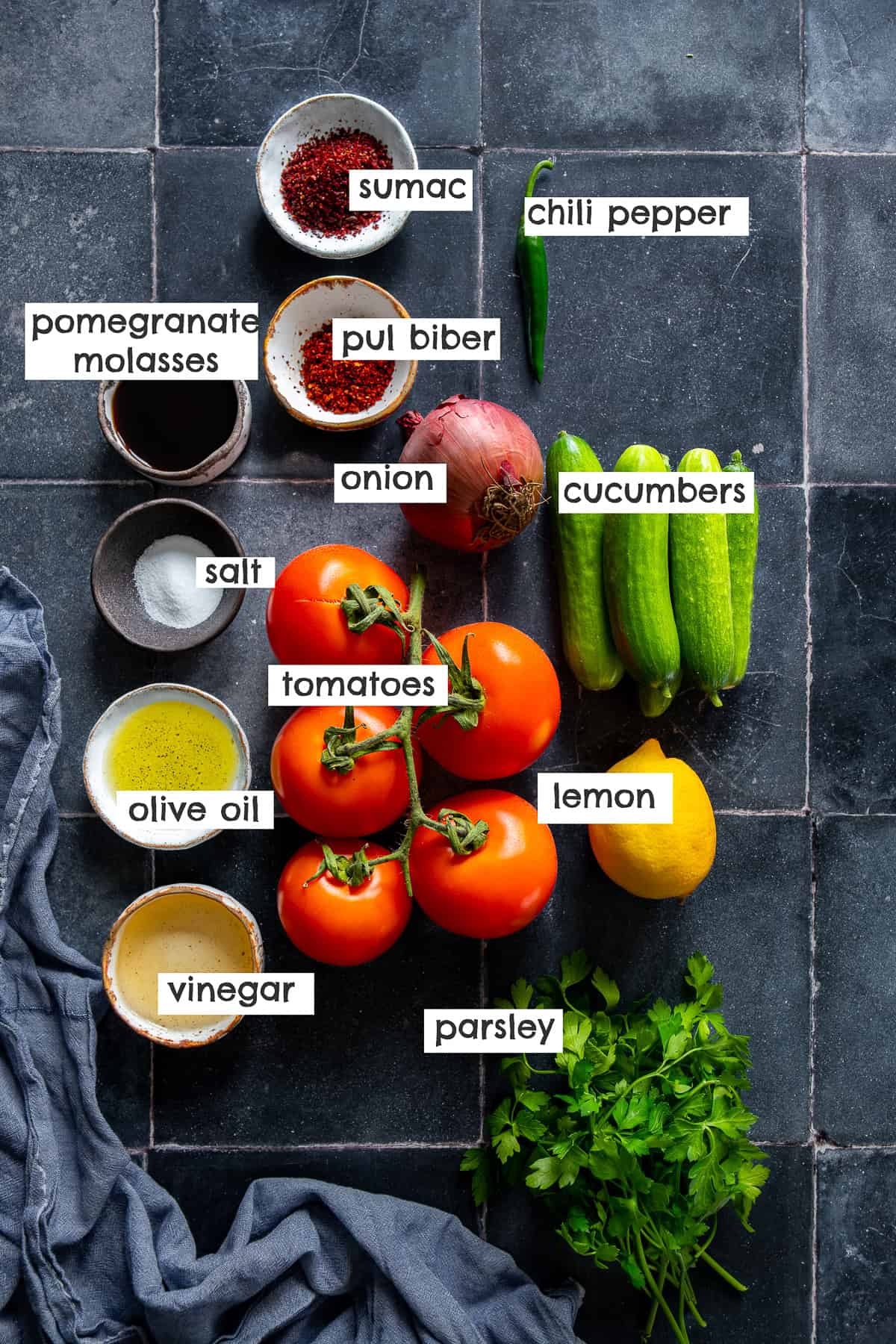
Coban Salad Ingredients
- Onions: Traditionally, brown or red onions are used. Some people prefer to soak them in water for a few minutes to reduce their sharpness but we don't.
- Tomatoes: Use the ripest and juiciest tomatoes you can find.
- Cucumbers: Small, thin-skinned cucumbers (like Persian or Turkish cucumbers) work best. If using larger ones, peel them if the skin is tough.
- Parsley: Fresh parsley is essential for this salad.
- Green Peppers: In Turkey, this salad typically uses sivri biber (long, slender green peppers with a mild to medium heat) or çarliston biber (sweet green pepper). If you can’t find these, you can use a chili pepper (like we often do) for a spicy kick or a green bell pepper for a milder flavor.
Dressing Ingredients
- Olive Oil, Lemon Juice, and Salt: These three make the classic base for Turkish Shepherd Salad dressing. Use extra virgin olive oil for the best flavor.
- Pomegranate Molasses (Nar Ekşisi): This sweet and tangy syrup is a common variation, especially if you want to add a richer flavor. It’s worth using if you can find it!
- Vinegar: A splash of vinegar is often used in traditional versions of this salad, especially grape vinegar (üzüm sirkesi), which is the most common in Turkey. Red wine vinegar or apple cider vinegar works fine too.
- Sumac and Pul Biber (Red Pepper Flakes): These are optional but highly recommended for an authentic touch. Sumac adds a tangy flavor, while pul biber adds a bit of smoky heat. Both are commonly used in Turkish cuisine.
Why Massage Onions with Sumac?
Massaging onions with sumac is a traditional Turkish method that makes the onions taste better. It takes away their sharp, bitter flavor and gives them a tangy taste instead. It also gives the onions a pretty pink color, which makes the salad look even more delicious.
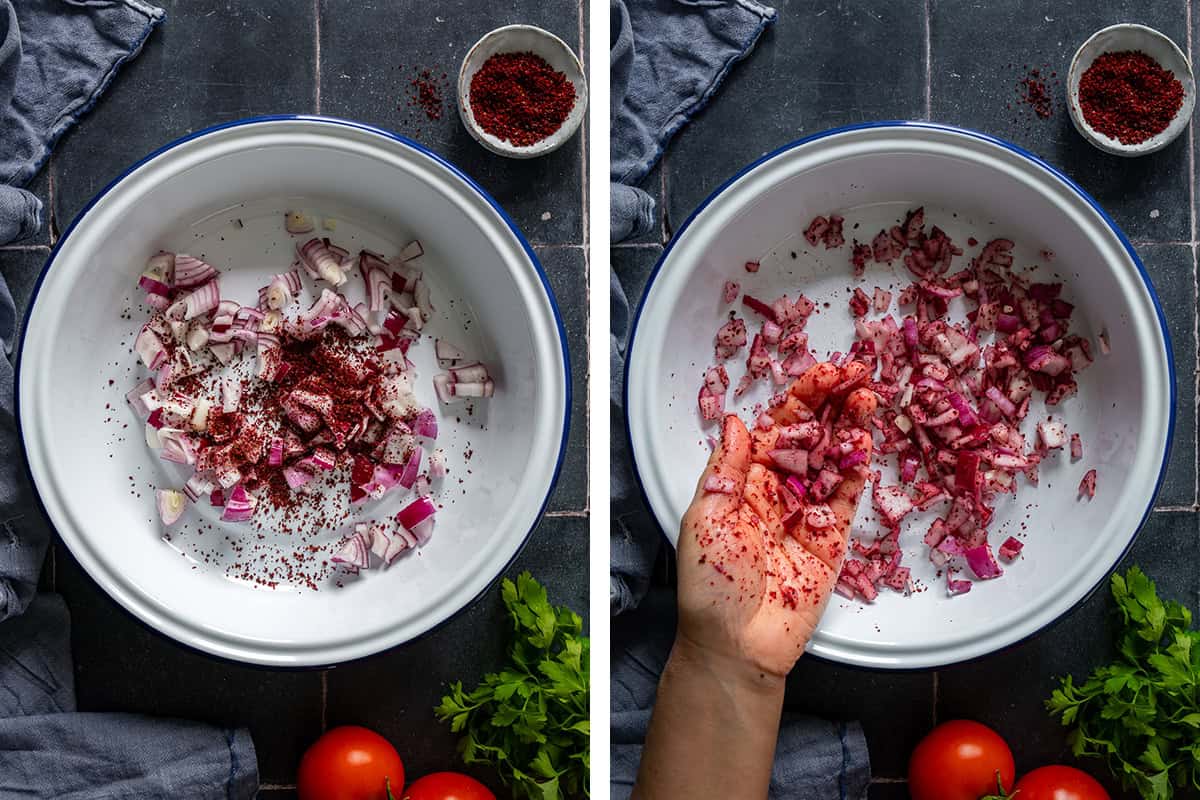
If you’ve tried Turkish sumac onions served with kebabs, this might sound familiar. The same trick is used there too, and it adds an authentic and tasty touch to the dish. It’s a simple step but makes a big difference!
How to Make Çoban Salata
The full instructions are in the recipe card below, but here’s a quick summary.
Start by massaging the diced onions with sumac. Then, place the onions in a large salad bowl along with the diced tomatoes, cucumbers, peppers (or chili pepper, if you prefer a spicy kick), and parsley.
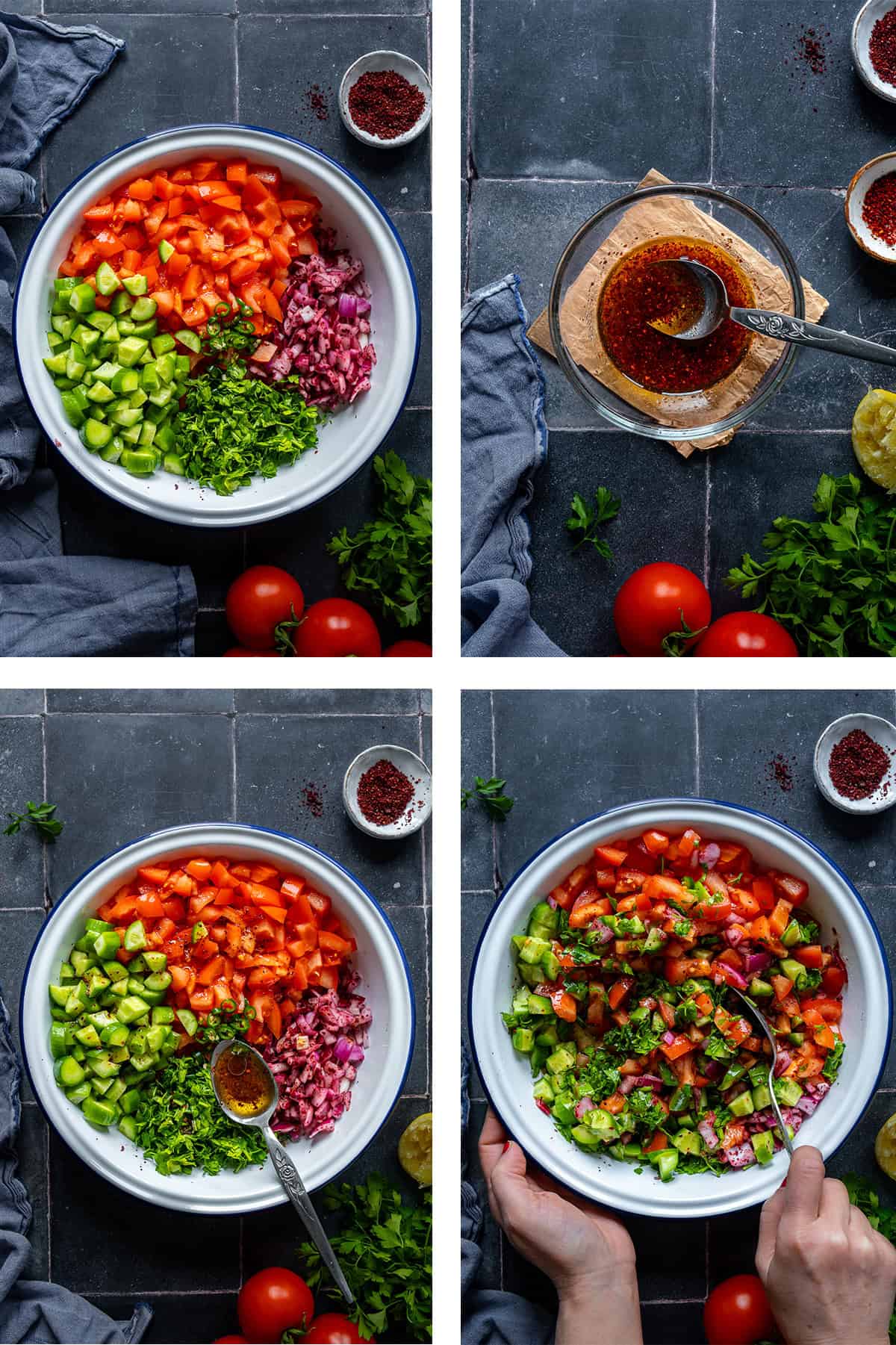
In Turkey, most people don’t prepare the dressing in a separate bowl when making coban salata. Instead, they squeeze fresh lemon juice directly over the salad, drizzle olive oil generously by eye, sprinkle on salt, and, if desired, add sumac and pul biber. Then, everything is tossed together right in the bowl.
To be honest, we usually make it this way too—it’s quick and easy! Feel free to prepare the dressing in a separate bowl or jar if you prefer. Either way, toss everything together just before serving for the freshest flavor.
Jazz Up the Dressing for the Salata!
To take the flavor of your Çoban Salata to the next level, try some additions to the dressing. We love adding spices like pul biber (Turkish red pepper flakes) and sumac for an extra burst of flavor. They add a tangy, slightly smoky kick that makes the salad even more delicious.
Another spice often used in Turkish Shepherd Salad is dried mint. It’s a great substitute when you don’t have fresh parsley or other herbs on hand.
For a richer and tastier dressing, try adding pomegranate molasses and a splash of vinegar. You can use your favorite type of vinegar, but we prefer apple vinegar or grape vinegar for their mild and fruity flavors.
In some restaurants in Turkey, they leave the customization to you! Spices like sumac, pul biber, and dressing ingredients like olive oil, lemon, and vinegar are served on the table. This way, you can adjust the flavors to your liking and make the salad your own.
Alternative Add-Ins
While the classic Turkish shepherd salad recipe is perfect as it is, you can easily customize it with additional ingredients to suit your taste or make it more filling.
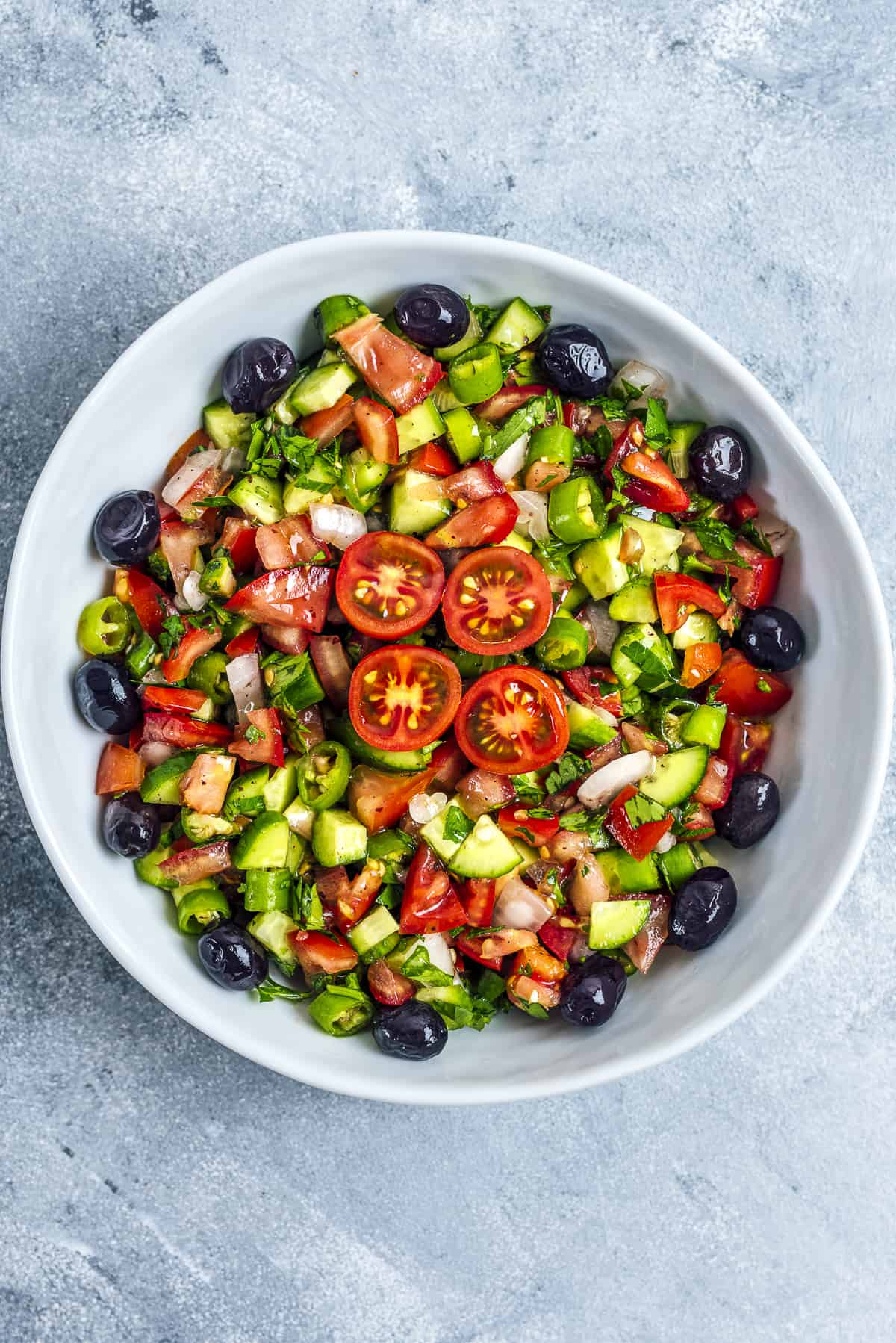
Here are some popular add-ins:
Red Peppers: Red bell peppers or Romano peppers for a little sweetness and more crispness.
Fresh Herbs: Dill, mint, or spring onions.
Black Olives: In Turkish villages, people often add black or green olives, especially when this salad is enjoyed as a lunch when working in the fields.
Feta Cheese (Turkish White Cheese): Crumbled feta cheese or Turkish white cheese (beyaz peynir) is great as a garnish on the top.
Serving Suggestions
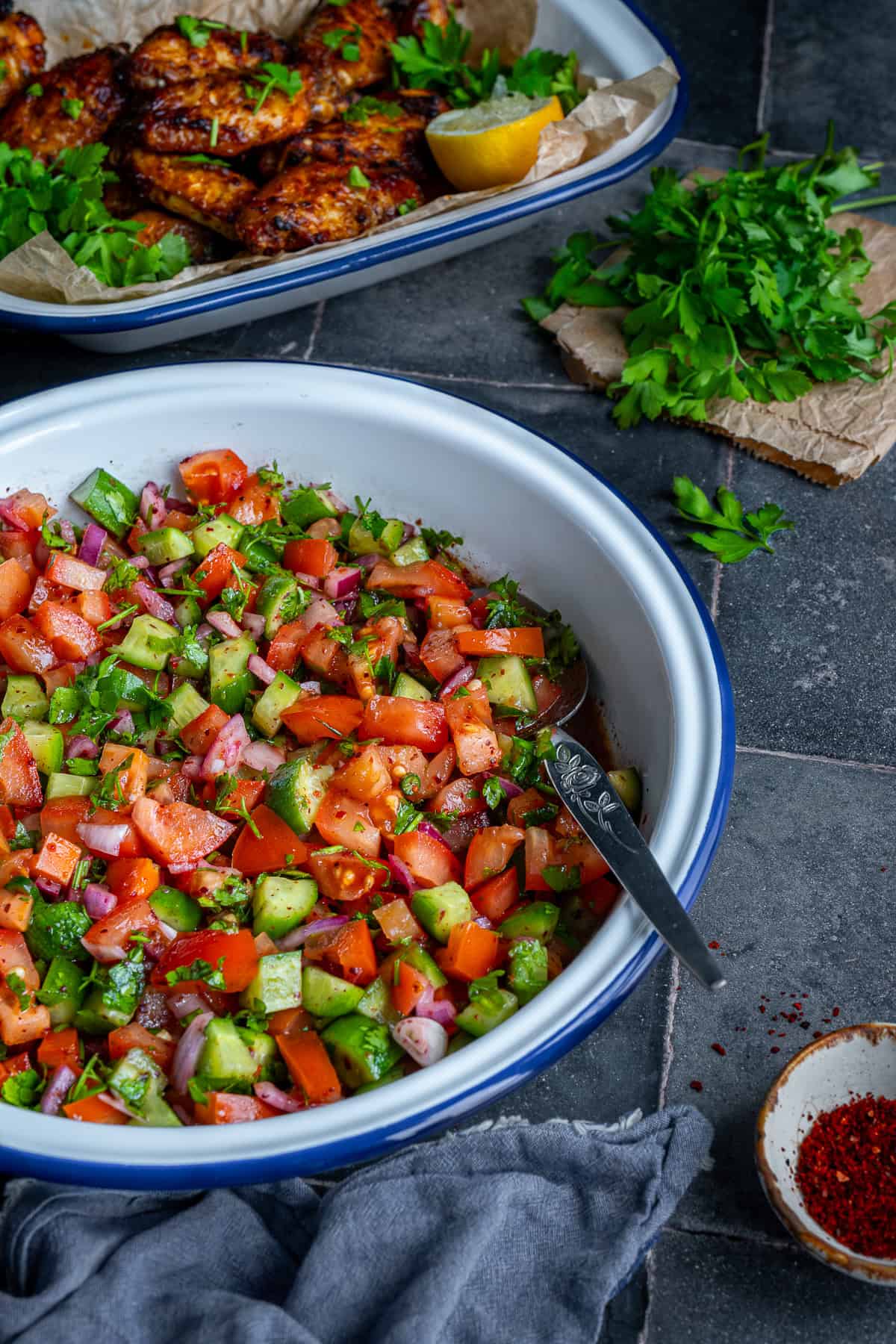
Çoban Salatası is the perfect side dish for so many meals. It pairs beautifully with Turkish meatballs (köfte) and all types of kebabs, like lamb shish kebab, Adana kebab, and Turkish chicken kebab.
It’s also amazing alongside:
- Turkish Chicken Wings
- Tavuklu Pilav (Rice with Chicken)
- Turkish Beef Stew
- Tavuk Sote (Chicken Sauté)
- Simple Roasted Chicken
- Lahmacun (Turkish flatbread with ground meat)
- Bulgur Pilavi
And don’t forget about pide bread, the soft and fluffy Ramazan pidesi—it’s perfect for soaking up the delicious juices from the salad!
Can I Make it Ahead of Time?
Yes, you can make Çoban Salata ahead of time, but for the freshest flavor and texture, it’s best to assemble it just before serving.
If you want to prepare in advance, chop the vegetables and store them in separate airtight containers in the fridge. You can also make the dressing and keep it in a jar.
When you’re ready to serve, simply toss the vegetables together, pour over the dressing, and mix well.
More Turkish Salads
- Roasted Onion Salad
- Piyaz Salad
- Patlican Salatasi (Eggplant Salad)
- Acili Ezme
- Olive Salad
- Turkish Bulgur Salad
Sign up for the FREE Give Recipe Newsletter to get the new recipes into your inbox!
And stay in touch with us on Facebook, Pinterest, YouTube and Instagram for all the latest updates.
📖 Recipe

Turkish Shepherd Salad (Coban Salata)
INGREDIENTS
Salad:
- 1 medium onion, diced
- 2 teaspoons sumac
- 4 medium tomatoes, diced
- 3 medium Persian cucumbers, diced
- 1 small chili pepper, finely chopped (optional)
- ¼ cup parsley, chopped
Dressing:
- 1 tablespoon lemon juice, juiced
- 2 tablespoons olive oil
- 1 tablespoon pomegranate molasses, optional
- ½ tablespoon vinegar, optional
- ½ teaspoon salt
- ½ teaspoon red pepper flakes, Turkish pul biber, optional
- ½ teaspoon sumac
INSTRUCTIONS
- Place the diced onions in a large bowl and sprinkle them with sumac. Massage the onions gently with your hands until they soften slightly and take on a beautiful pink color.
- To the same bowl, add the diced tomatoes, cucumbers, finely chopped chili pepper, and parsley.
- In a small bowl, whisk together the lemon juice, olive oil, pomegranate molasses, vinegar, salt, pul biber, and sumac until well combined.
- Pour the dressing over the chopped vegetables and toss everything together until evenly coated.
- Taste the salad and adjust the salt or spices to your liking.
- Serve immediately for the freshest flavor.
NOTES
- This salad can be made without peppers if you prefer.
- Vinegar, pomegranate molasses, and pul biber (red pepper flakes) are optional but highly recommended for extra flavor. If you’re unsure, start with small amounts and adjust to your taste.
- Çoban Salata is best enjoyed fresh, right after tossing the dressing with the vegetables.
- If you want to make it ahead, keep the vegetables and dressing separate until just before serving.
- Nutrition information is provided for guidance only.
NUTRITION
Nutrition information is automatically calculated, so should only be used as an approximation.
Jan says
Absolutely great
Zerrin & Yusuf says
Hi Jan,
Glad you liked it.
Ayse Lenard says
Love all your recipes, Shepard Salad is one of my favorites.
Zerrin & Yusuf says
Thank you so much for this lovely comment!
Irene says
Tried the salad for the first time today and it is wonderful. I love the dressing and the addition of sumac. So much flavor!
Zerrin & Yusuf says
So happy to hear that you loved it! Sumac really makes a big difference, doesn’t it?
Leslie K. says
This was so good! I used aleppo pepper flakes because that's what I had and the rest of a sweet onion. We loved it and are thinking of adding some white beans to the leftover for a complete meal.
Zerrin & Yusuf says
So happy to hear you loved it, Leslie! Aleppo pepper flakes sound like a perfect touch—they add such a gentle, delicious heat. Adding white beans to the leftovers is such a great idea! It would actually turn it into something quite similar to a Turkish white bean salad we call piyaz. Thanks so much for trying our recipe and sharing your twist! 😊
Kimberly Kay Pater says
Can you use something in place of pomegranate molasses if you can't find it?
Zerrin & Yusuf says
Hi Kimberley! In our opinion, tamarind paste is the closest in taste, so if you can find that, it would be a great alternative. That said, pomegranate molasses is totally optional in this salad. In Turkey, it's actually quite common to make it without any at all. So feel free to leave it out if needed. The salad will still be delicious!
Zerrin & Yusuf says
kkkk
Virginia OKeeffe says
What sort of onions do you use: brown, white or red?
Zerrin & Yusuf says
Hi Virginia,
You can use all sorts of onions. You can even add green onions if you like them.
Donna says
Served this salad along with lamb kabobs and your roasted onions. You are right, this was the first dish to disappear. I did add feta, but everything else was according to recipe. For such a simple salad, it was a smash hit!
Mg says
Made this for a party. It was more popular than any of the other dishes. Delicious. Thank you !
Zerrin & Yusuf says
So happy to hear this. It is a staple salad in Turkey. We pair almost any dish with this shepherd salad. Isn't it great when a simple salad like this becomes a hit at a party? Thanks for coming back and leaving this comment.
Cheers!
Mely Martinez says
I love this salad. Every time I make it, I have to come back to your website to make sure I'm not missing any ingredient. I also like to add Feta Cheese. And instead of Sumac, I add lime juice.
Thank you for such a perfect salad!
Yusuf says
So happy to hear that Mely! This is the go-to salad for people in Turkey. We pair with any meal. Adding feta makes it even tastier, right? Substituting lime juice for sumac is brilliant! Thank you so much for sharing your twist on the recipe!
Louise says
Hi there.. I love Çoban Salatası.. My favourite salad. Can I ask you though what measurements do you use.. Is it US or metric please. Many thanks.. I'm enjoying looking at your recipes.
Çok teşekkür ederim
Vivian Semeraro says
May I know what is pomegranate molasses in Turkish is called because they do not speak English over here 🙈. Many thanks!!
Yusuf says
Hi Vivian! It is called nar ekşisi in Turkish. Hope this helps.