

Nothing beats the smell of freshly baked Turkish Poğaça! These soft, fluffy pastries are perfect for breakfast, snacks, or tea time. Plus, they’re so easy to make! Follow our go-to recipe for bakery-style pogacas you’ll be proud of.
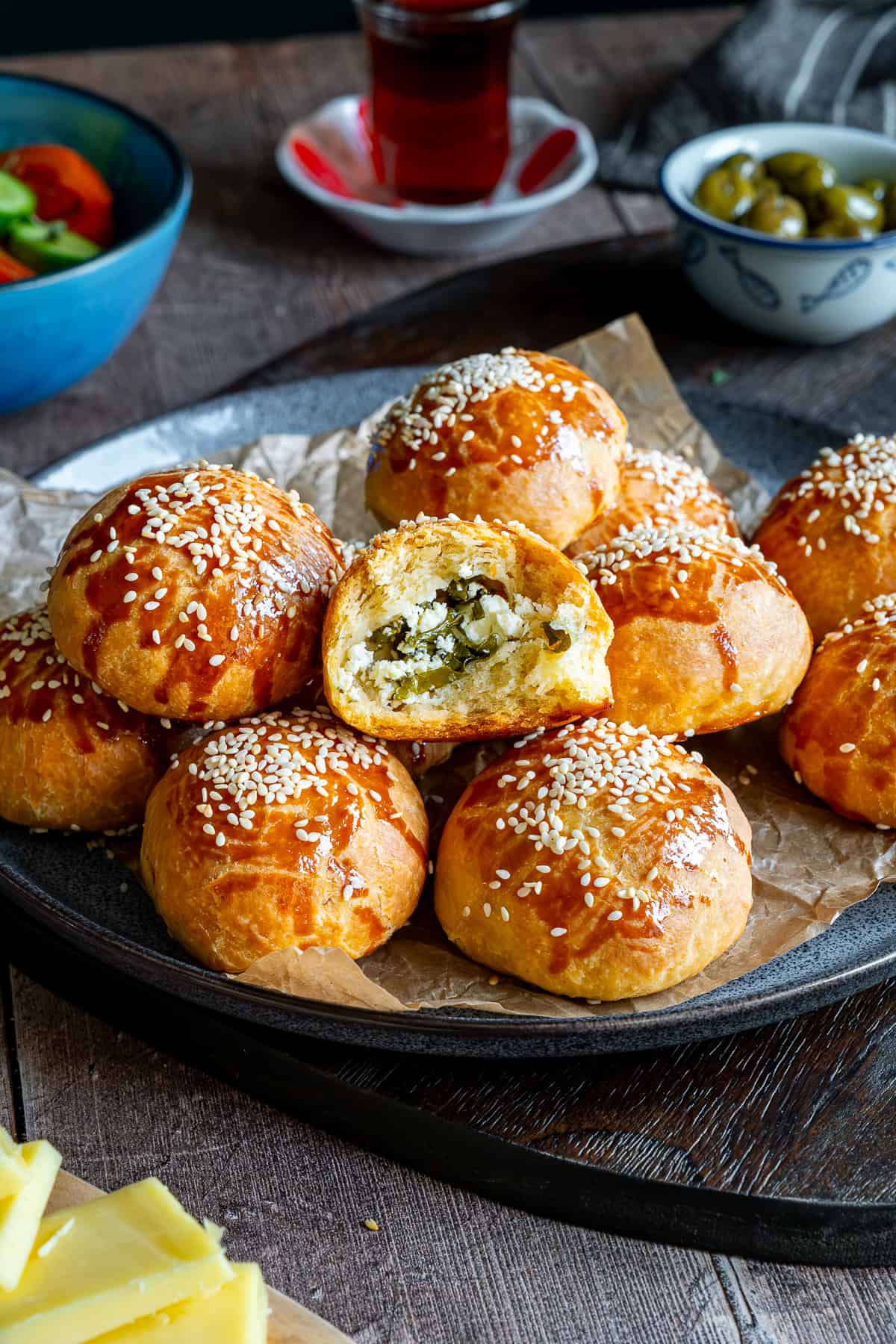
Whenever we have an early morning trip and no time for breakfast, we always bake a batch the night before. They are a lifesaver in our bags, keeping us full and happy on the go!
We wanted to share this yeasted pogaca recipe so that everyone can experience just how soft and light homemade pogaca can be.
In this post, you'll find all our tips and tricks to make them perfectly every time.
What is Turkish Poğaça?
Pogaca is a classic Turkish pastry similar to bread rolls found in almost every bakery and sold by street vendors as a quick breakfast option. Alongside simit (Turkish bagel), it’s one of the most popular savory baked goods in Turkish cuisine.
These small, round or oval buns are made from a soft dough and filled with ingredients like cheese or potatoes. They’re often topped with sesame or nigella seeds.
Pogaca recipe can be made in two ways: with yeast for a soft, fluffy texture or with baking powder for a crumbly, scone-like feel. We are sharing the yeasted version today.
Don't have time to wait for the dough to rise? Give our quick Turkish pogaca with dill (dereotlu pogaca) a try instead.
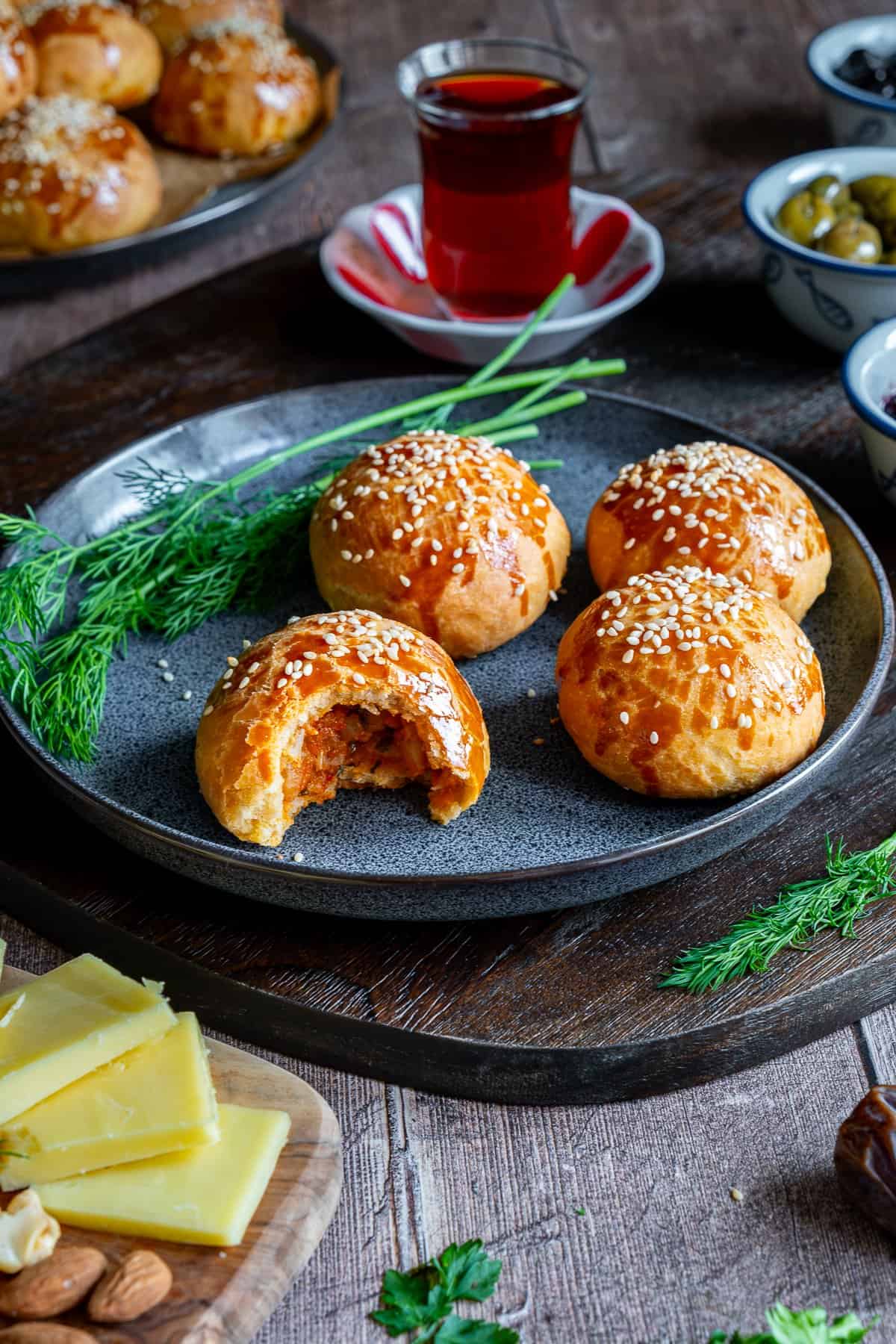
In Turkey, grabbing a pogaca or simit with a cup of Turkish tea is a common morning ritual. They’re also a staple at afternoon tea gatherings, perfect for Turkish breakfast spreads, and a favorite lunchbox snack for kids.
About the Ingredients
The full list of ingredients and measurements is in the recipe card below.
We’re sharing two filling options here—cheese and potato—because we love our pogacas with cheese, but our son always prefers them with potatoes. You can choose one when making pogaca or do it like us and make both!
Here are some notes about the ingredients to help you get the best results.
Dough:
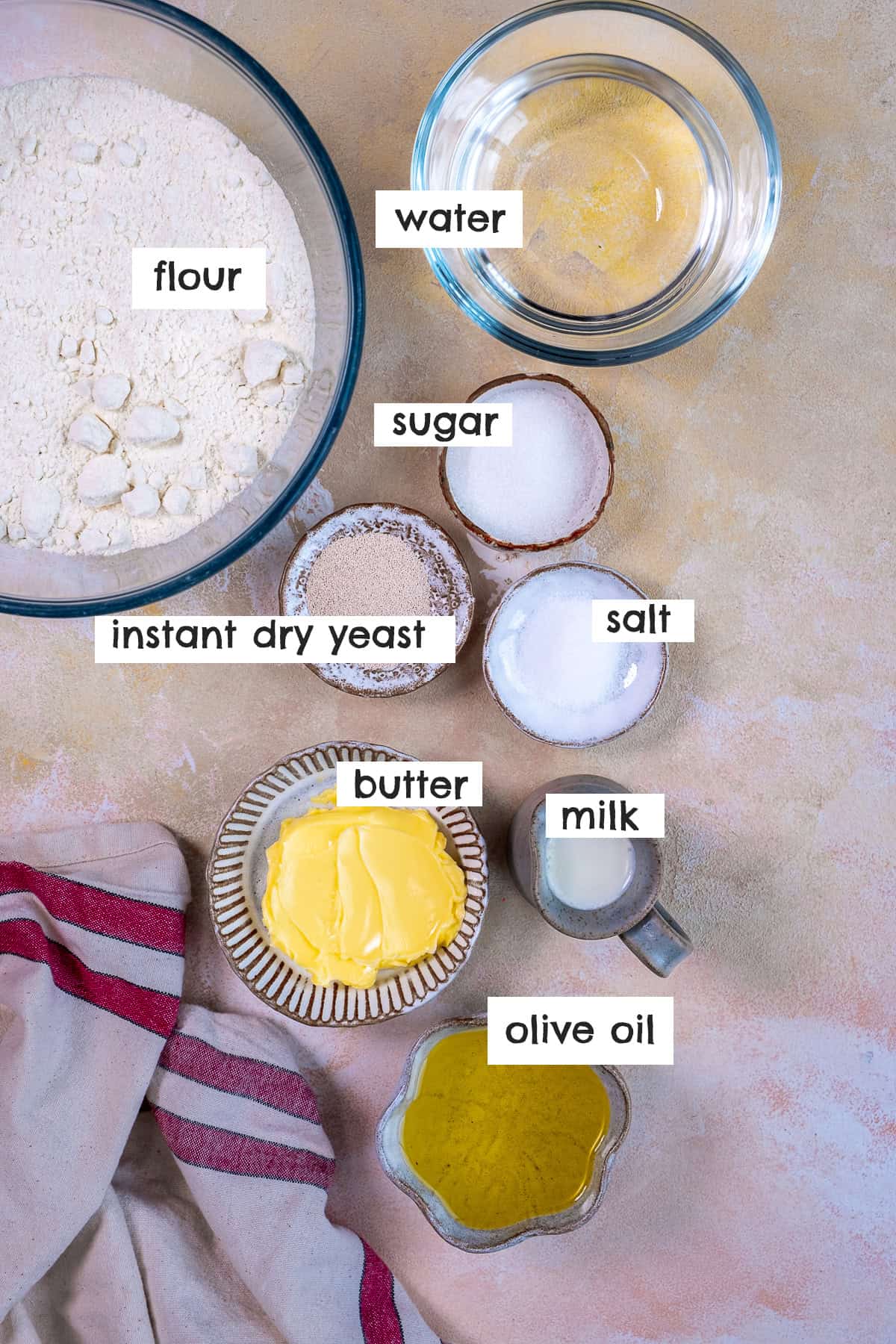
- Flour: Use all-purpose flour.
- Instant Dry Yeast: Also known as fast-action dried yeast, it can be mixed directly with flour without needing to be dissolved in water first. If using active dry yeast instead, dissolve it in lukewarm water with a teaspoon of sugar and let it sit for 5-10 minutes until foamy before adding it to the wet mixture.
- Sugar: It helps activate the yeast.
- Milk: Use full-fat milk. It should be lukewarm to help activate the yeast.
- Butter: Adds richness and softness to the dough.
- Water: Use lukewarm water.
- Olive Oil: You can also use sunflower oil for a milder flavor.
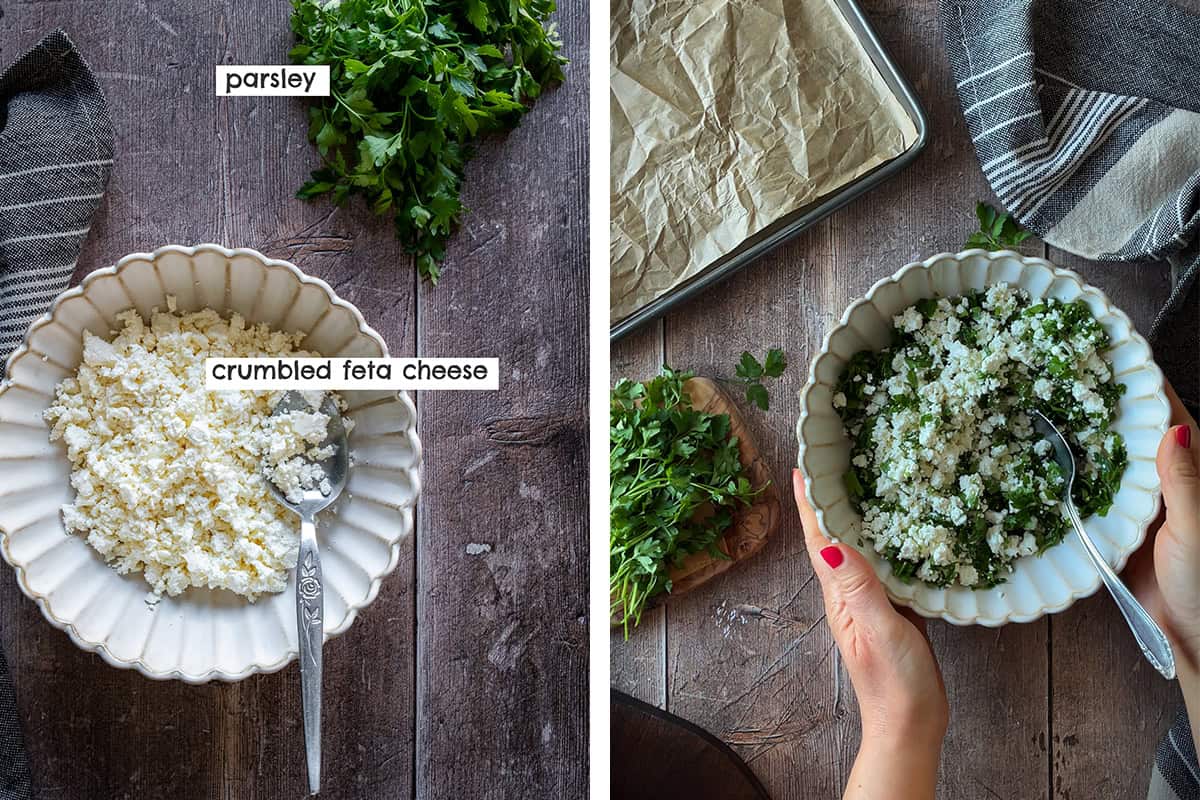
Cheese Filling:
- Feta Cheese or Turkish White Cheese (Beyaz Peynir): You can also mix half feta and half cheddar or Turkish kaşar cheese.
- Fresh Parsley: You can substitute it with fresh dill.
Potato Filling:
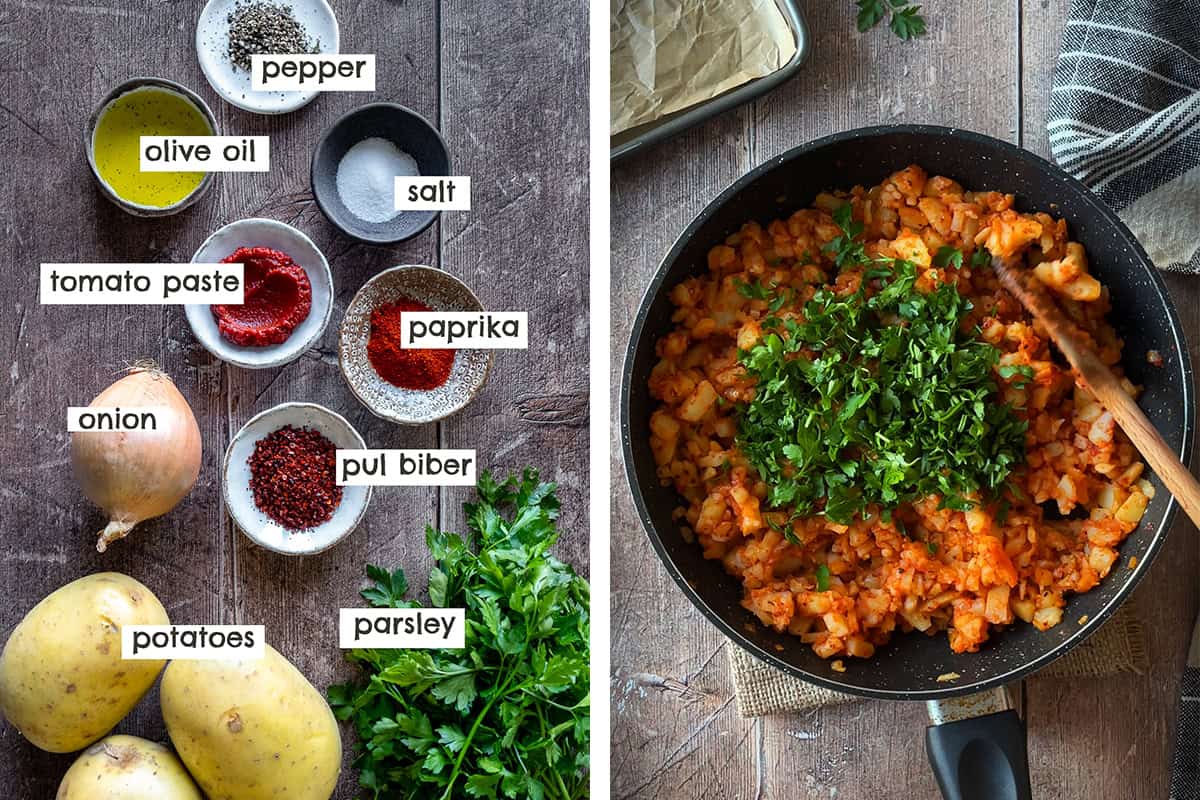
- Potatoes: Boiled and finely chopped or mashed.
- Onion: Finely chopped.
- Tomato Paste: Adds a slight tanginess.
- Spices: Paprika, pul biber (red pepper flakes), salt, and pepper for seasoning.
- Fresh Parsley: You can also use fresh dill as a substitute.
Topping:
- Egg Yolk – Gives Turkish poğaça its golden, glossy finish.
- Sesame Seeds, Nigella Seeds or Poppy Seeds: Traditional toppings that add extra flavor and texture, but they are optional.
How to Make Pogaca Dough
Full instructions are in the recipe card below.
Making Turkish poğaça dough is really easy when you follow this recipe, and it will quickly become one of your go-to savory pastries to make.
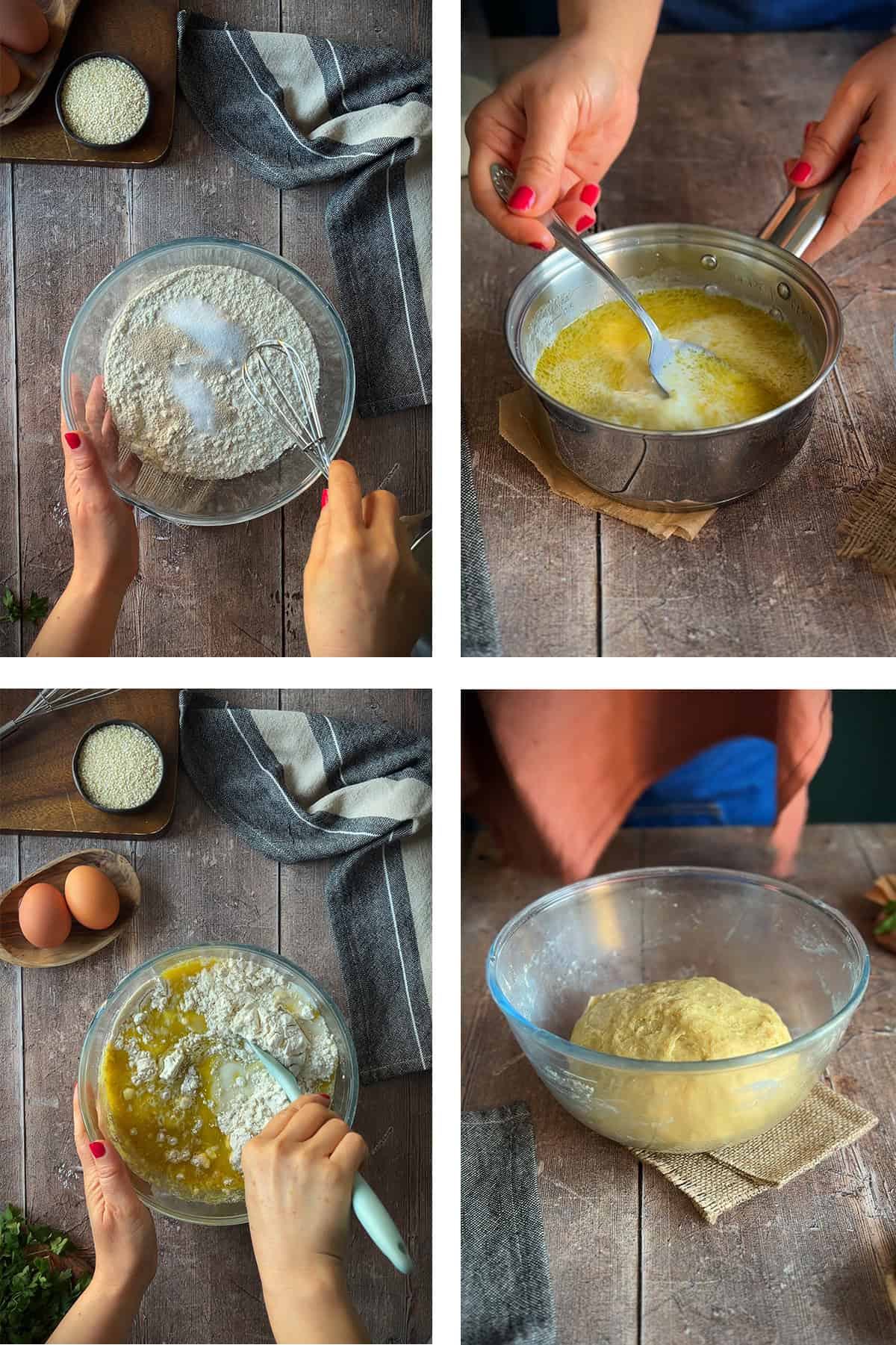
Mix lukewarm milk and butter in a bowl until the butter softens and melts. Add lukewarm water and olive oil, then mix well.
In a large mixing bowl, whisk together flour, yeast, sugar, and salt. Pour the wet mixture into the dry ingredients and mix with a spatula or your hand.
The dough will be sticky, so you might want to wear gloves if you are mixing it with your hand. Cover with a kitchen towel and let it rest for about 1 hour or until it doubles in size.
How to Make Cheese Filling
In a small bowl, mix crumbled feta cheese or Turkish white cheese with chopped parsley. You can also use a mix of half feta and half cheddar or kaşar cheese for a richer taste.
How to Make Potato Filling
Boil the potatoes until soft, then peel and finely chop them. Sauté finely chopped onions in olive oil, then add tomato paste, chopped boiled potatoes and spices (paprika, pul biber, salt, and pepper). Stir in chopped fresh parsley and let it cool completely.
How to Shape and Bake Pogaca
Deflate the dough by folding it a few times. Take a piece of dough, roll it into a ball, and flatten it slightly in your hand.
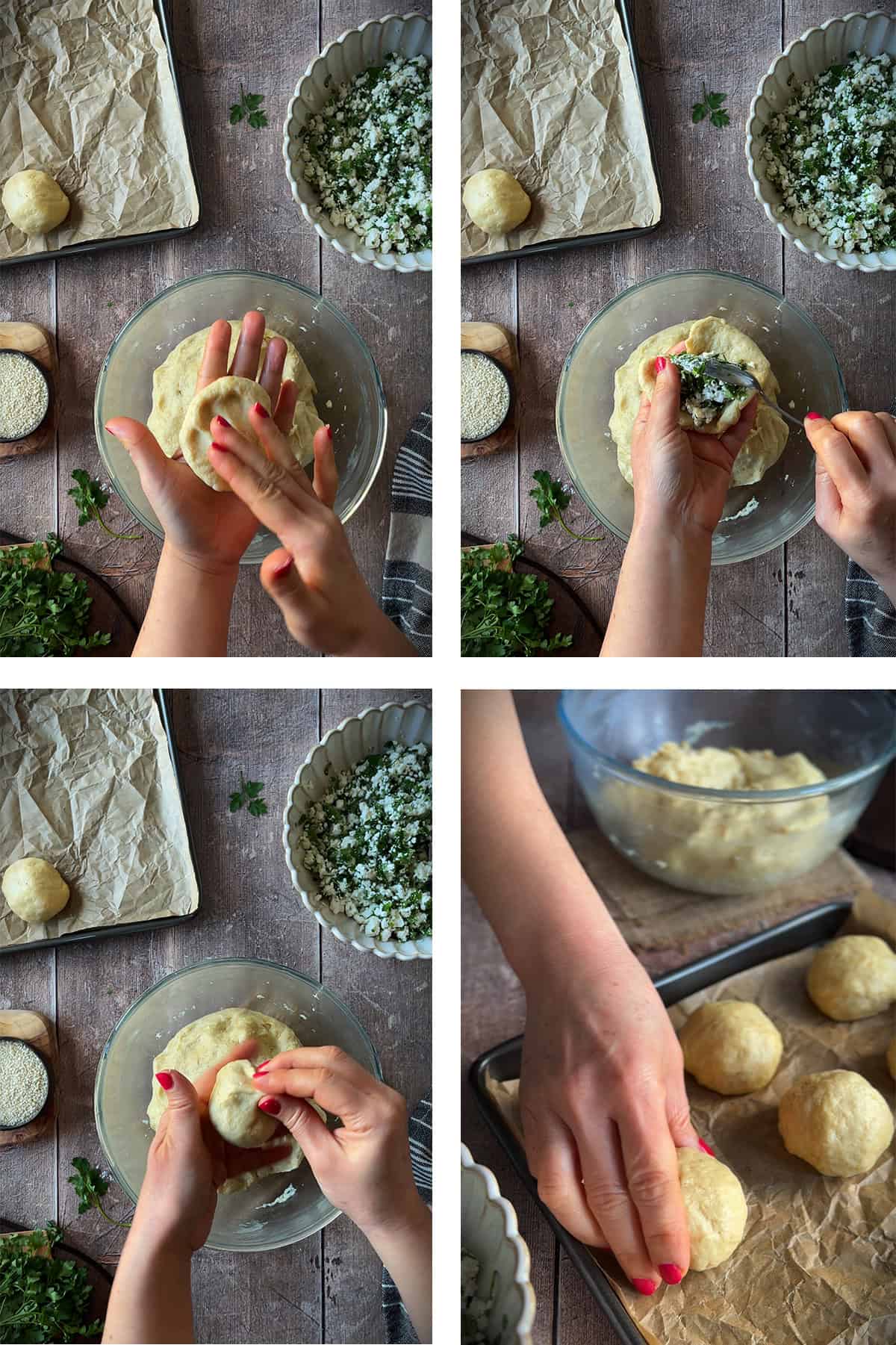
Place about 1.5 tablespoons of your preferred filling in the center. Fold the edges together like a bundle and seal tightly. Place each pogaca seam-side down on a parchment-lined baking sheet.
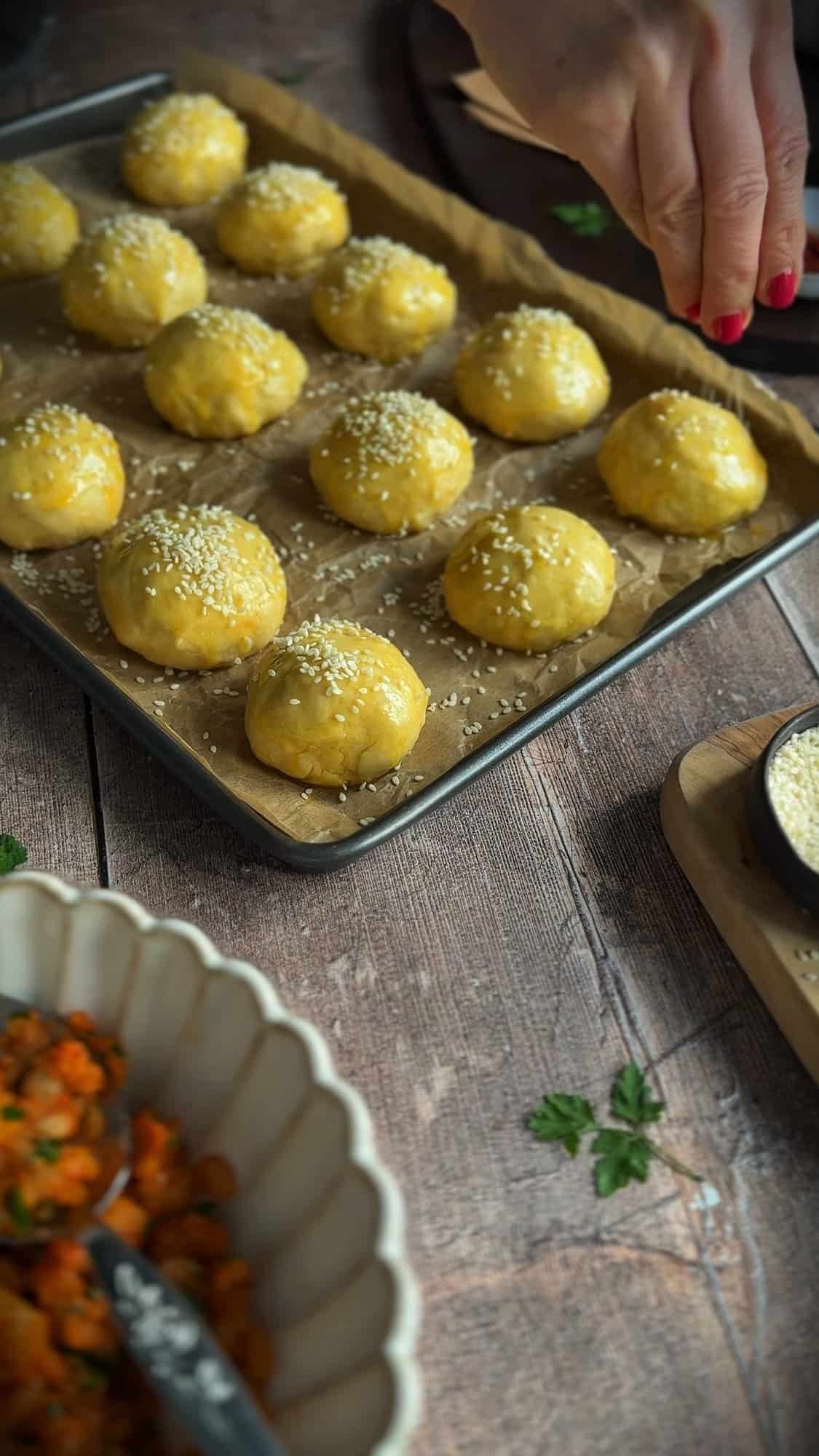
Cover them with a clean kitchen towel and let them rest for 20 minutes for second rising. Brush with egg yolk and sprinkle sesame or nigella seeds on top. Bake until golden brown.
Our Tips for Fluffy Pogaca
Use lukewarm milk and water. This is essential for activating the yeast properly and ensuring a good rise.
Expect a sticky dough. Don’t add extra flour thinking it’s too sticky. A soft, slightly sticky dough results in fluffier pogacas.
Let the dough rest in a warm place. If it’s summer, room temperature will be enough. However, if you’re making pogaca in winter and your kitchen is cold, preheat the oven to 50°C (120°F), turn it off, and let the dough rest inside. This creates the perfect warm environment for proofing.
To prevent sticking, lightly oil your fingertips or wear gloves, which will make shaping much easier.
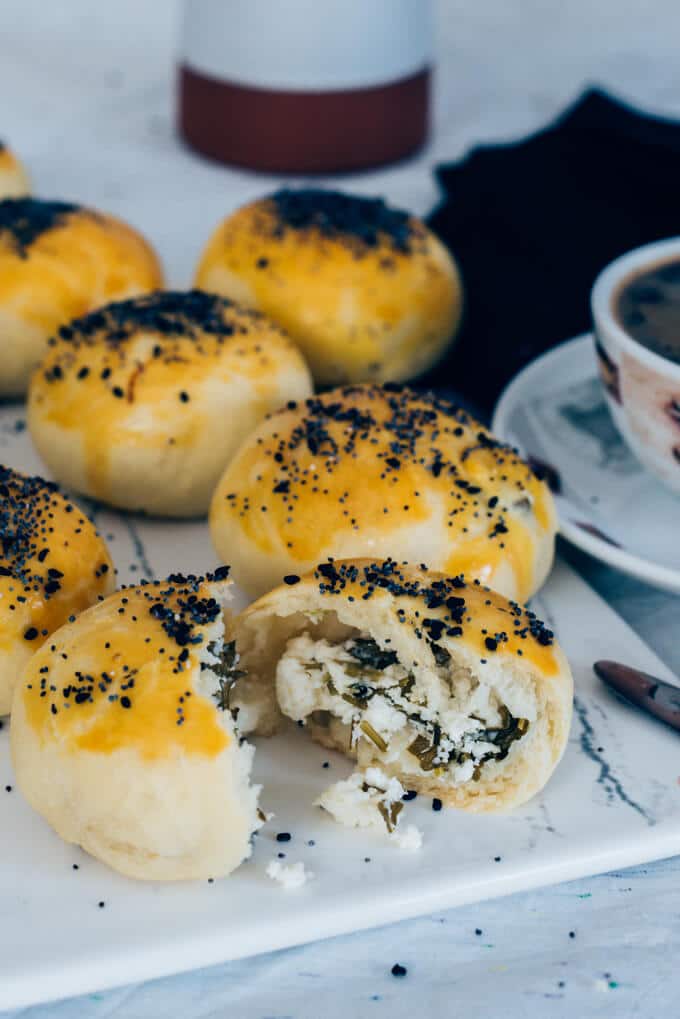
Don’t skip the second rise. After shaping the pogacas and placing them on a baking sheet, cover them with a kitchen towel and let them rest for 20 minutes. This final rise is key to achieving soft, fluffy poğaça.
Cover the baked pogaca in the baking sheet with a kitchen towel immediately after removing them from the oven. This will help them to become even softer.
Serving Suggestions
Pogaca can be enjoyed warm or at room temperature. They are perfect for a quick grab-and-go breakfast or as part of a Turkish breakfast spread, especially on weekends.
They are also a staple at afternoon tea gatherings, served alongside tea, black and green olives, patates salatasi (potato salad) or kisir (bulgur salad), cheese plate and nuts. Beyond breakfast and tea time, pogacas make a great savory snack, perfect for satisfying hunger after work or school.
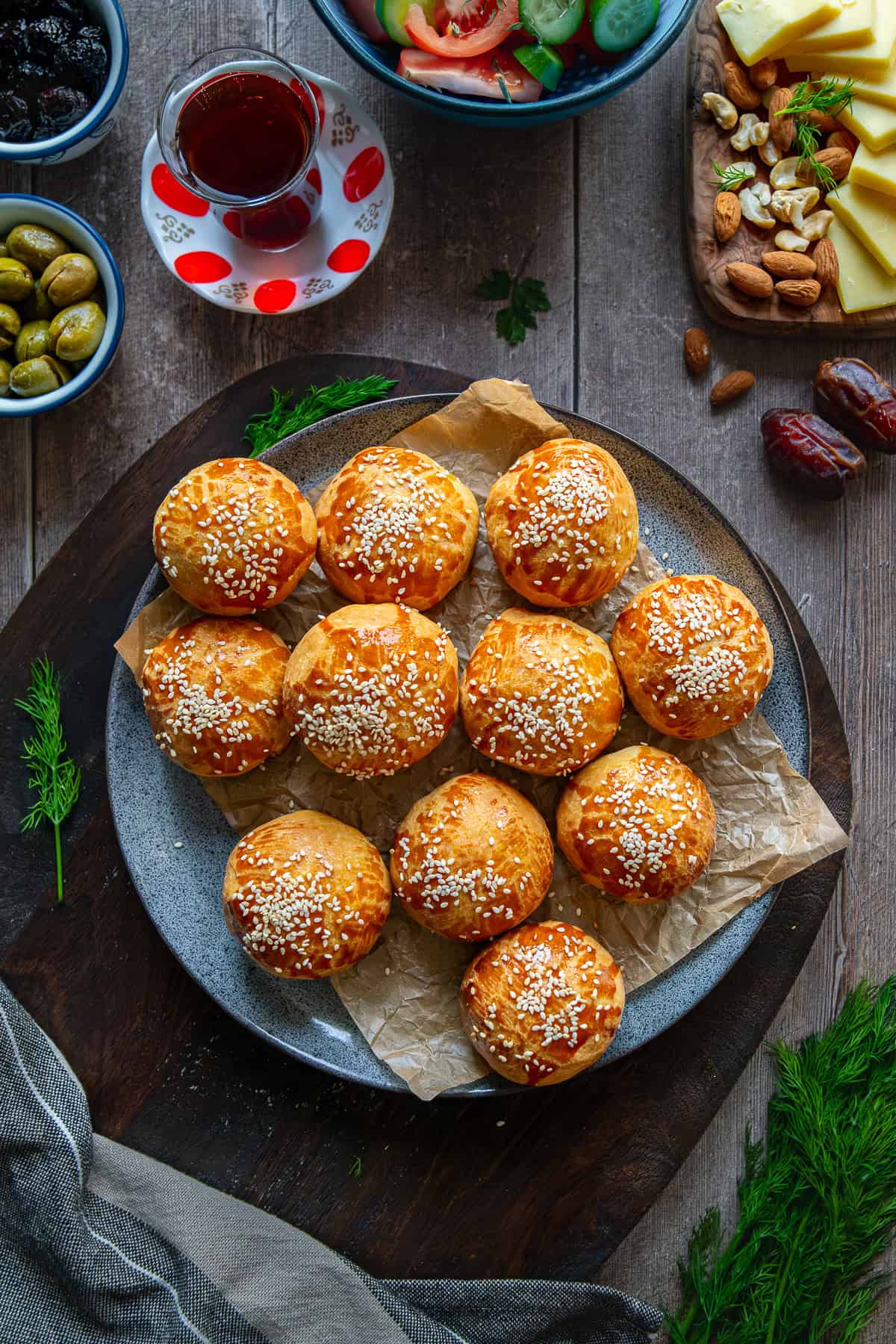
When it comes to pairing drinks, Turkish tea and ayran (a traditional yogurt drink) are the best choices. This is how we Turks enjoy pogaca!
Storing & Reheating
To keep pogaca fresh, store them in an airtight container at room temperature for up to two days.
For longer storage, place them in a sealed bag or container in the refrigerator for up to five days.
For freezing, make sure to store them on the same day they are baked for the best texture. Arrange the fully cooled pogacas in a single layer on a baking sheet and freeze until solid. Then transfer them to a freezer-safe bag or container and store for up to three months.
To reheat, warm them in a preheated oven at 150°C (300°F) for 5-10 minutes. If using frozen pogacas, let them sit at room temperature for about 15 minutes before reheating. To reheat directly from frozen, bake for 10-12 minutes in a preheated oven at 150°C (300°F) until warmed through.
Can I Prepare the Pogaca Dough in Advance?
Yes, you can prepare the pogaca dough in advance!
After preparing the dough, cover it tightly and store it in the refrigerator for up to 24 hours. When you're ready to bake, let the dough sit at room temperature for about 40 minutes before shaping the pogacas to allow it to warm up and rise properly.
Alternatively, you can shape the pogacas first, arrange them on a baking sheet, cover, and refrigerate overnight. The next day, let them rest at room temperature for 40 minutes, brush with egg yolk and then bake as described in the recipe below.
More Savory Turkish Pastries
Sign up for the FREE Give Recipe Newsletter to get the new recipes into your inbox!
And stay in touch with us on Facebook, Pinterest, YouTube and Instagram for all the latest updates.
📖 Recipe

Turkish Pogaca with Cheese & Potato Fillings
INGREDIENTS
Dough:
- 200 ml milk lukewarm
- 50 g butter
- 125 ml water lukewarm
- 60 ml olive oil
- 480 g all-purpose flour
- 7 g instant dry yeast
- 1 tablespoon sugar
- 1½ teaspoons salt
Cheese Filling:
- 200 g feta cheese crumbled
- ½ cup parsley chopped
Potato Filling:
- 2 medium potatoes
- 1 tablespoon olive oil
- 1 small onion finely chopped
- 1 tablespoon tomato paste
- 1 teaspoon salt
- 1 teaspoon paprika
- 1 teaspoon red pepper flakes aka Turkish pul biber
- ¼ teaspoon black pepper
- ¼ cup parsley chopped
Topping
- 1 medium egg yolk beaten
- 2 tablespoons sesame seeds or nigella seeds
INSTRUCTIONS
Prepare the Dough
- Mix lukewarm milk and butter in a bowl until the butter melts.
- Add lukewarm water and olive oil, then mix well.
- In a large mixing bowl, whisk together flour, yeast, sugar, and salt.
- Pour the wet mixture into the dry ingredients and mix with a spatula or your hand until combined. The dough will be sticky.
- Cover and let it rest for about 1 hour or until it doubles in size. Place it in the warmest room in your house. If the room is not warm enough, preheat your oven to 50°C (120°F), turn it off, and place the bowl with the dough inside. This will create the perfect environment for the dough to rise.
- Meanwhile prepare the filling of your preference.
Prepare the Cheese Filling
- In a small bowl, mix crumbled feta or Turkish white cheese with chopped parsley.
Prepare the Potato Filling
- Boil the potatoes until soft, then peel and chop them finely.
- Heat olive oil in a pan. Sauté finely chopped onions in it, then add tomato paste and stir.
- Now add the finely chopped boiled potatoes. Stir well.
- Sprinkle paprika, pul biber, pepper and salt. Stir well.
- Add in chopped fresh parsley and let it cool.
Shape and Bake the Pogaca
- Line a baking sheet with parchment paper.
- Gently deflate the dough by folding it a few times. Take a portion of dough, roll it into a ball, and flatten it slightly in your palm. To prevent sticking, lightly oil your fingertips or wear gloves when doing this.
- Place about 1.5 tablespoons of your preferred filling in the center. Bring the edges together, pinching them securely to seal.
- Repeat the process with the remaining dough, shaping each pogaca the same way. Arrange them seam-side down on the prepared baking sheet, leaving some space between each. Cover them with a clean kitchen towel and let them rest for 20 minutes for the second rise.
- Meanwhile preheat the oven to 180°C (350°F).
- Once the second rise is complete, brush the tops with beaten egg yolk and sprinkle with sesame or nigella seeds.
- Bake in the preheated oven for 20-25 minutes or until golden brown. After 20 minutes, check the bottoms—if they are slightly golden, they are done. If still pale, bake for an additional 3-5 minutes.
- Cover the pogacas with a kitchen towel immediately after removing them from the oven and let them rest for 15 minutes. This will help them to become even softer. Then transfer them onto a paper towel lined plate.
NOTES
- Choose either the cheese filling or potato filling when making poğaça. If you decide to make both, use half of the measurements for each filling to avoid excess.
- If you have leftover fillings, don’t worry! The potato filling can be served as a side dish, while the cheese filling is great on salads or in omelets.
- This recipe makes 19 pogacas. If your baking sheet is not large enough, bake them in two batches to avoid overcrowding. However, if they fit without touching, you can bake them all at once.
- The nutrition information provided is for the cheese filling only and is meant for guidance purposes.
NUTRITION
Nutrition information is automatically calculated, so should only be used as an approximation.
Maya says
Hey Zerrin, your pictures looked hard to resist so I tried the pogaca recipe out today. They turned out super yummy (although a little hard on the outside). I used soda instead of mineral water and got a little adventurous with the filling (using my husband's favourite, hazelnut chocolate for one batch). Definitely trying out more of your bread recipes. Keep them coming! 🙂
Lydia Greve says
I made these today and they were delicious! I have been craving poğaça for months-- thanks for the great and easy recipe!
Debbie Ashmore says
Mmm. My Aunt used to make us these after school when I was a kid. Yours are very close to what she made. Thanks for the recipe! PS totally agree you need the captcha code.
graphic babe brisbane says
Yum! I love these.
Debs @ Acquiredish says
I'm very intrigued by these tasty looking balls and will be trying them very soon, thanks for sharing and I'll pop back with my comments once I've tried trhem, Debs.
Hope you don't mind a little criticism but having to enter a captcha code is damned annoying. How you achieve so many comments with this enabled amazes me!!!!!!!
Zerrin says
Debs, would love to hear the result when you try. As for the captcha code, it might be annoying, but it's absolutely necessary. Otherwise I have to deal with millions of spam comments. Sorry for making it difficult to write a comment, but isn't it better for me to spend time on writing new post or replying your comments rather than checking and deleting spams?
manju says
These do look delish! We love turkish food, and one of my resolutions this year is to bake bread more often so this is going on my baking list! Thanks.
Zerrin says
These pogacas make perfect snack too! You will love them!
Jeannie says
Those pastries do look very fluffy and delicious! I wonder if you knead them to develop glutten like bread? or just mix till combine and leave to rise.
Zerrin says
No, you don't need to knead it. Just combine them well.You will love it!
Grass in Brisbane says
These are awesome, they are in the oven right now and I have to say I am a bit excited because they look just like the pic.
Mateja says
My family just love this kind of food. Thank you for sharing. Will try to bake some as soon as possible ^_^
GreenGirl says
Thanks so much for the recipe, I made them the other day, Maybe you stop by blog to see how they turned out.
once again, many thanks
Sandy the Podiatrist (Brisbane) says
Bugga! (as we say in the Antipodes) I have drooled on my keyboard...again. Your site is always inspirational and I have made things from her about 6 or 8 times. Today I had to write. made these yesterday. People over last night. They were fantastic. Just seeing them again has made my saliva glands spasm. Thank you so much.
Cuisine etudiant says
Thanks, I haven't seen a recipe like this before... French students will love it, I'll share it on our Facebook page 😉
Zerrin says
Ora- I haven't waited the dough that long, but if you keep it in refrigerator after the dough rises, I think it's ok. There will be no problem. You can start to make pogacas then.
Ora says
Hi, Can these be made 5 hrs in advance.
Maria says
Hey there again. I got my first Foodbuzz publish with your Pogaca recipe, I am so excited. Thanks again!