
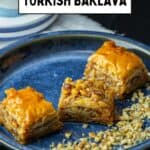
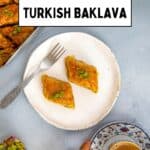
If you’ve ever wanted to try a Turkish Baklava Recipe at home, this one is a great place to start. It’s made with layers of thin, buttery phyllo, a walnut filling and a simple syrup poured over the top. It looks impressive, but it’s actually easier than you think.
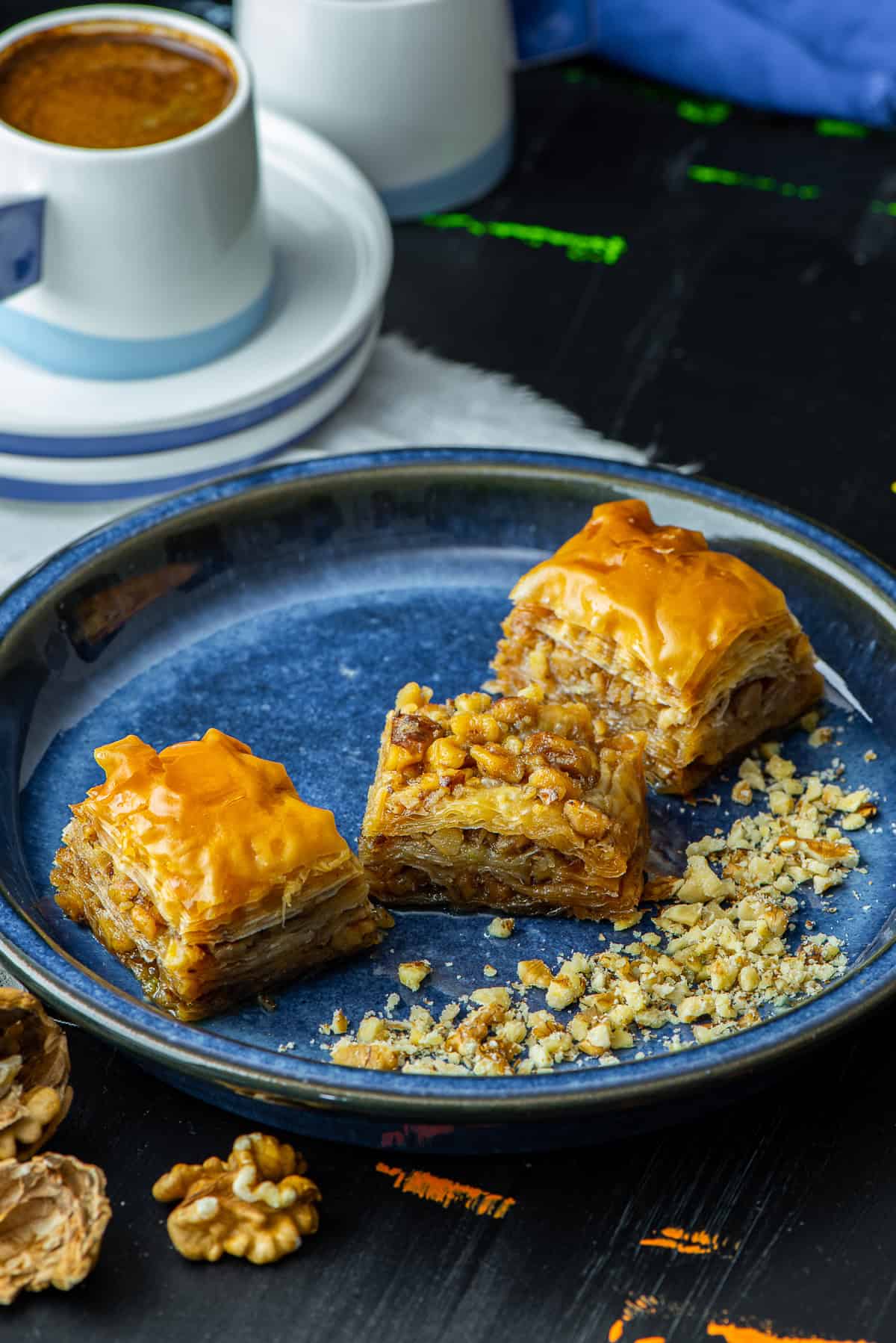
Syrup-soaked desserts are a big part of Turkish cuisine. Baklava might be the most famous one, but there’s so much more to try.
Think of Turkish desserts like kadayif, künefe, and tulumba. All just as irresistible!
If you love Turkish baklava but always thought it was too tricky to make at home, you’re not alone.
As a Turkish couple, we love sharing recipes from our cuisine, and this Turkish baklava recipe is one we make again and again at home.
What is Turkish Baklava?
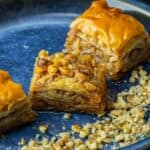
Turkish baklava is a classic dessert made with layers of thin, flaky phyllo pastry, filled with nuts like walnuts or pistachios, and baked until golden and crisp.
Once baked, it is soaked in a simple syrup made with sugar, water and a little lemon juice, which gives it that signature sweetness and shine.
While baklava is strongly associated with Turkey, you’ll find different variations across many countries. Some use different nuts or spices, while others change the syrup with honey or citrus.
If you enjoy working with phyllo dough, you might also like our other filo pastry recipes!
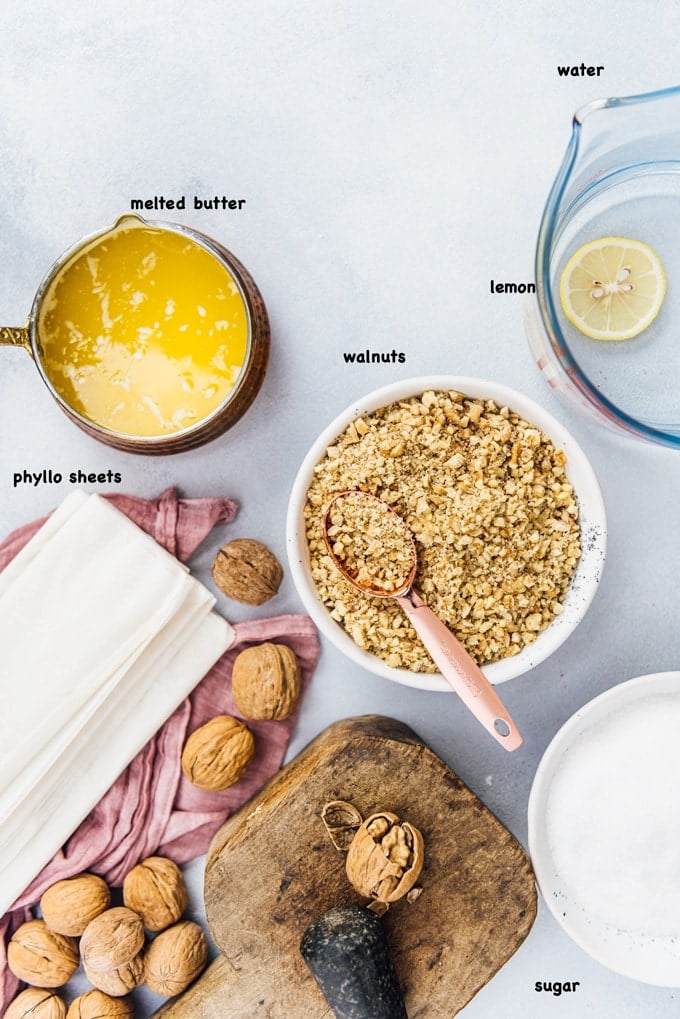
Ingredients for Turkish Baklava
These are the basic ingredients used in a classic Turkish baklava recipe.
Phyllo pastry (filo dough): This is the base of baklava. It’s a very thin pastry that becomes flaky and crisp when baked. You can find it in the freezer section of most grocery stores.
Butter: Melted butter is brushed between the layers to help them turn golden and crispy.
Nuts: Turkish baklava is usually made with walnuts or pistachios. The nuts are finely chopped and layered between the phyllo sheets.
Sugar syrup: A simple syrup made with sugar, water and a little lemon juice. It is poured over the baked baklava and gives it that classic sweet and glossy finish.
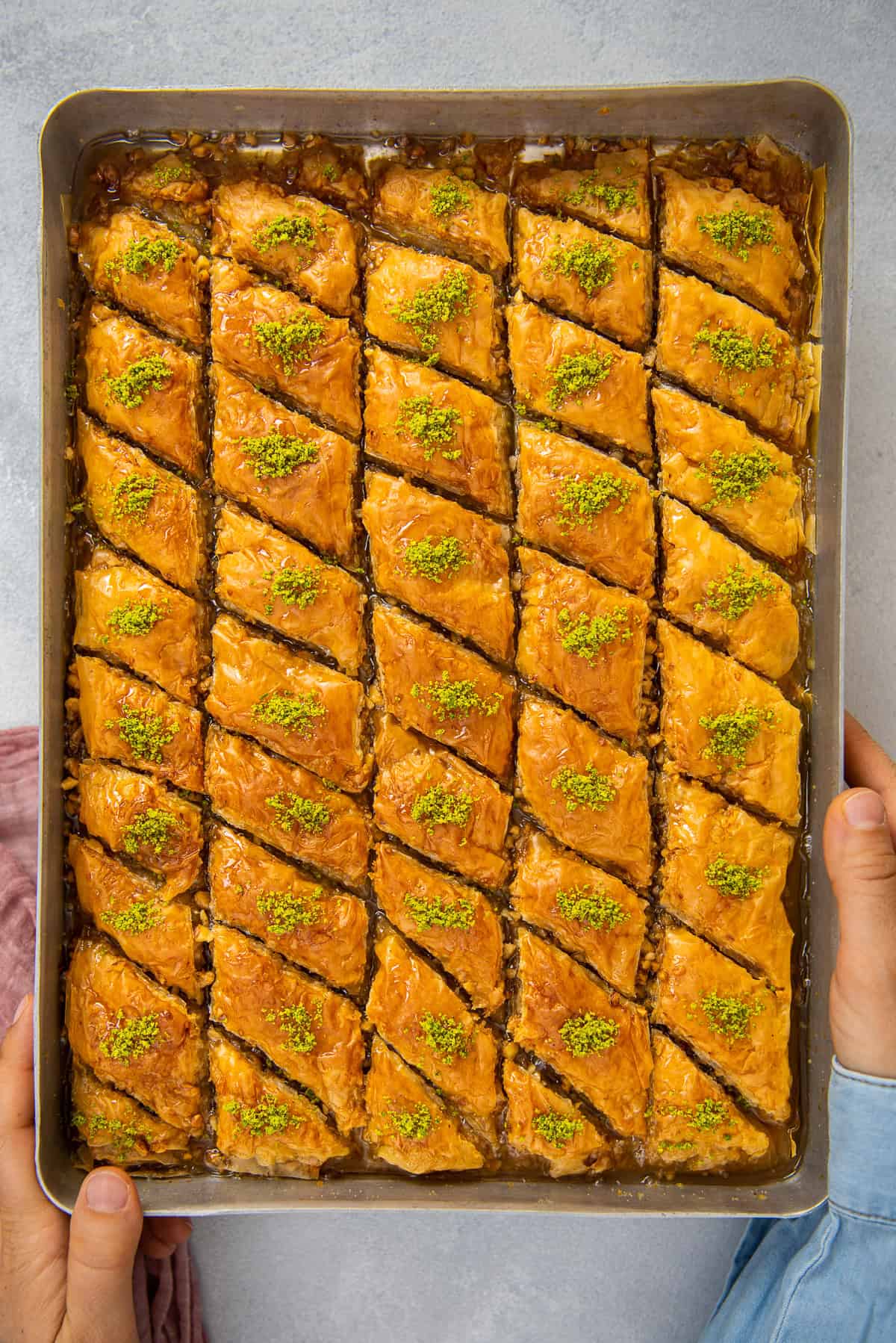
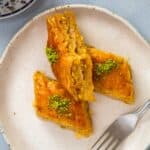
Ground pistachios: Used as a topping for extra flavor and a nice finish but this is optional.
You can find the full list of ingredients and their exact measurements in the recipe card below.
A Quick Note on Nuts and Syrup
In Turkey, the type of nuts used in baklava can change depending on the region. Pistachios are very popular, especially in the southeast, while walnuts are more common in many homes because they are more affordable.
In this recipe, we use walnuts for the filling and ground pistachios on top because we love the combination of both.
The syrup for Turkish baklava is usually made with just sugar, water and lemon juice. It doesn’t include extra flavorings, but if you like, you can add a little rosewater or orange blossom water.
How to Make Turkish Baklava
Making Turkish baklava at home is much easier when you use store-bought phyllo pastry. Here are the basic steps:
Make the syrup: Combine water, sugar and a slice of lemon in a saucepan. Heat until the sugar dissolves, stirring occasionally. Bring it to a boil, then reduce the heat and simmer for about 15 minutes. Let it cool completely.
Prepare the phyllo dough: Trim the phyllo sheets to fit your baking pan. Then cover them with a damp towel to keep them from drying out.
Assemble the baklava: Place a few phyllo sheets in the pan, brushing each layer with melted butter. Sprinkle a layer of finely chopped walnuts. Continue layering phyllo and walnuts in the same way, finishing with several buttered phyllo sheets on top.
Cut and bake: Using a sharp knife, cut the baklava into diamonds or squares. Bake until golden brown and crisp.
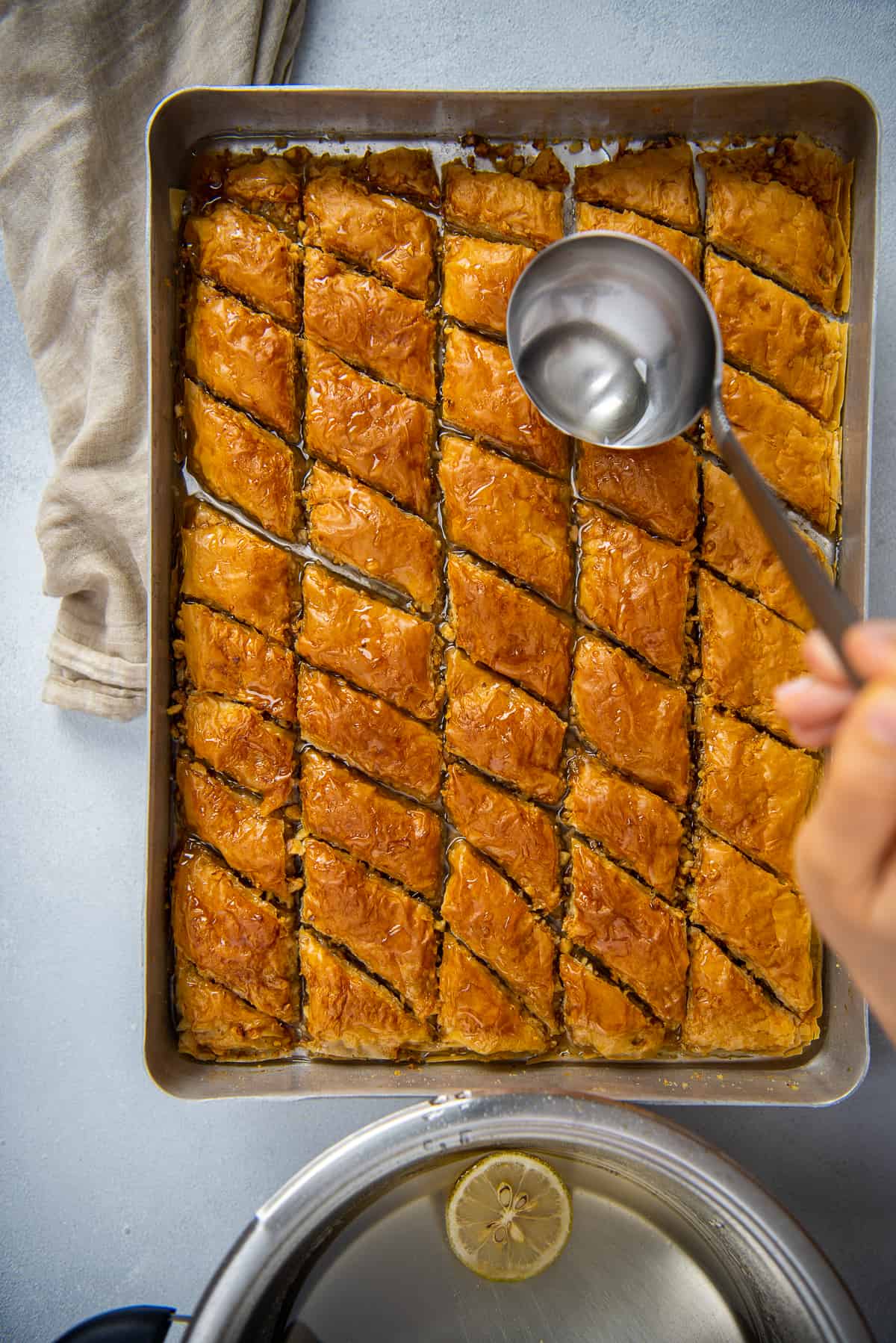
Add the syrup: Pour the cooled syrup over the hot baklava. Let it rest for at least 4–5 hours so it can absorb the syrup properly.
You can find the full instructions with step-by-step details in the recipe card below.
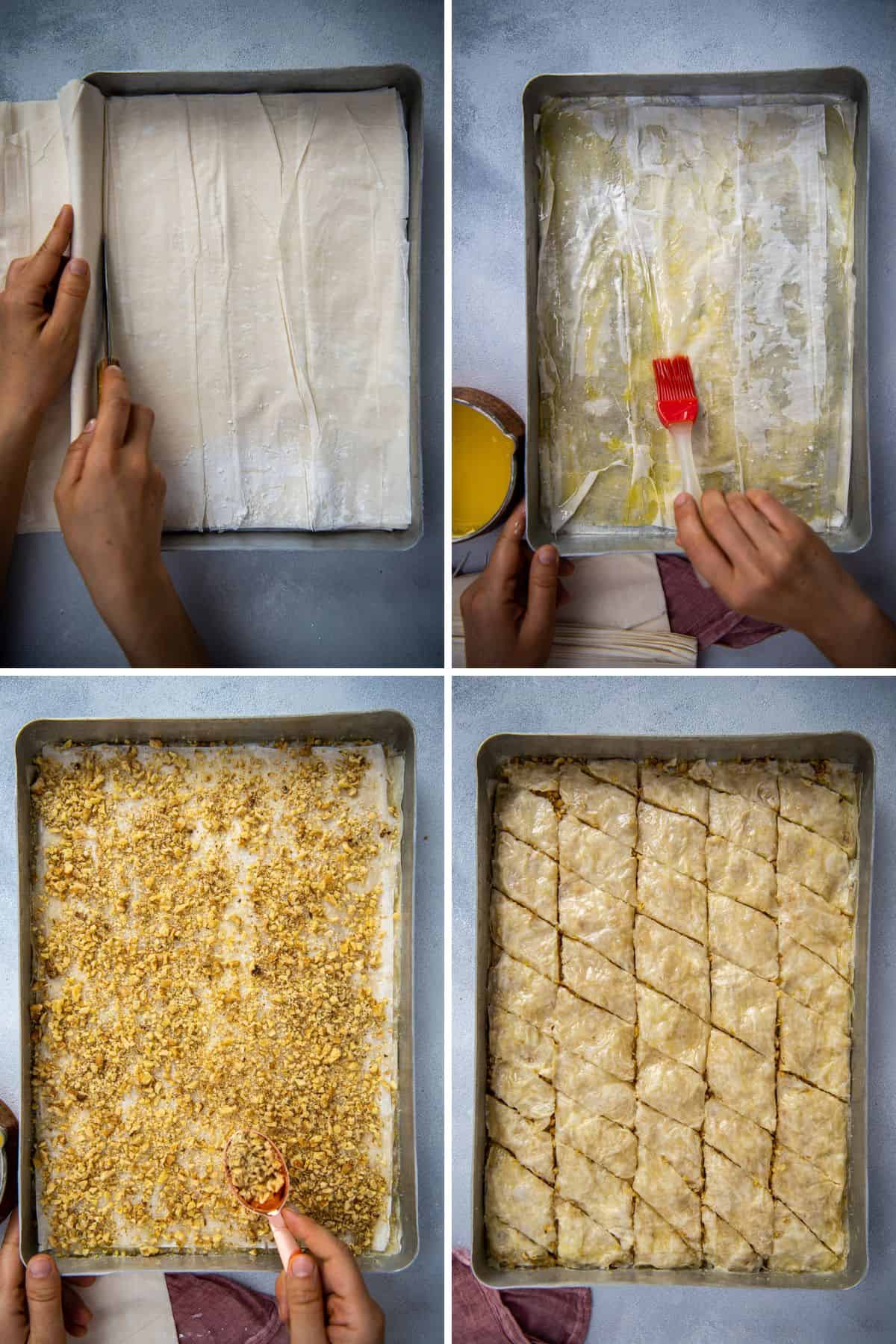
How to Cut Baklava
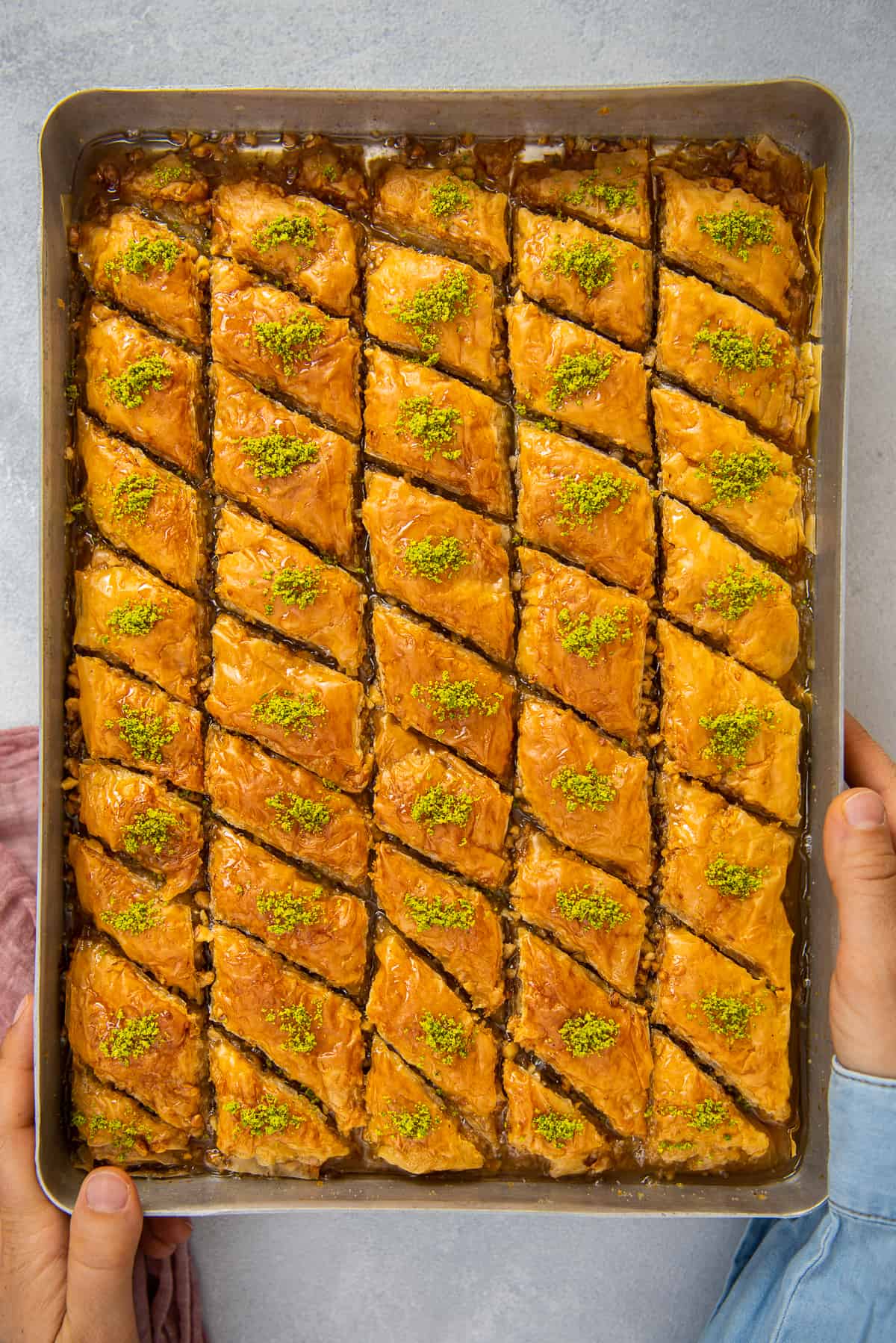
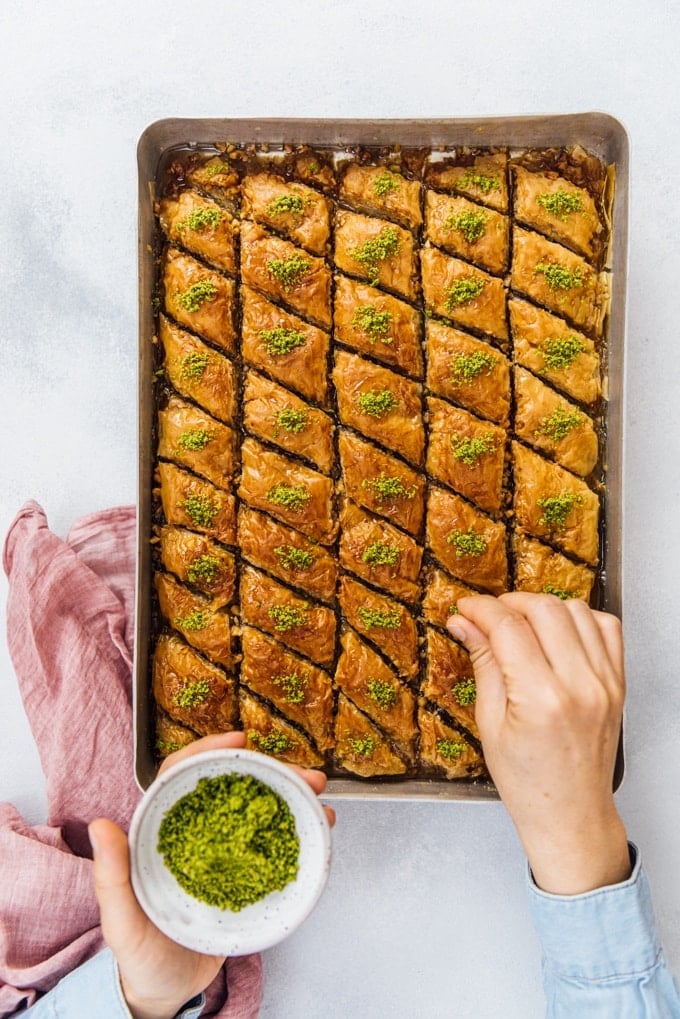
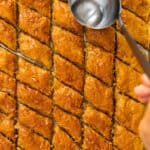
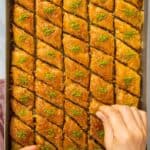
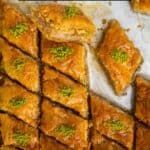
Turkish baklava is traditionally cut into diamond shapes, but it’s easier than it looks.
First, cut the unbaked baklava into vertical strips using a sharp knife, making sure to go all the way down to the bottom of the pan. Then cut diagonally across the strips to create the diamond shape.
If you prefer, you can also cut it into squares or rectangles. The shape doesn’t affect the taste at all.
Is Turkish Baklava Hard to Make?
As you can see, making baklava at home is not as complicated as it looks.
Traditionally, it was made from scratch, including rolling out very thin sheets of dough, which takes time and skill. Today, using store-bought phyllo pastry makes the process much easier.
Once you get the layering right, the rest is quite straightforward. With good quality ingredients, homemade baklava can turn out just as delicious.
Tips for Perfect Turkish Baklava
Making baklava at home is quite straightforward, but a few small details can make a big difference:
Keep the phyllo covered: Phyllo dries out quickly, so always keep the unused sheets covered with a slightly damp cloth.
Use enough butter: Brush each layer generously with melted butter to help it turn golden and crisp.
Chop the nuts finely: Finely chopped nuts create even layers and make the baklava easier to cut and eat.
Cut before baking: Always slice the baklava before it goes into the oven. This helps it bake evenly and gives you clean cuts.
Use the right temperature contrast: Pour cooled syrup over warm baklava so it absorbs properly.
Let it rest: Give the baklava a few hours to soak up the syrup. It gets even better as it sits.
What To Serve Turkish Baklava With
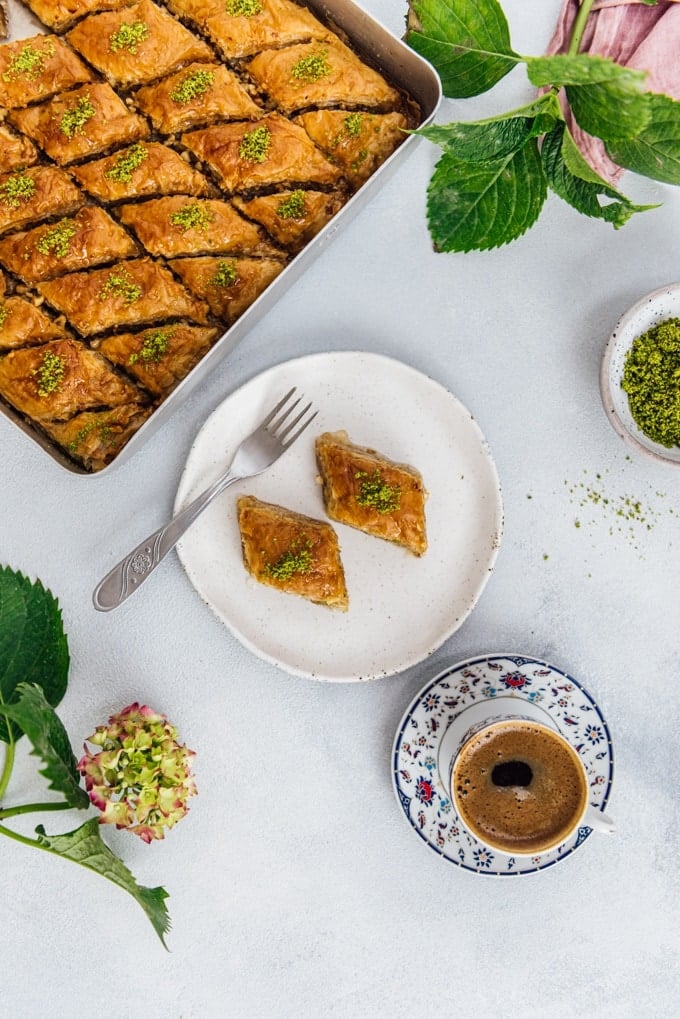
We serve baklava either with Turkish Tea or Turkish coffee, preferably with no sugar added as the dessert itself is already sweet enough.
Some people also like to serve it with Turkish Ice Cream or kaymak (clotted cream) on the side.
Storage
Turkish Baklava keeps well if stored properly. Here’s how:
Let it cool completely: Make sure the baklava is fully cooled before storing to prevent it from becoming soggy.
Store at room temperature: Keep it loosely covered at room temperature for up to a week. Avoid sealing it airtight so it stays crisp.
Refrigerate if needed: For longer storage, you can keep it in the fridge for up to a couple of weeks.
Freeze for later: Baklava freezes well. Store it in an airtight container for up to 3 months. Thaw at room temperature before serving.
Where is Baklava From?
Baklava has a long and debated history. Several cuisines, including Turkish, Greek and Middle Eastern, are often associated with it.
There’s no clear agreement on where it was first made, but one thing is certain: many cultures have their own version of baklava today.
Baklava in Turkish cuisine
In Turkey, baklava has a very special place, especially since the Ottoman period. It was often served at celebrations like weddings and holidays, and it’s still one of the most loved desserts today.
You’ll mostly see it made with walnuts or pistachios. Gaziantep, a city in the southeast of Turkey, is especially famous for its baklava and high-quality pistachios.
Baklava masters there roll the phyllo so thin that you can almost see through it — it’s a real craft that takes years to master.
Whenever we visit Tarsus, Zerrin’s hometown, we always feel like we’re having “real” baklava again. There are several shops there run by baklava masters from Gaziantep, and you can really taste the difference.
More Turkish Desserts
Sign up for the FREE Give Recipe Newsletter to get the new recipes into your inbox!
And stay in touch with us on Facebook, Pinterest, YouTube and Instagram for all the latest updates.
📖 Recipe
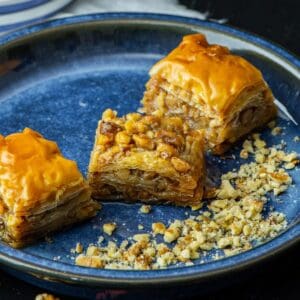
Turkish Baklava Recipe
Video
INGREDIENTS
Syrup:
- 2½ cups sugar 500g
- 2 cups water 500ml
- 1 slice lemon
Baklava:
- 25 sheets phyllo sheets 2 packages, thawed if frozen
- ¾ cup unsalted butter, melted (cooled, not hot) 200g
- 3½ cups walnuts, finely chopped 400g
- 2 tablespoons ground pistachios ( optional for garnish) 15g
INSTRUCTIONS
- Prepare the syrup: Combine sugar, water and lemon slice in a saucepan. Bring to a boil, then reduce the heat and simmer for 15 minutes. Let it cool completely.
- Preheat the oven to 350°F (180°C).
- Trim the phyllo sheets to fit your baking pan. Keep them covered with a damp cloth while working so they don’t dry out.
- Butter the bottom and sides of a 9x13-inch (23x33 cm) baking pan.
- Place 1 sheet of phyllo in the pan and brush lightly with melted butter. Add another sheet and butter it. Repeat until you have 5 sheets in total.
- Spread about 100g chopped walnuts evenly over the 5th sheet.
- Add another 5 phyllo sheets, brushing each with butter. After the 5th sheet, sprinkle another layer of walnuts (about 100g).
- Repeat this process two more times, so you have 4 layers of walnuts in total.
- Finish with the final 5 phyllo sheets, brushing each with butter, including the top layer.
- Using a sharp knife, cut the baklava into diamond or square shapes, making sure to cut all the way to the bottom of the pan.
- Bake for about 30 minutes, or until golden brown.
- Remove from the oven and immediately pour the cooled syrup over the hot baklava.
- Let it rest uncovered for at least 4–5 hours so the syrup is fully absorbed.
- Garnish with ground pistachios before serving.
NUTRITION
Nutrition information is automatically calculated, so should only be used as an approximation.
Shahema says
If i wanted to make chocolate baklavas so its nut free and also because chocolates my favourite, do i use cocoa powder or choc chunks or a choc sauce? Please give detailed method if possible 🙂