

If there is one bulgur dish almost every Turkish person knows, it’s Kisir. Made with fine bulgur, tomato and pepper paste, spices, lemon juice, and lots of herbs, it’s fresh, tangy, and slightly spicy. We make it for tea parties, family gatherings, potlucks, and just because we’re craving it. It also keeps well in the refrigerator for several days, so leftovers are always a bonus!
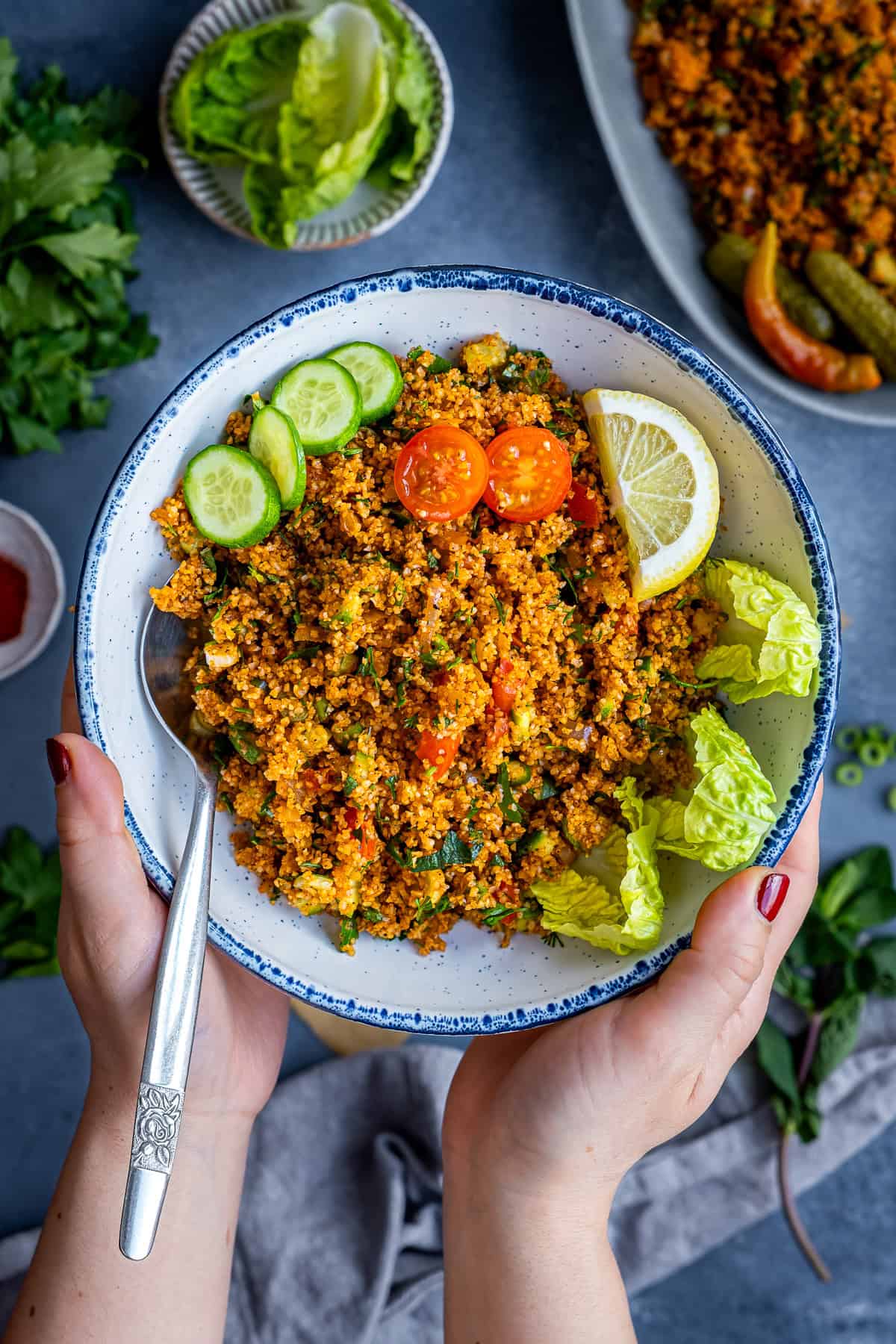
Bulgur is a staple ingredient in Turkish cuisine, and kisir is probably our favorite way to use it for a quick lunch. If bulgur is new to you, make sure to check out our guide on how to cook bulgur.
Kisir, The Star of Turkish Gatherings
Made with fine bulgur, tomato and pepper paste, herbs, lemon juice, and pomegranate molasses, kisir is one of the simplest yet most loved dishes in Turkish cuisine.
But for us, Turkish people, kisir is much more than just a bulgur salad.
In Türkiye, it is one of those foods almost guaranteed to appear whenever people gather together. Afternoon tea parties with neighbors, family get-togethers, potlucks, long chats over tea… there is usually a big tray of kisir on the table.
And, nobody makes a small batch.
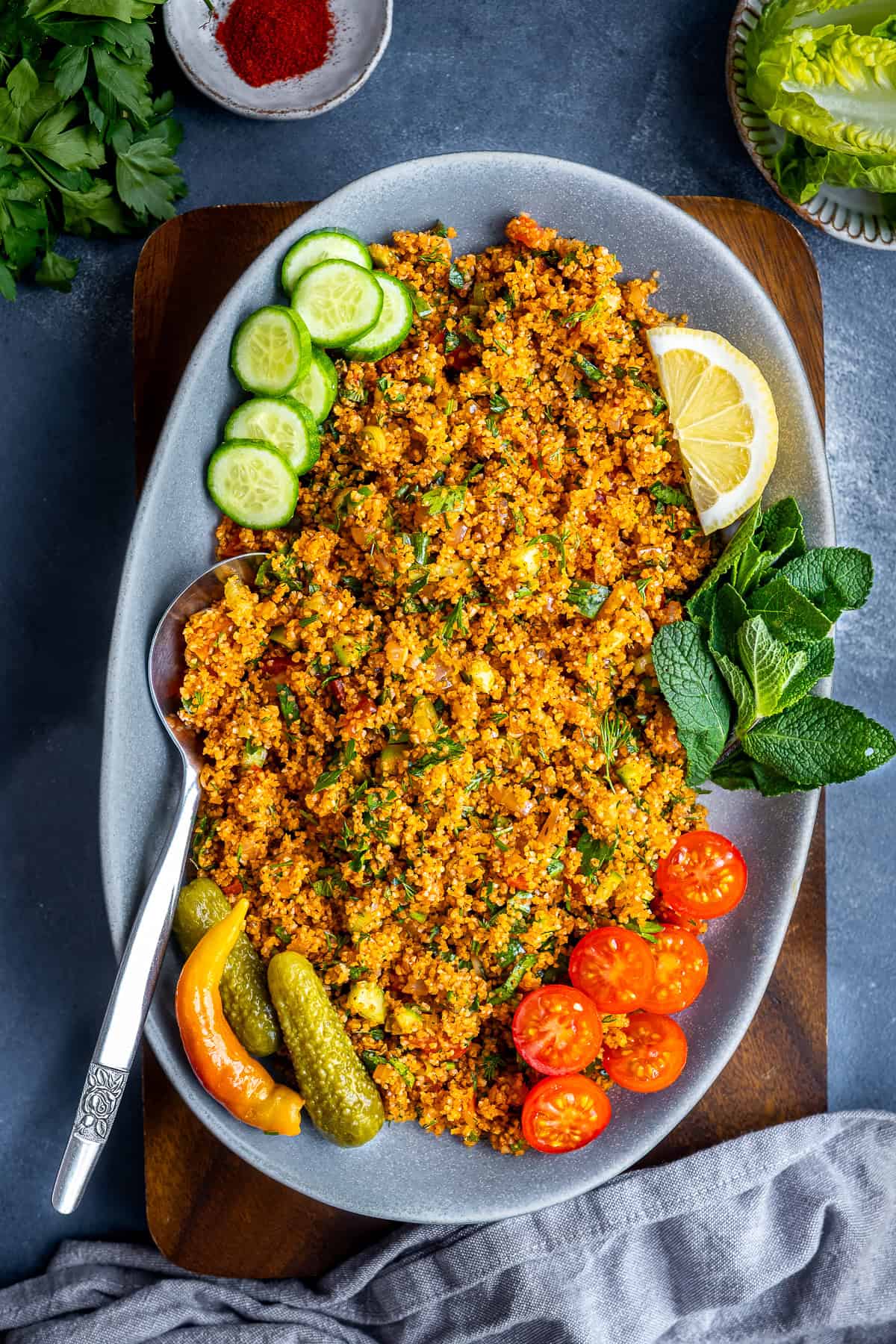
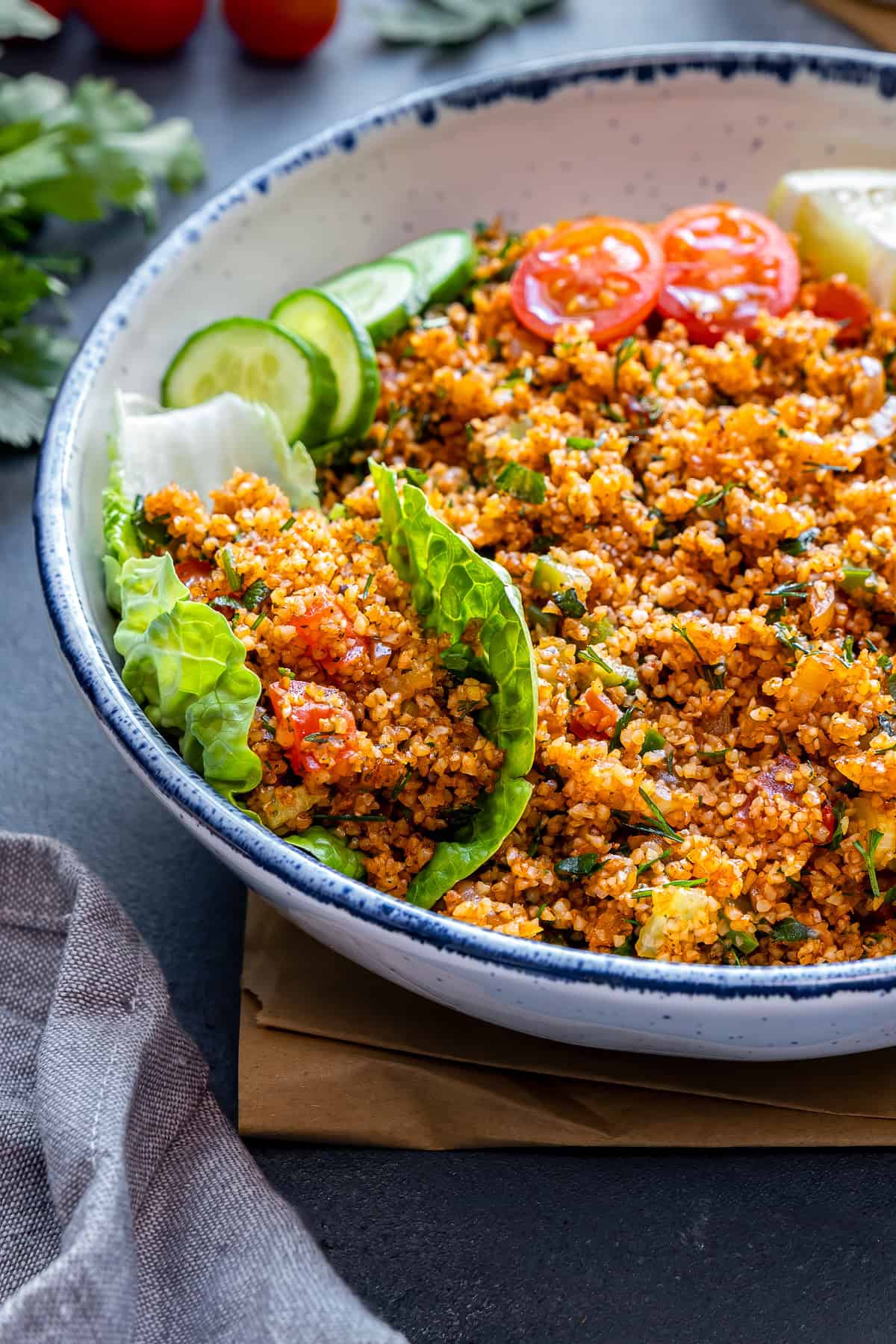
It is the kind of food people enjoy together, usually served with lettuce leaves, pickles, extra lemon wedges, and endless glasses of Turkish tea. Everyone builds their own little lettuce wraps and keeps going back for more.
Even though it is made with very simple ingredients, the combination of bulgur, herbs, spices, and tangy dressing makes it incredibly satisfying and full of flavor.
About the Ingredients
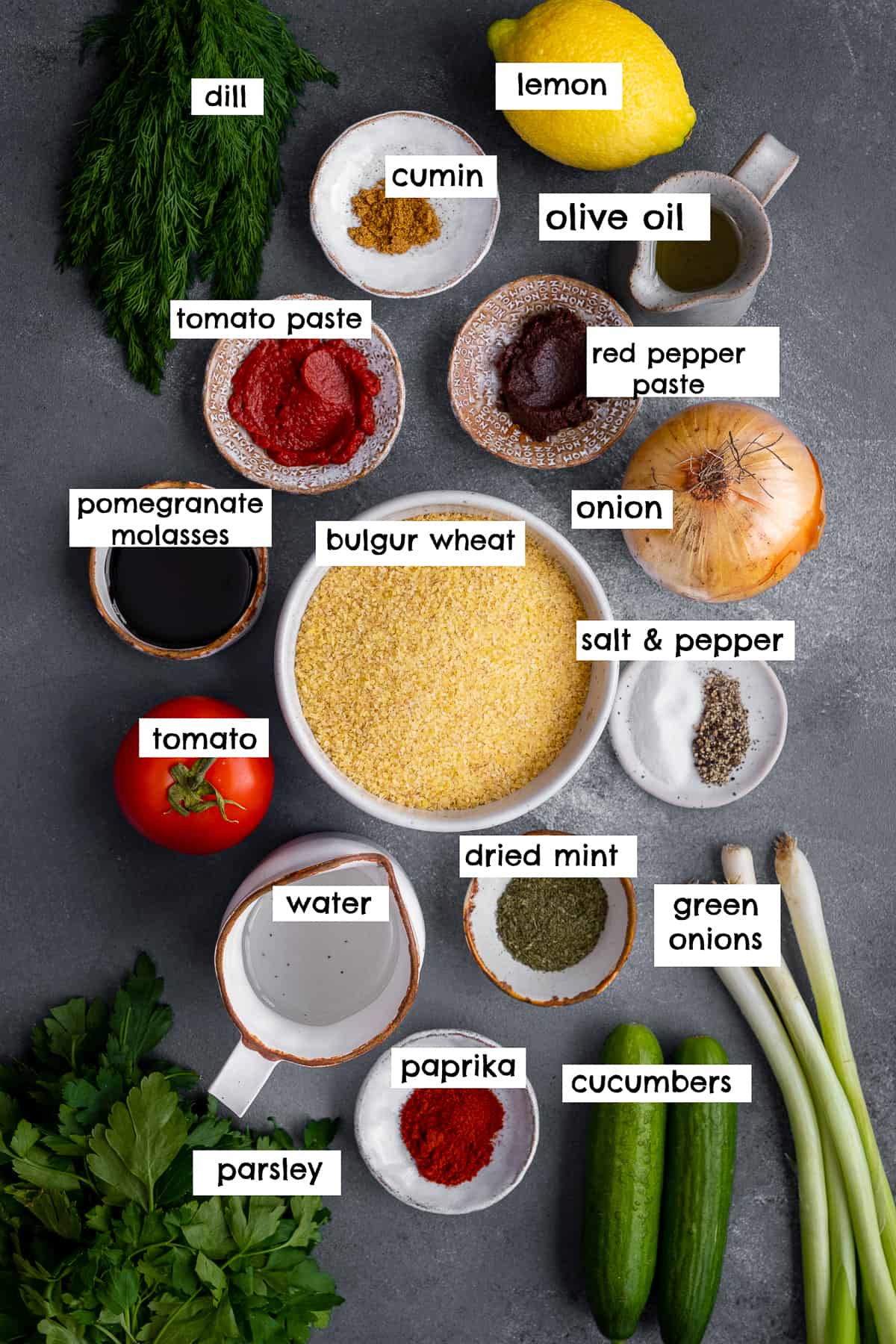
Fine bulgur wheat: Use fine bulgur for the best texture. You can use either red or white fine bulgur. If you can’t find fine bulgur, medium bulgur works too, but fine bulgur is definitely the traditional choice for kısır.
Spices: The spices we always use in kısır are dried mint, paprika, cumin, and pul biber (Turkish red pepper flakes). Even though pul biber is not shown in the ingredient image above, we highly recommend adding it for a more authentic flavor. If you can’t find pul biber, Aleppo pepper is a great substitute. And if you can’t find that either, regular red pepper flakes work too depending on how spicy you want it.
Tomato paste: Turkish tomato paste (domates salçası) works best, but regular tomato paste from any supermarket is fine too.
Red pepper paste: Known as biber salçası in Turkish, this paste is made from red peppers and dried under the sun, which gives it a deep and concentrated flavor. You can use either sweet or hot pepper paste depending on your taste. If you can’t find it, just increase the tomato paste and paprika a little.
Pomegranate molasses: Called nar ekşisi in Turkish, this is one of the key ingredients in an authentic kısır recipe. It gives the salad its signature tangy flavor. When buying, try to choose brands made with 100% pomegranate molasses rather than pomegranate molasses sauce. If you can’t find it, simply add extra lemon juice.
Lemon juice: Kısır should have a nice tangy flavor, so feel free to adjust the amount to your taste. Start with the juice of half a lemon and add more after tasting if needed.
Herbs: We use parsley, mint, dill, and green onions. Don’t worry if you can’t find them all. Kısır is very flexible when it comes to herbs, but we do think the more herbs, the better!
Tomatoes: We use just one tomato. You can even leave it out if you plan to serve sliced tomatoes on the side.
Cucumbers: We use baby cucumbers (Persian cucumbers), but English cucumber works too. Whether you peel them or not is completely up to you.
You can find the full ingredient list with exact measurements in the recipe card below.
How To Make Kısır
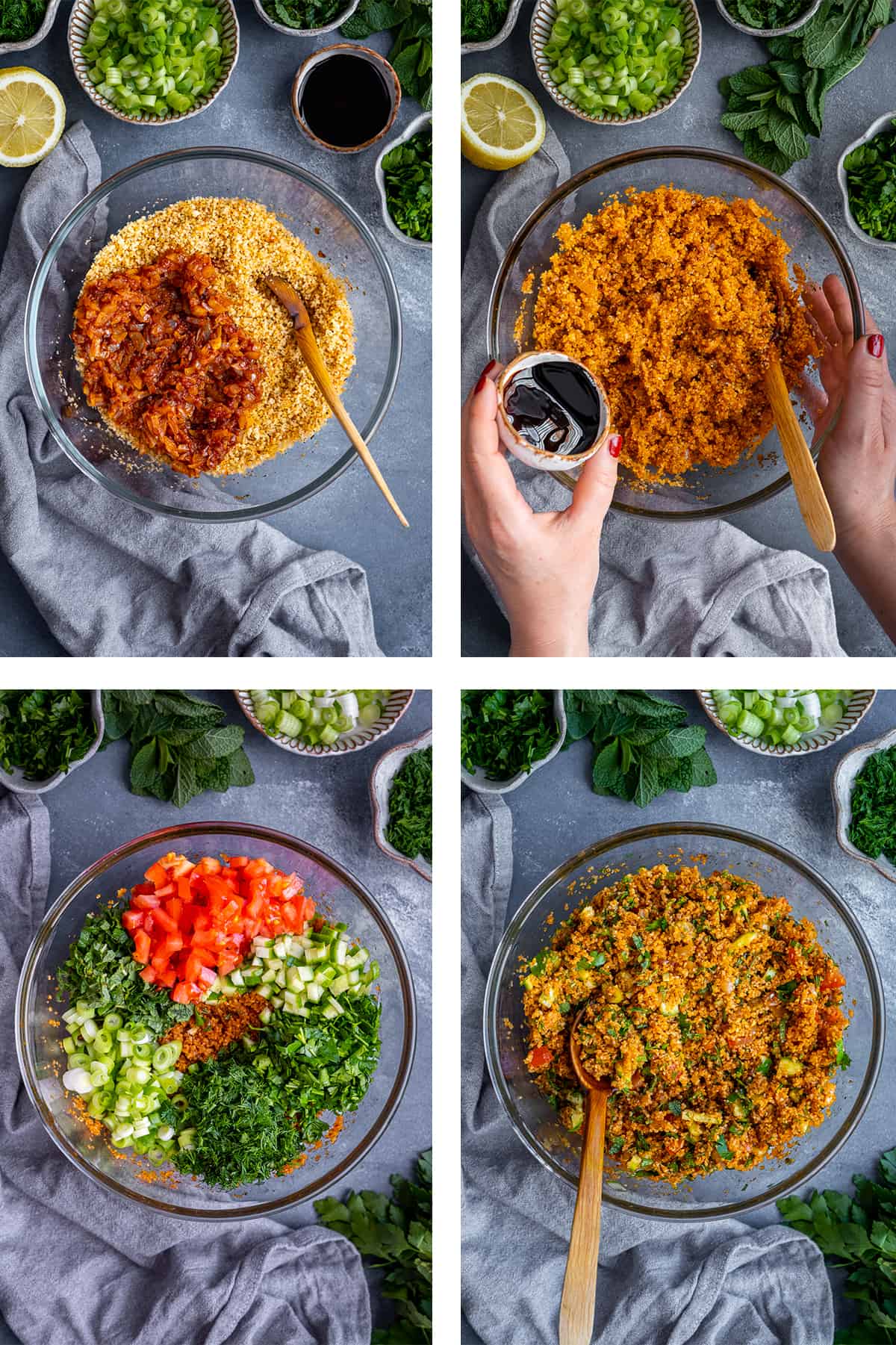
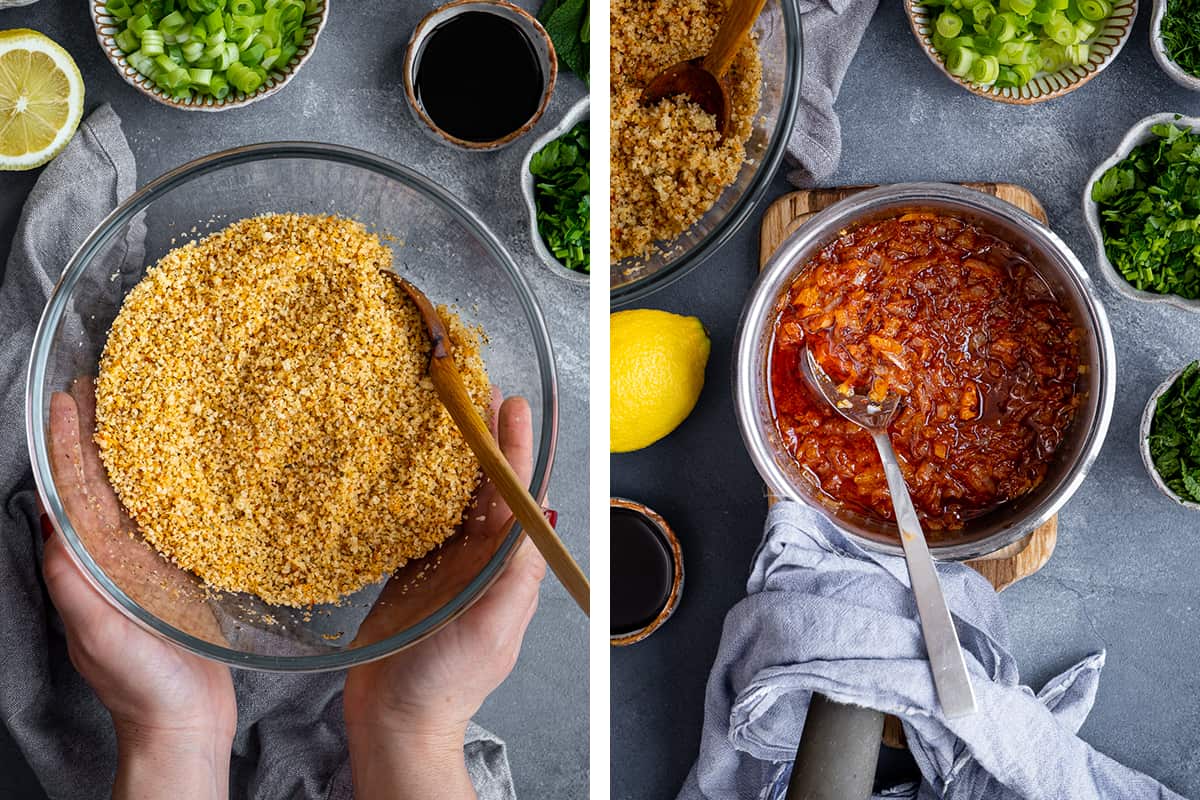
Making kisir is actually very easy once you have the right bulgur. The fine bulgur is mixed with spices and soaked in hot water until softened.
Meanwhile, onions are cooked in olive oil together with tomato paste and pepper paste. Some people skip this step and add the pastes directly into the bulgur without cooking them first. But this is how Zerrin’s mom always makes kisir, and honestly, we think cooking the pastes helps bring out their flavor much better.
The cooked onion mixture is then mixed with the softened bulgur together with lemon juice and pomegranate molasses. Finally, lots of fresh herbs, tomatoes, and cucumbers are added in.
Once everything is mixed together, make sure to taste it. Some people like kisir more tangy, some prefer it spicier, so feel free to add extra lemon juice, pomegranate molasses, or pul biber to adjust it to your taste.
You can find the full step-by-step instructions in the recipe card below.
Use Fine Bulgur For Kisir
For kisir, we always use fine bulgur, called köftelik bulgur in Turkish. You can use either white or red fine bulgur, both work well.
Fine bulgur is what gives kisir its classic texture. Since the grains are very small, they soften quickly when mixed with hot water, so there is no actual cooking involved.
For us, fine bulgur is essential for authentic kisir. Turkish people simply don’t make kisir with medium or coarse bulgur. Still, if fine bulgur is impossible to find where you live, medium bulgur can work as a substitute. You’ll just need to let it soak longer.
Make Sure The Bulgur Softens Well
Fine bulgur should soften completely after soaking. If it still feels hard after 15 minutes, just add a splash of boiling water and let it sit a little longer.

Serving Suggestions
Kisir is usually served with lots of lettuce leaves, pickles, sliced tomatoes, cucumbers, and extra lemon wedges on the side.
The most common way to eat it is spooning some kisir into a lettuce leaf and eating it like a little wrap. We almost always squeeze extra lemon juice on top too.
In some parts of southern Türkiye, fresh grape leaves are served instead of lettuce when they are in season. The leaves are briefly blanched, then filled loosely with kisir and eaten that way.
Kisir is also one of the most popular foods at Turkish tea parties and gatherings. Alongside it, you’ll often see things like:
- Sigara Boregi
- Pogaca
- Turkish Potato Salad
- Yaprak sarma (stuffed grape leaves)
- A Turkish cake like revani
And there is always a large pot of Turkish tea to be served with or following kisir. It is considered as the best accompaniment to bulgur dishes. Tea relieves bloating especially when you eat too much of it.
There Are Different Ways To Make Kisir
Like many Turkish dishes, kisir has several regional variations.
Some people, especially in the south of Türkiye, skip the cooked onion mixture completely and mix the bulgur directly with olive oil, tomato and pepper paste, lemon juice, pomegranate molasses, and herbs.
There is even a version made with grated or mashed tomatoes instead of hot water. The bulgur softens directly with the tomato juices while being mixed by hand.
The kisir recipe we are sharing here is the one we learned from our families and still make all the time at home.
Storage
Leftovers can easily be stored in an airtight container. Place it inside the fridge where it will last for roughly 4 days. Bring it to room temperature before serving.
So, Is Kisir Basically Tabbouleh?
Not really. Even though both are made with bulgur and fresh herbs, they taste quite different.
Tabbouleh is much heavier on parsley and usually doesn’t include tomato paste or pepper paste.
Kisir, on the other hand, uses more bulgur and gets its flavor from tomato and pepper paste, spices, lemon juice, and pomegranate molasses. It has a tangier, slightly spicier flavor too.
Is Kisir Gluten-Free?
No. Traditional kisir is made with bulgur, which is a wheat product and contains gluten.
If you need a gluten-free alternative, you can use quinoa or buckwheat groats instead. The flavor and texture will be different, but the fresh herbs, lemon juice, and pomegranate molasses still work beautifully with them.
More Recipes with Bulgur
- Çiğ Köfte – A spicy bulgur dish packed with herbs and spices.
- Mercimek Köftesi – A soft mixture of red lentils and fine bulgur shaped into small patties.
- Bulgur Pilaf – One of the most common Turkish side dishes made with coarse bulgur.
- Ezogelin Soup – A famous Turkish soup made with red lentils and bulgur.
- Stuffed Dried Eggplants – Dried eggplants and peppers stuffed with a flavorful bulgur filling.
- Boza – A thick fermented Turkish winter drink traditionally made with bulgur.
- Bulgur Breakfast Bowl – A sweeter way to enjoy bulgur with milk, fruit, and nuts.
You can also browse our full Turkish Bulgur Recipes collection for even more ideas.
More Turkish Salads
Sign up for the FREE Give Recipe Newsletter to get the new recipes into your inbox!
And stay in touch with us on Facebook, Pinterest, YouTube and Instagram for all the latest updates.
📖 Recipe

Kisir (Turkish Bulgur Salad)
INGREDIENTS
- 200 grams fine bulgur (1 cup) red, brown or white
- 1 teaspoon dried mint
- 1 teaspoon paprika
- ¼ teaspoon cumin
- 1 teaspoon pul biber Turkish red pepper flakes
- ¼ teaspoon black pepper
- ½ teaspoon salt
- 250 ml boiling water (1 cup)
- 80 ml olive oil (⅓ cup) (see note 2)
- 1 large onion finely chopped
- 1 tablespoon tomato paste
- ½ tablespoon pepper paste (see note 3)
- 1 medium lemon squeezed (see note 4)
- 1 tablespoon pomegranate molasses (see note 5)
- 4 green onions finely chopped
- 1 medium tomato finely chopped (optional)
- 1 medium cucumber finely chopped
- ½ cup parsley finely chopped
- ¼ cup fresh dill finely chopped
- 2 tablespoons fresh mint finely chopped
- 1 head lettuce to serve
INSTRUCTIONS
- Put the bulgur and spices in a large bowl. Pour the hot water over them, give everything a stir, and cover the bowl with a lid or kitchen towel. Let it sit for about 10 minutes until the bulgur softens.
- Heat the olive oil in a pan and sauté the finely chopped onion until translucent. Add the tomato paste and cook for 2 minutes, stirring occasionally.
- Pour the cooked onion mixture over the softened bulgur and stir well.
- Add the lemon juice and pomegranate molasses and mix well.
- Toss in the chopped herbs, tomatoes, and cucumber and give everything another good stir.
- Serve it on plates with lettuce leaves on the side.
- Serve with lettuce leaves on the side. Pickles, sliced tomatoes, cucumbers, and extra lemon wedges are great alongside it too.
NOTES
- Fine bulgur is a must for this recipe but if you can’t find it, use medium bulgur. These types don’t need to be cooked. Soaking is enough. If it is not softened and still has a hard texture, pour a splash of boiling water on it and let it sit for another 5 or 10 minutes.
- You can easily adjust the amount of olive oil to your taste. We use 80 ml because we like kisir to have a rich, noticeable olive oil flavor. Sometimes we even use 100 ml or more. But if you prefer it lighter, you can reduce it to about 50 ml instead. After mixing everything together, taste it and drizzle in a little more olive oil if you think it needs it.
- Pepper paste, biber salçasi in Turkish, is one of the staple ingredients in Turkish cuisine and you can look for it online. If you can’t find it, substitute tomato paste and paprika for it.
- You can always play with the amount of lemon juice. Taste it when it is ready and add more if you want. This is supposed to be a tangy salad.
- If you can’t find pomegranate molasses, you can increase the amount of lemon juice.
NUTRITION
Nutrition information is automatically calculated, so should only be used as an approximation.


Georgina Dunning says
Can I use dried dill
Zerrin & Yusuf says
Hi Georgina,
Dried dill isn’t traditionally used in kısır. Fresh dill can be added along with parsley and fresh mint, but for the classic flavor, dried mint is the herb/spice we’d recommend. That said, if you enjoy dried dill, you can certainly add a little—it just won’t give the kısır quite the same traditional flavor.