

Güllaç is a light, refreshing, and absolutely delicious Turkish dessert that's especially popular during Ramadan. It’s no-bake and made with just a few simple ingredients. This milk-soaked treat is perfect for anyone looking for an easy yet impressive dessert.
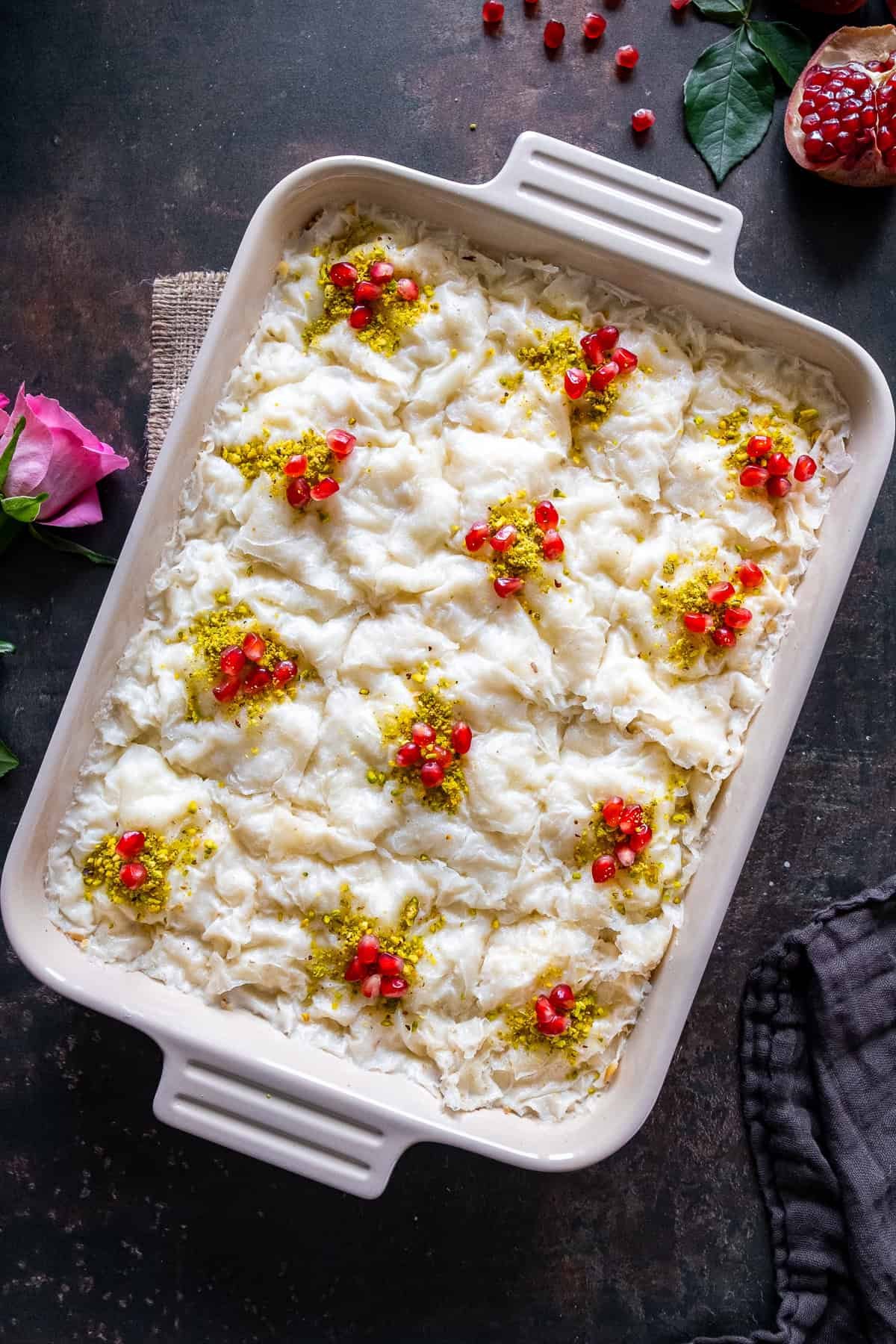
Just like Turkish pide ekmek, Gullac dessert is a special food served during the month of Ramadan. You can't see it anywhere in Turkey other than this month. This is why it is special.
Also, check out our easy Turkish baklava recipe and künefe recipe or our best Turkish desserts list if you want more dessert recipes.
If you like milk based desserts like this one, check out our Turkish rice pudding sutlac too!
What Is Gullac?
In Turkish food culture, there are some certain dishes which are made on special days or occasions. We want to share another special dish made just in Ramadan month.
This is a simple, but tasty dessert called gullac. The crispy sheets are simply made of corn starch, wheat flour and water. They are soaked in sweetened warm milk, layered with walnuts and chilled.
In Turkish gül means rose and aş means food; gullac is the abbreviation of güllü aş, which means food flavored with rose. Nobody calls it güllü aş today, gullac is easier to pronounce, so it is the modern name of this yummy dessert.
So what is the relation of rose with this dessert? Actually, it’s not the rose, but rose water which has that relationship with this Turkish dessert.
Rose water used to be the main flavor in this dessert in Ottoman culture because of its refreshing effect.
Just like when making Turkish delight, today, it depends on your taste to add rose water or not. Some people use it, some don’t.
Personally, we don’t love its flavor in gullac much, so we prefer not using it. But it doesn’t mean it tastes bad, it gives a quite refreshing flavor to the dessert.
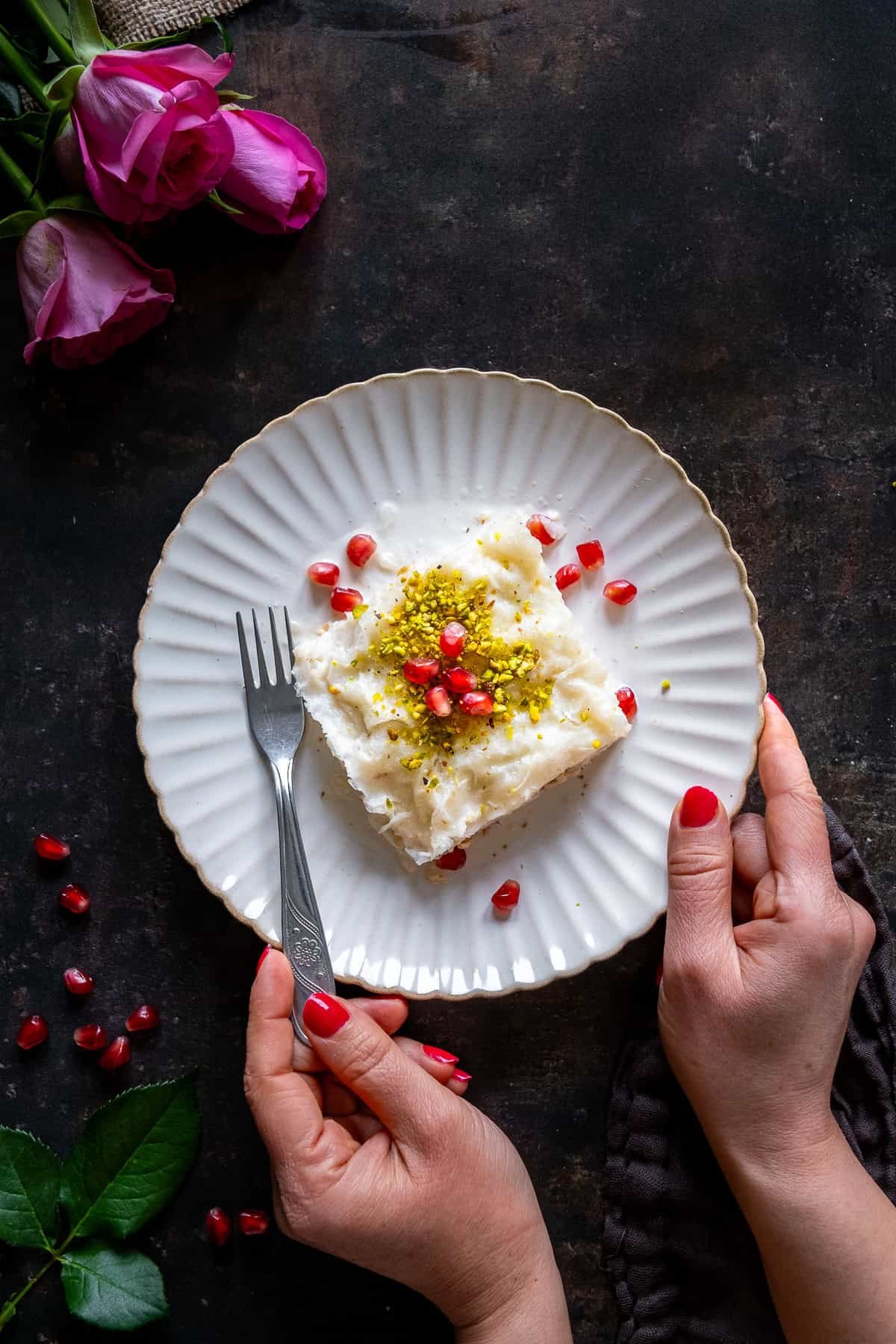
History
In the early times of Ottoman Empire, people used to make sheets from corn starch, flour and water and they could keep these for months. As these sheets are dry and super crispy, people used to soften them with milk and sugar.
Probably, it wasn’t a kind of dessert those times, but more of a main dish. The best part of it for those people was the simple ingredients in the recipe.
And keeping the dried sheets for long might be the second reason for people to love it. Then as the empire got richer, it turned out to be a dessert special for the palace and it became sultans’ favorite.
And today, It has that fame as one of the palace desserts. When you tend to buy the dessert (not the sheets) from a pastry shop, you will see that it’s not that cheap.
More Ottoman desserts: Turkish Flour Halva Recipe, Sesame Seed Candy Recipe, Tulumba Recipe Homemade.
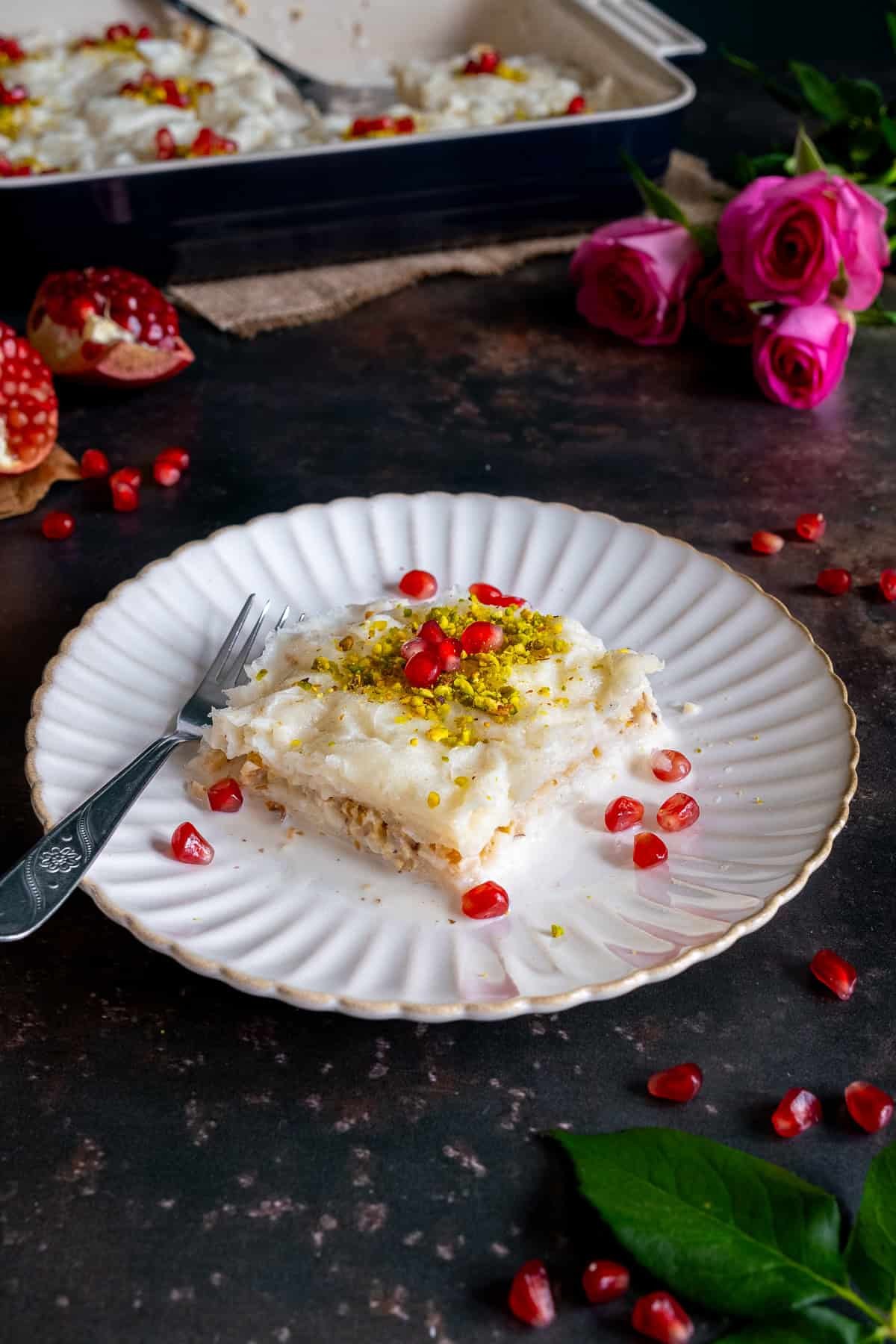
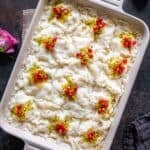
Another Ottoman tradition about gullac is that it’s always decorated with pomegranate and we love to see these cute red beads on the white surface of this dessert. They complete each other and address to our eyes first.
And we love to add a third wonderful ingredient for garnish: Pistachios! When you have these three at the same time, the pleasure you feel doubles.
About The Ingredients
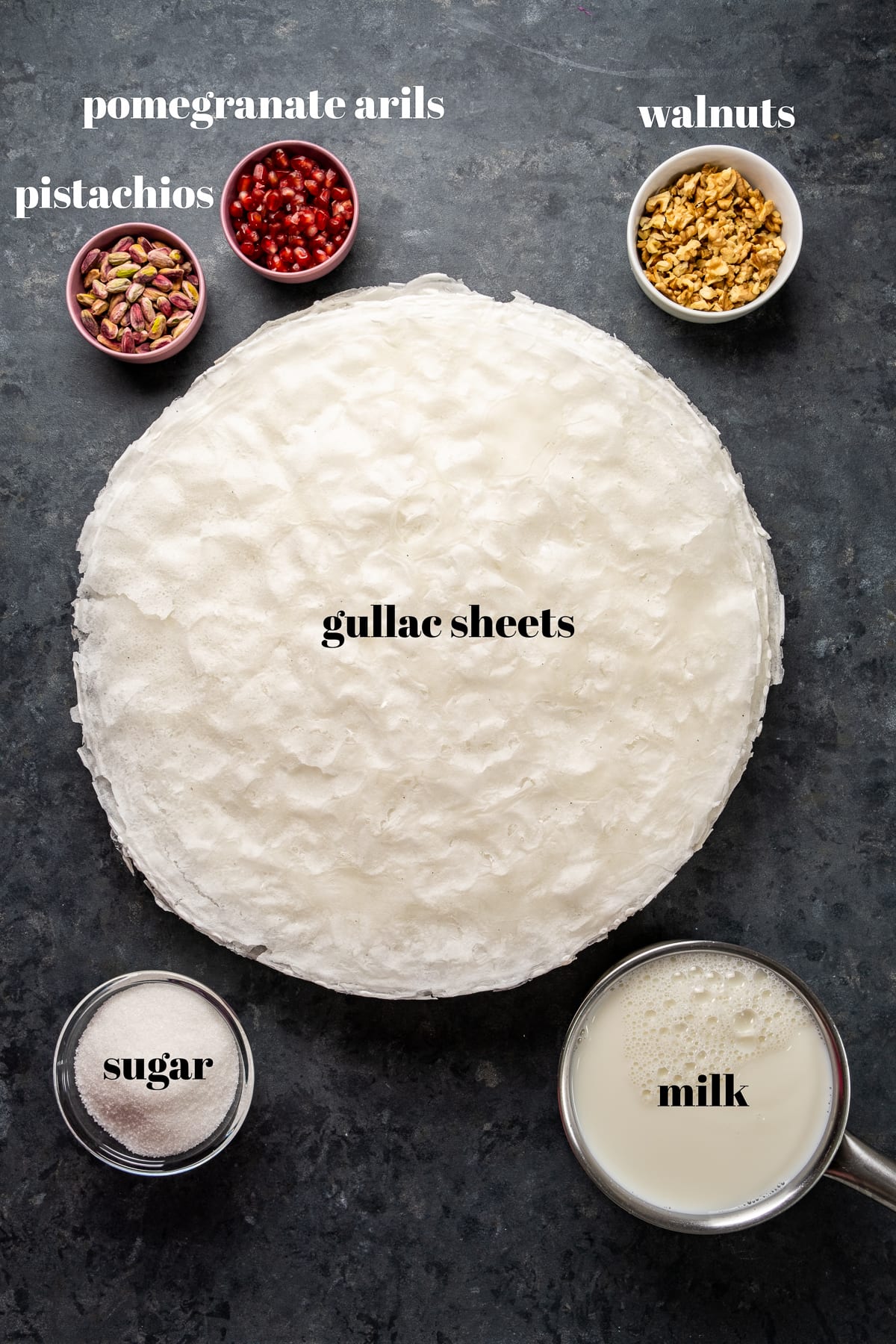
Güllaç sheets are made from corn starch and water. They’re paper-thin and dry, similar to rice paper, and become soft and silky when soaked in warm milk. You can usually find them at Turkish or Middle Eastern grocery stores, especially around Ramadan.
We use whole milk for a creamy and rich flavor, but you can also make this dessert with plant-based milk like almond or oat milk for a vegan version.
Traditionally, walnuts are used between the layers, but you can also use almonds, hazelnuts, or even pistachios—whatever you prefer or have on hand.
For garnish, pomegranate arils are the most classic choice and add a fresh, slightly tart touch. Ground pistachios are optional but add a nice pop of color and flavor. You can also get creative and top it with strawberries or cherries if pomegranate isn’t available.
When To Buy Güllaç
You can see gullac at pastry shops and at markets just in Ramadan. Just like dates, in Turkey it is special for Ramadan. This simple and easy dessert is made from gullac sheets. You may think that they are similar to phyllo sheets, but these are totally different. Gullac sheets are so white, thin and crispy.
Today, people don’t make these sheets themselves as it requires special talents. These are sold in packages at the markets. And there are about 15 sheets in a package. There are two big companies producing and selling these sheets to markets, Saffetabdullah Gullaclari and Istanbul Gullac.
These sheets are completely natural, they don’t have any additives. Moreover, it is a very light dessert. These are just two of the reasons why people prefer gullac to end their iftar meal with something sweet. You know, in Ramadan, muslims don’t eat or drink anything from sunrise till sunset, so their body needs more sugar than usual because of hunger.
How To Make Gullac
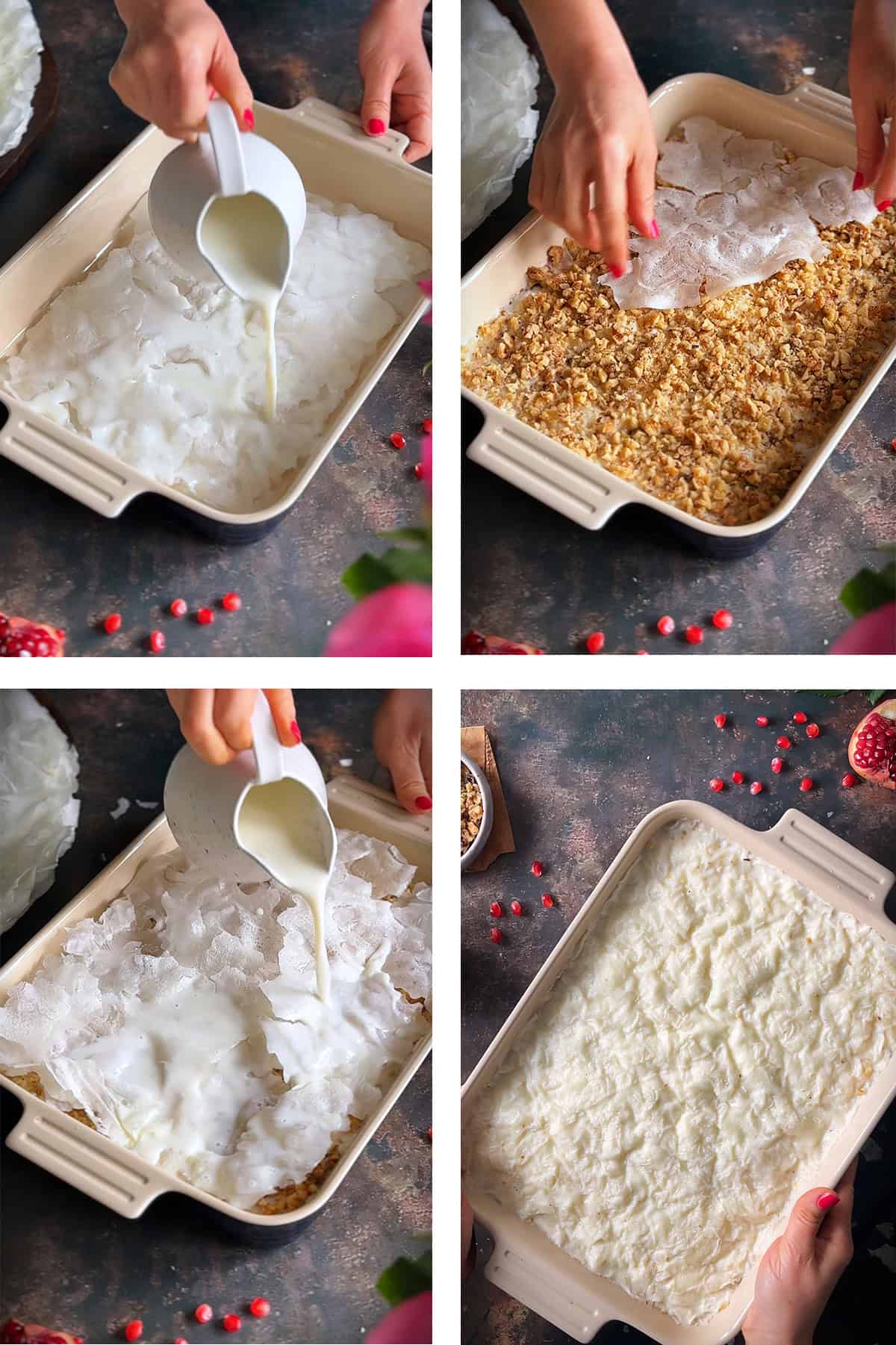
First, prepare the milk. Put milk and sugar (and 1 tablespoon rosewater if you like) in a pot and heat it until the sugar melts. Stir it occasionally. It shouldn’t be too hot to touch, so let it cool a little if needed. If it is too hot, your dessert gets soggy.
Second, make the layers in a pan. Put a gullac sheet in the pan. Wet it with the warm milk. Repeat this with five sheets.
After the fifth one, spread the crumbled walnut on it.
Then put the rest five sheets one by one and wet each of them with milk. When you finish with the tenth one, pour the rest of the milk on it. They don’t need to be very good in shape while arranging them in the pan.
They will combine when they get wet with milk. After pouring the milk, you will see the sheets are rising, do not touch them. Cover it with stretch film and put it in refrigerator for at least 2 hours.
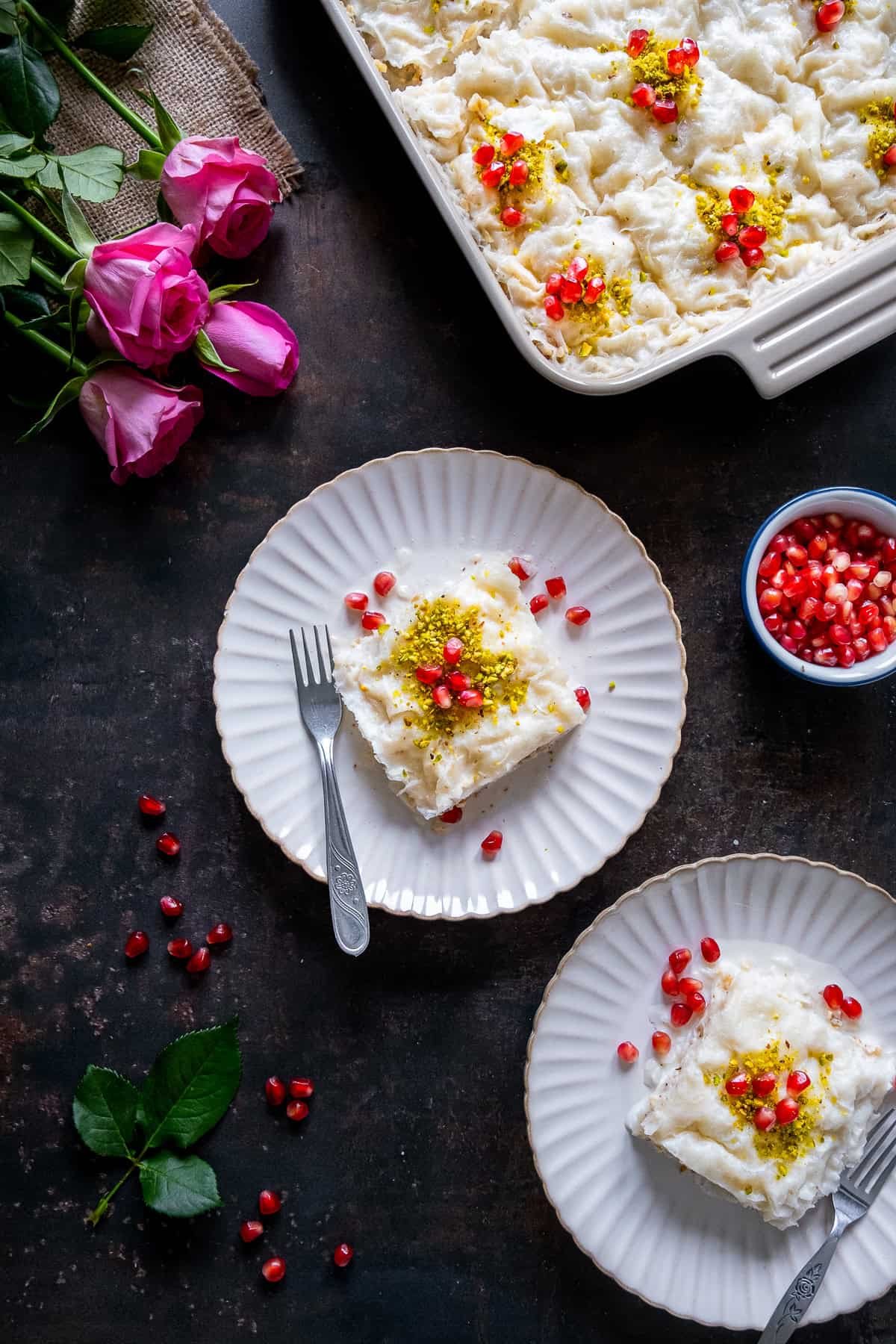
Third, garnish it. I always leave the garnishing part to the serving time, otherwise pomegranates and pistachio may change the color of gullac. After taking it from refrigerator, cut it in squares or rectangles, garnish and serve.
Serving Suggestions
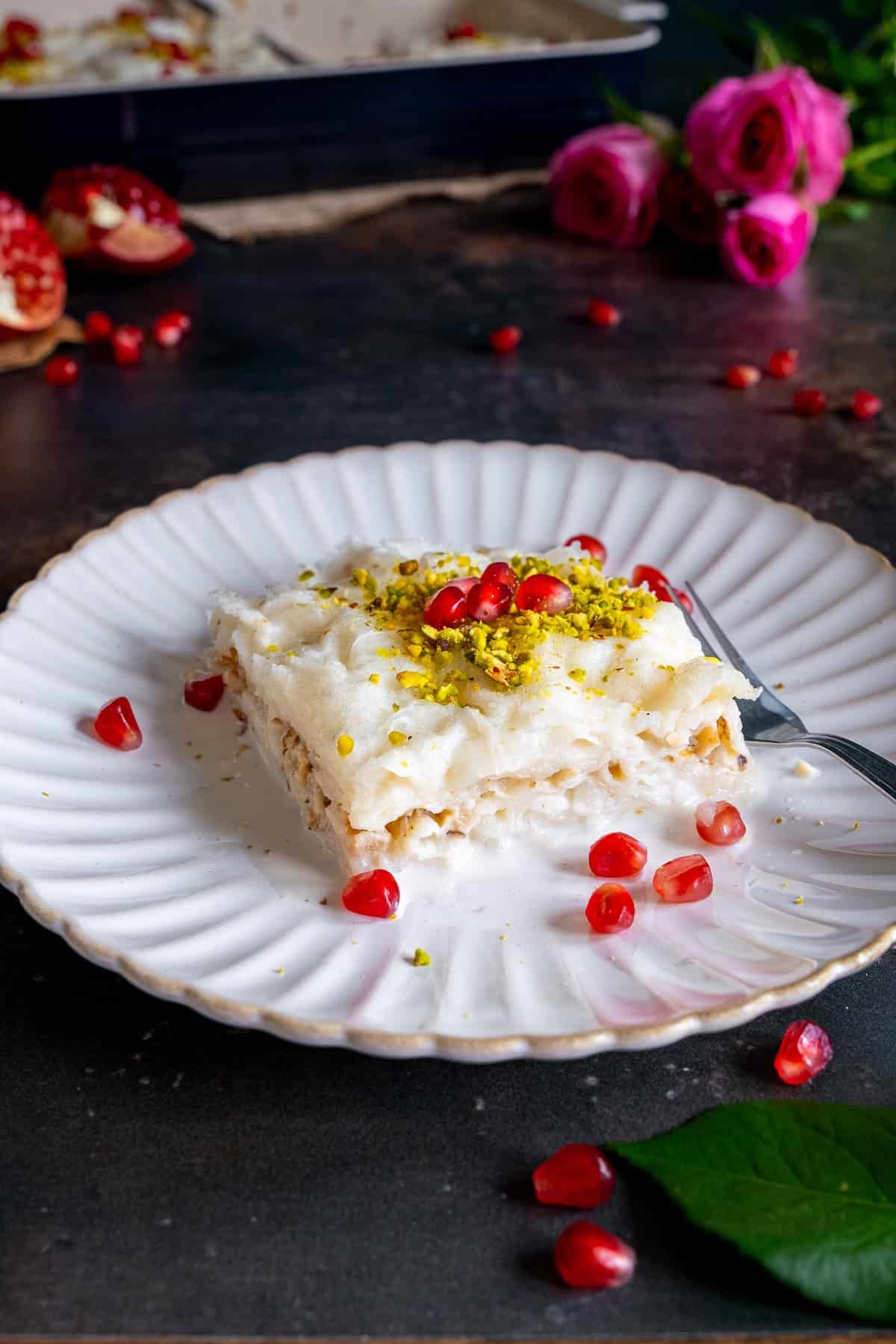
Güllaç is most commonly enjoyed after iftar, served cold with a cup of Turkish tea or Turkish coffee. That’s the traditional way—but it also pairs surprisingly well with a little whipped cream, kaymak (clotted cream) or a scoop of dondurma (ice cream) on the side, even though that’s not traditional.
Storage Tips
Güllaç is best enjoyed cold and fresh, but it can be stored in the fridge for later. Cover the dish tightly with plastic wrap or transfer leftovers to an airtight container. It will keep well in the refrigerator for up to 3 days.
Keep in mind that the longer it sits, the softer the layers become and the more milk it absorbs, which may slightly change the texture. For the best taste and appearance, try to consume it within the first 2 days.
Freezing Güllaç, as the texture doesn’t hold up well after thawing.
More Turkish Desserts
Sign up for the FREE Give Recipe Newsletter to get the new recipes into your inbox!
And stay in touch with us on Facebook, Pinterest, YouTube and Instagram for all the latest updates.
📖 Recipe

Gullac Recipe
INGREDIENTS
- 1.4 liters milk
- 300 grams sugar
- 10 sheets güllaç
- 150 grams walnuts
- 1 tablespoon Ground pistachios
- 1 tablespoon Pomegranate arils
INSTRUCTIONS
- Heat the milk and sugar in a pot, stirring until the sugar dissolves. Do not boil, just warm it enough to melt the sugar. It should be warm but still comfortable to touch.
- Break a güllaç sheet into 4–5 pieces and place them in a 32x25 cm (5 cm deep) baking dish. Pour a ladle of the warm milk over the pieces.
- Repeat the process with 5 güllaç sheets, then evenly sprinkle the walnuts over the top.
- Continue layering with the remaining güllaç sheets, pouring milk between each layer. Once all the sheets are used, pour any remaining milk over the top.
- Cover with plastic wrap and refrigerate for at least 1–2 hours.
- Slice, garnish with pistachios and pomegranate arils, and serve chilled.
NUTRITION
Nutrition information is automatically calculated, so should only be used as an approximation.
Sophie Bowyer says
Where can I buy the Güllaç sheets UK?
Zerrin & Yusuf says
Hi Sophie,
You can look for it at Middle Eastern or Turkish markets. In Manchester, we've seen it at Venus supermarket.
Zouhair says
I love it but you did not tell how to make Gullac sheets,,I am from Damascus -Syria,,Also you did not reply my message about Fava "Edamame""
Zerrin & Yusuf says
Hi Zouhair,
Thank you for your asking this. Well, we never make Gullac sheets at home. We always buy it from the store. You can find it at Middle Eastern grocery stores or at online shops like Amazon.
Sorry we haven't seen your message about fava beans. Oh, did you send an email? Will check it out now!
Nena says
Thisrecile is wonderful and easy to make. Looks delicious.
Thank's Zerrin&Yusuf for ur blog!!!
Zerrin & Yusuf says
Hi Nena,
Thank you for your kind words! Gullac is a simple and light dessert that tastes yummy. So it is one of our favorites 🙂
Halina says
This recipe looks very delicious and yummy...i would like to try to make it for my children...unfortunately i cant find any gullac sheets sold here....
Yusuf says
Hi Halina! Happy to hear that you love gullac! Have you tried looking at online Turkish markets? Maybe they bring it in Ramadan. We can find gullac sheets at online markets here in UK.
Emily says
Love the steps and the recipe is so straightforward. Thanks!
mirela says
Is there any way i could make those gullac sheets at home?Do you have a recipe?Google wasn't of much help.
Selma says
Mirela. I wanted to know the same... But it seems that you can only buy them :/
And that's what I did when I visited Istanbul about 2 weeks ago 🙂 I bought few packages:)
Thanks to Author for sharing recipe!
Zerrin says
Mirela and Selma- Nobody in Turkey makes these sheets at home, and unfortunately we don't know how to make. We just buy them from markets. I guess you can find them from Middle East markets.
Filiz says
Merhaba Zerrin bu yaz Turkiyeden Gullac aldim ve mutfak dolabinda beni bekliyor. Uzun suredir bekliyor diyebilirim cunku hangi tarifi kullansam diye dusunuyor ve karar veremiyorum ya bu tarif benim gullacimi mahvederse korkusundayim ve nereden yine alacagim canim gullacimi evet yeniden 1 sene daha beklemem gerekecek diye gullacim beni dolapta bekliyor ve senin istah acici gullac tarifini gorunce icim icime sigmadi ozellikle step by step instructions made me so happy. Thanks for the recipe and I love your blog title. Reminds me of this saying"Sharing is Caring"
diva@The Sugar Bar says
this is so pretty! i love decorating with pomegrenate seeds. this must taste real gd 🙂 thanks for visiting the SB by the way. x
dilek says
It is one of my favourite desserts!!! It is really light and yummy.There are very good Middle Estern stores in the USA.
Hillary says
Thank you for educating us all with a Ramadan recipe! 🙂
Faith says
I had never heard of gullac sheets until now...very interesting! This dish is so pretty garnished with pistachio and pomegranate!