

Ashure, also known as Noah's Pudding, is one of the most beloved desserts in Türkiye. Made with wheat berries, chickpeas, beans, dried fruits, nuts, and sugar, it might sound like an unusual combination at first. But once you try it, it all makes sense. Here we'll show you how to make ashure the way we learned it growing up in Türkiye.
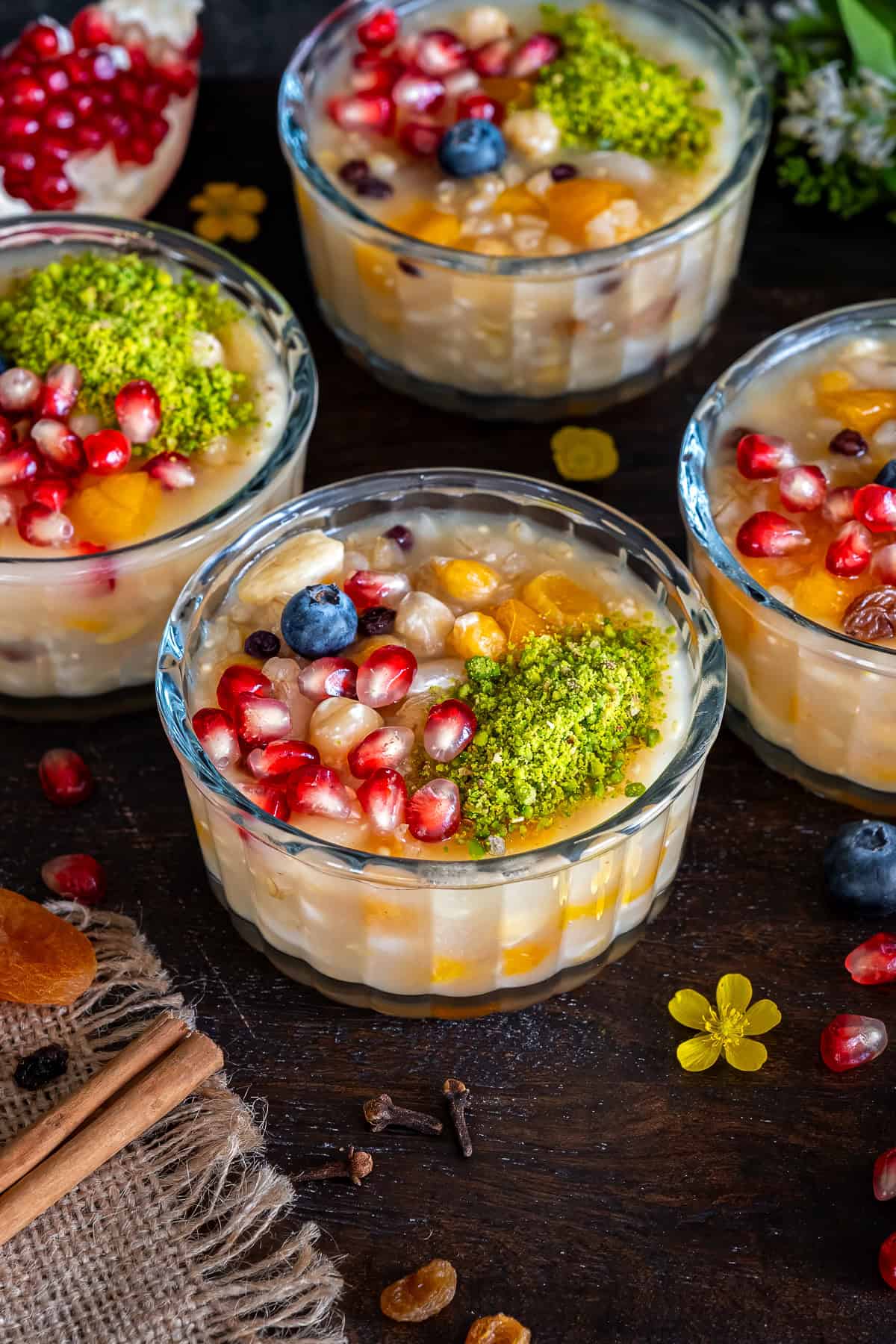
What Is Ashure?
Ashure (pronounced ah-shoo-reh), or aşure in Turkish, is a traditional dessert made with wheat berries, chickpeas, beans, dried fruits, nuts, and sugar. Outside Türkiye, it is often known as Noah's Pudding.
According to Muslims, after the Great Flood ended and Noah's Ark came to rest, Noah and his family gathered the last remaining ingredients they had on board and cooked them together in a single pot. This mixture is believed to have become the first ashure. It is the reason ashure is often called Noah's Pudding.
Ashure is traditionally made during Muharram, the first month of the Islamic calendar. It is associated with the tenth day of Muharram, known as the Day of Ashura, and is typically prepared and shared during the following days.
Despite its unusual combination of ingredients, ashure is a surprisingly delicious dessert with lots of different textures and flavors.
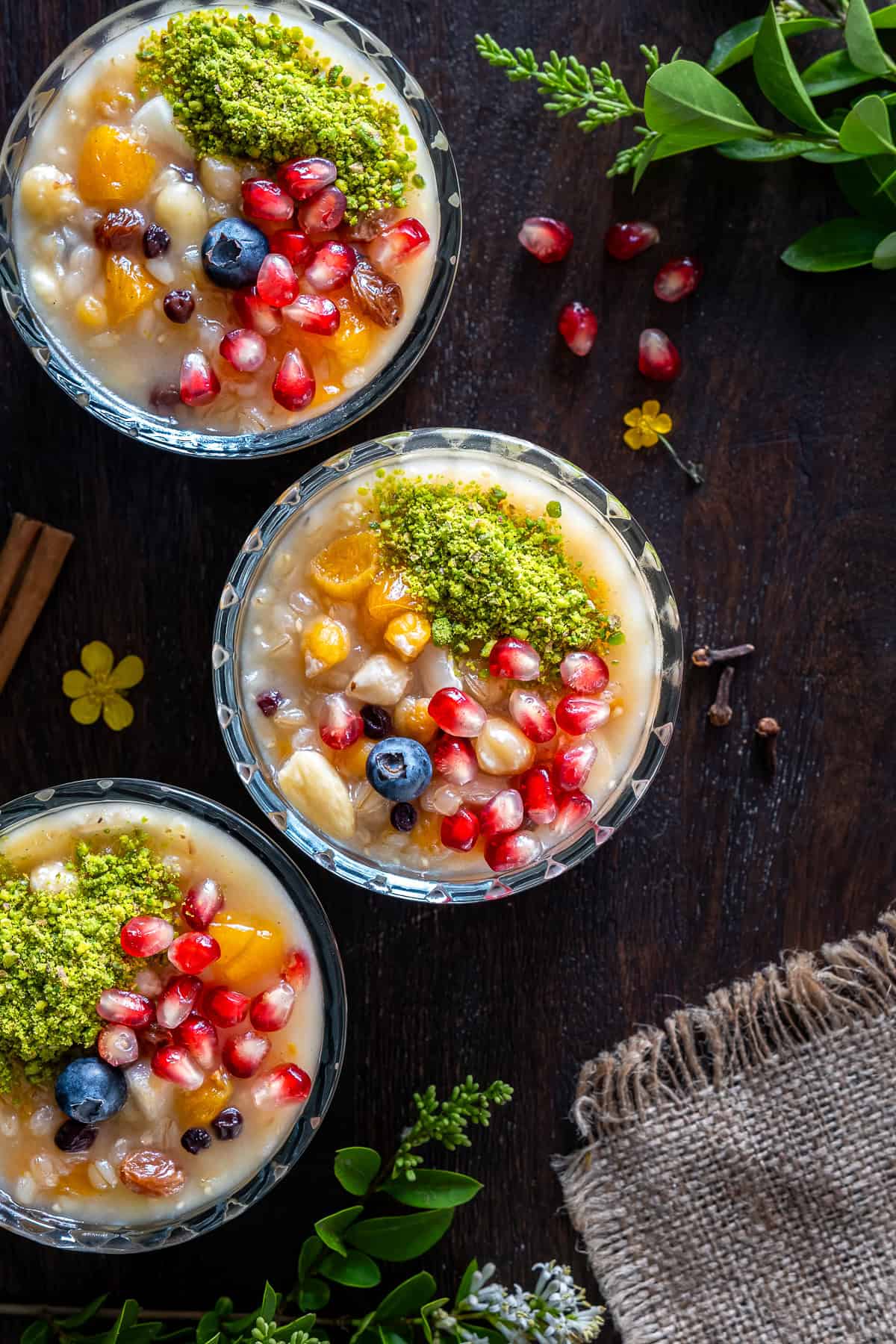
Growing Up With Ashure in Türkiye
For us, ashure is much more than a dessert. It is one of those childhood memories that instantly takes us back to Türkiye.
Every year during ashure season, our doorbell would ring and one of the neighbors (or sometimes their child) would be standing there with a tray full of ashure bowls. They would hand us a bowl and continue delivering the rest to other neighbors.
A few days later, it would be our turn. Our mums would make a large pot of ashure, and we would help deliver bowls to neighbors, relatives, and friends.
In Türkiye, ashure is rarely made just for the household. The tradition is to make plenty and share it with others, which is why most recipes make a large batch.
That is one of the reasons ashure remains such a special dessert in Türkiye. It is not just about the dessert itself, but also about sharing it with others.
About the Ingredients
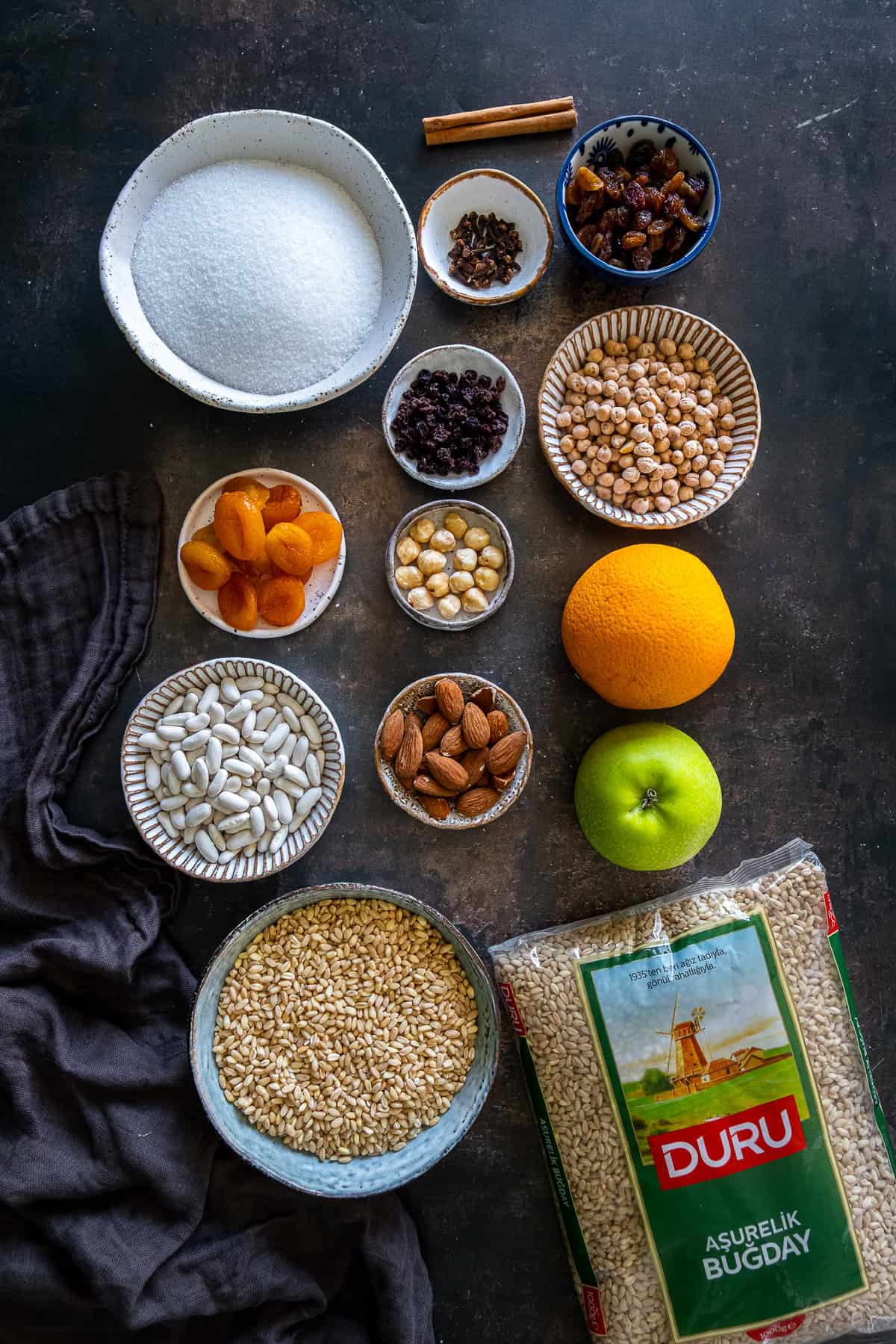
Ashure is made with a variety of ingredients, but don't let the list intimidate you. Most of them are easy to find, and many can be prepared while the wheat berries are cooking.
- Wheat berries (aşurelik buğday): This is the most important ingredient in ashure. Make sure to use whole wheat berries sold for ashure. Cracked wheat, bulgur, or other wheat products won't work in this recipe.
- Chickpeas and white beans: We use dried chickpeas and beans because this is the traditional way. However, canned chickpeas and beans work well if you'd like a shortcut. For the beans, we recommend cannellini beans or another small white bean variety.
- Dried fruits: Sultanas and dried apricots are found in almost every ashure recipe. We also add currants for a little more variety. Some people include dried figs too, but we usually skip them because they can break down during cooking and affect the color and texture of the dessert.
- Nuts: We use raw almonds and raw hazelnuts. Both should be skinless. Raw almonds are often sold with their skins on, but don't worry—we explain how to remove them in the recipe.
- Apple: We like adding apple because it brings a little freshness and texture to the dessert.
- Cloves, cinnamon, and orange zest: These ingredients add a subtle aroma and flavor to the ashure. We usually use a Granny Smith apple, but any apple will work.
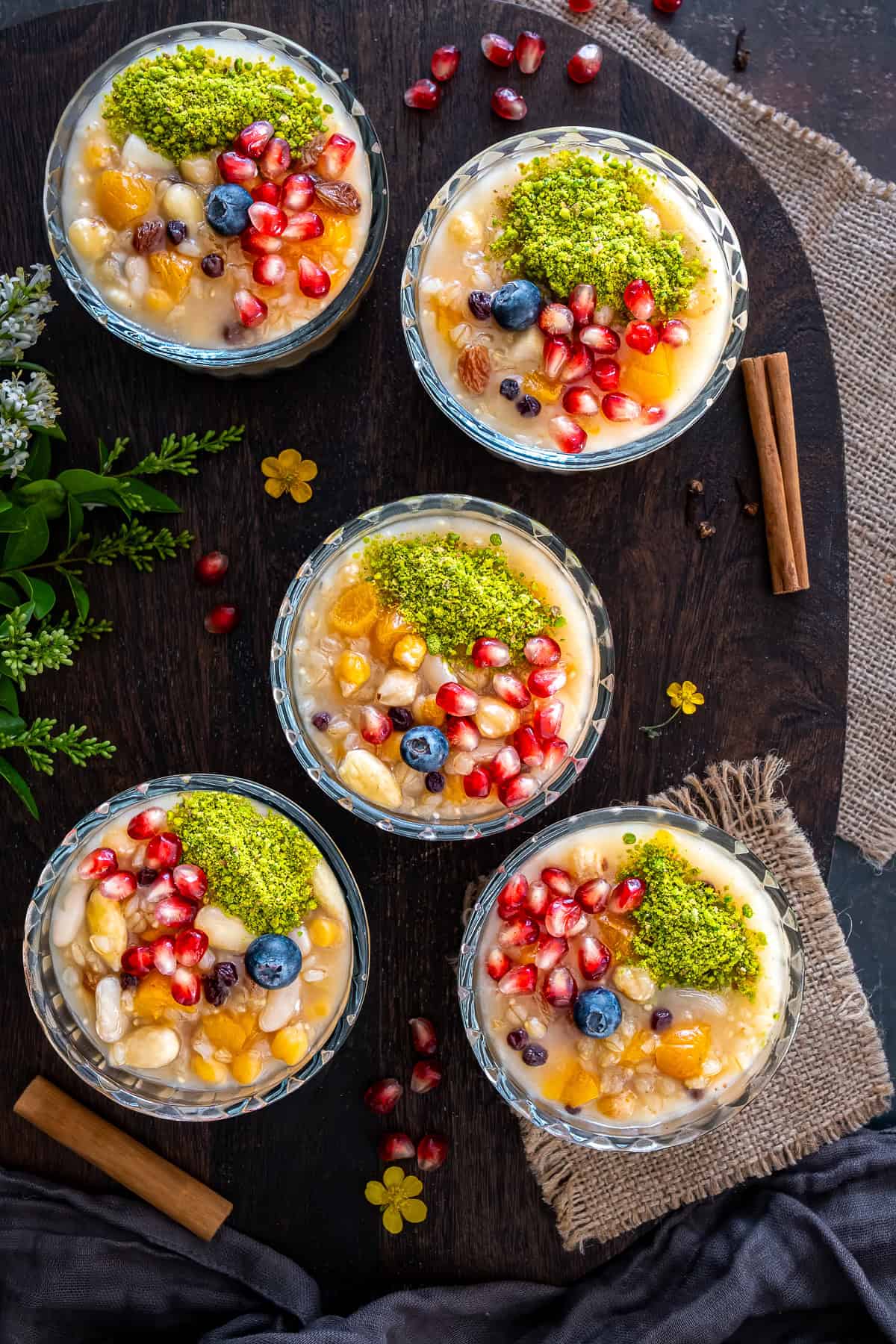
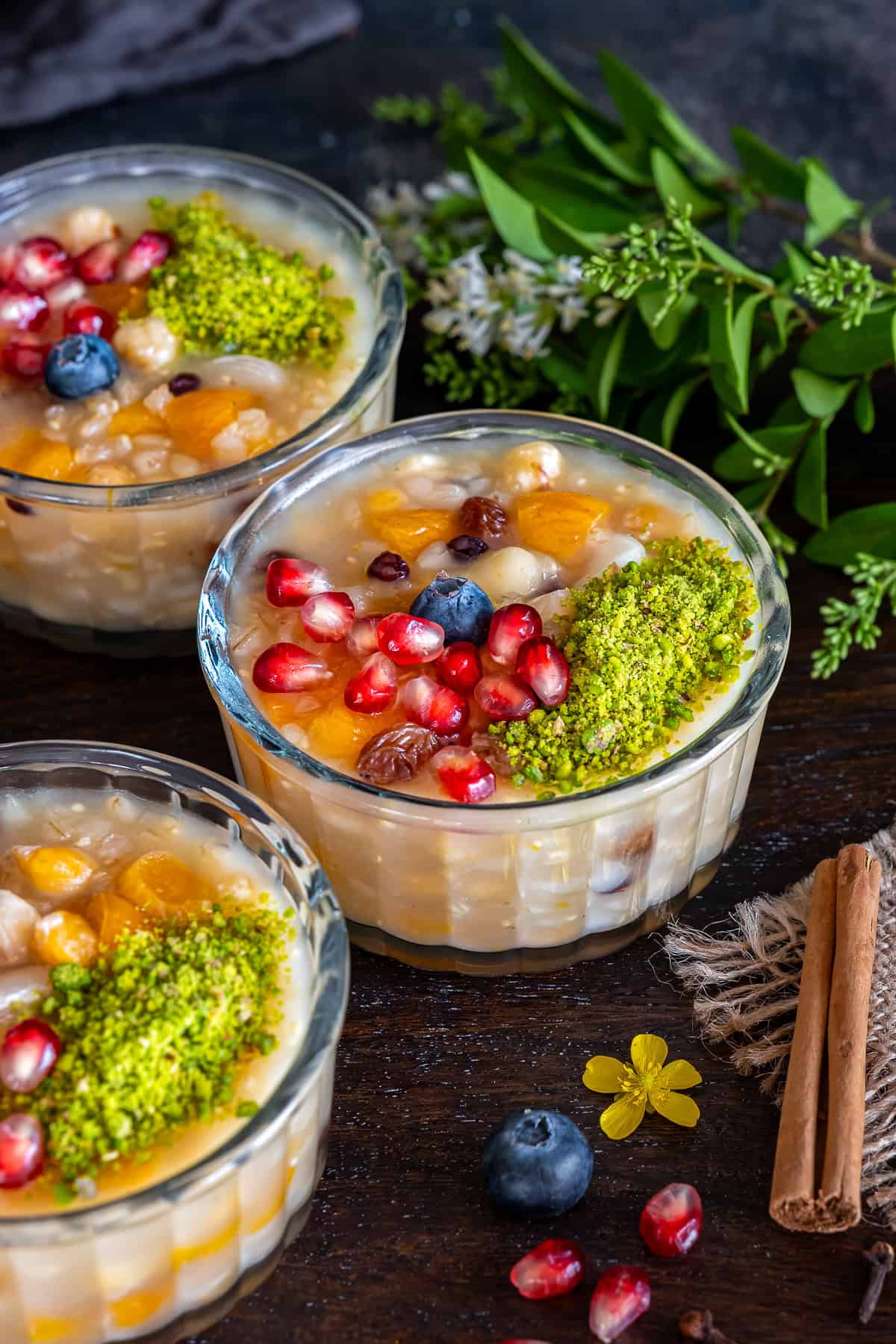
- For garnish: We like to top our ashure with pomegranate seeds, ground pistachios, and blueberries. Blueberries are not a traditional topping in Türkiye, but we enjoy them here. Feel free to use your favorite nuts, fruits, or other toppings.
You can find the full list of ingredients with their exact measurements in the recipe card below.
How To Make Ashure
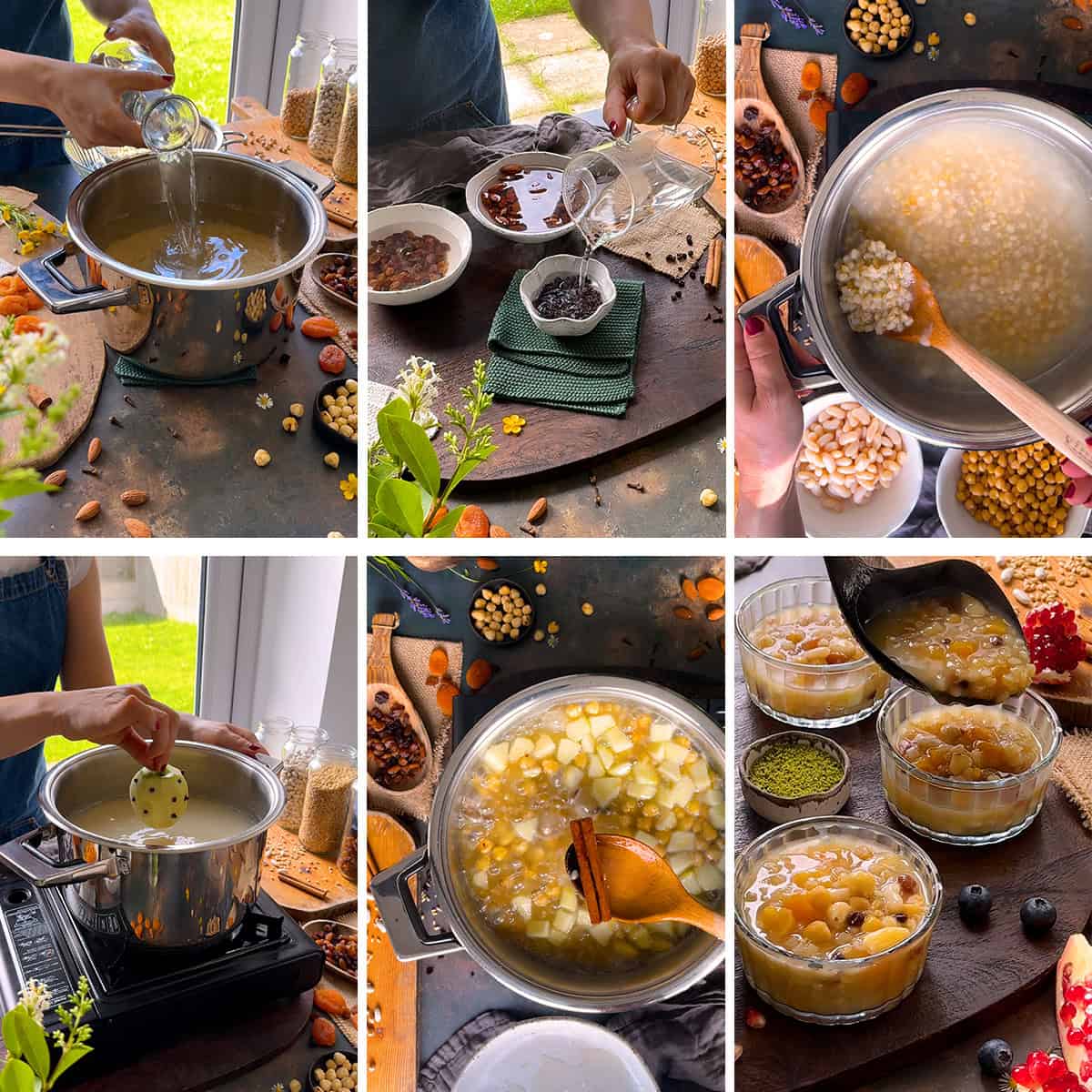
Ashure might look like a complicated recipe because of the long ingredient list. However, it is quite simple. Most of the work is just soaking, chopping, and preparing the ingredients while the wheat berries are cooking.
The process starts by soaking the wheat berries, chickpeas, and beans overnight. The next day, you cook them until tender. While they are cooking, you can prepare the rest of the ingredients by peeling the almonds, soaking the dried fruits, and chopping the apricots and apple.
Once the wheat berries are soft, everything comes together in one pot. The cooked chickpeas and beans are added first, followed by the dried fruits, nuts, apple, and flavorings. Finally, the sugar is stirred in and the ashure is simmered until everything is well combined.
After a short rest, divide it into bowls and let it cool. You can enjoy ashure warm, but most people in Türkiye prefer it chilled after a few hours in the refrigerator.
You can find the full instructions with step-by-step details in the recipe card below.
Why Every Ashure Recipe Is Different
One of the things we love about ashure is that there isn't just one correct way to make it.
The wheat berries, chickpeas, beans, and sugar form the base of the recipe. Beyond that, every family has their own version.
Some people use only dried fruits, while others add fresh fruit too. We like adding apple because it gives the ashure a nice texture, but many people leave it out. Dried figs are also common, but we don't use them because they can make the ashure darker and softer than we prefer.
Some recipes include walnuts or even rice. We don't use either of them, but many people do.
The toppings are even more flexible. Pomegranate seeds, pistachios, hazelnuts, walnuts, sesame seeds, dried apricots, coconut flakes, and cinnamon are all popular choices.
Skim Off The Foam While Cooking
As the wheat berries, chickpeas, and beans cook, you will notice some foam forming on the surface. We recommend skimming it off with a spoon whenever you see it.
This only takes a minute or two and helps keep the cooking liquid cleaner. Don't worry if you miss a little bit, but removing most of the foam will give you a nicer final result.
Why Do We Stick Cloves Into an Apple?
Instead of adding loose cloves directly to the pot, we stick them into a peeled apple and simmer it in the ashure for a few minutes.
This gives the dessert a gentle clove flavor without leaving whole cloves scattered throughout the pot. After the apple has infused the ashure, we simply remove it and discard it.
It's an old-fashioned trick that many people in Türkiye use when making ashure.
Don't Worry If It Looks Too Thin
When the ashure is finished cooking, it may look thinner than you expect. In fact, it should still have plenty of liquid at this stage.
As the ashure cools, the wheat berries and other ingredients continue to absorb some of the liquid, causing the dessert to thicken naturally. By the time it has chilled in the refrigerator, the consistency will be much thicker.
How To Serve Ashure
Ashure can be served either warm or cold, but in Türkiye it is most commonly enjoyed chilled. After dividing it into bowls, let it cool to room temperature and then refrigerate for a few hours.
If you plan to keep it in the refrigerator for more than a day, we recommend adding the toppings just before serving. This helps them stay fresher and keeps their texture.
We love enjoying a bowl of ashure with a glass of Turkish tea or a cup of Turkish coffee.
Storage
Ashure keeps well in the refrigerator for up to 1 week. Cover the bowls with plastic wrap or transfer the dessert to airtight containers once it has cooled completely.
Keep in mind that ashure will continue to thicken as it sits in the refrigerator. This is completely normal.
For the best texture and appearance, we recommend adding any toppings just before serving.
More Turkish Desserts
- Güllaç (Ramadan Dessert)
- Sütlaç (Turkish Rice Pudding)
- Semolina Helva
- Kabak Tatlisi (Turkish Pumpkin Dessert)
- Halka Tatlisi
Sign up for the FREE Give Recipe Newsletter to get the new recipes into your inbox!
And stay in touch with us on Facebook, Pinterest, YouTube and Instagram for all the latest updates.
📖 Recipe
Ashure (Turkish Noah's Pudding)
Video
INGREDIENTS
- 300 g wheat berries see Note 1
- 100 g dried chickpeas or 220g cooked and drained chickpeas, see Note 2
- 75 g dried white beans or 175g cooked and drained beans, see Note 2
- 2.75 liters water
- 100 g raw almonds
- 75 g sultana raisins
- 30 g currants
- 150 g dried apricots diced
- 10 whole cloves
- 2 apples peeled (we use Granny Smith, but any variety works)
- 1 teaspoon zest of 1 orange
- 1 cinnamon stick
- 50 g raw hazelnuts
- 500 g granulated sugar
For Garnish (Optional, see Note 3)
- Pomegranate seeds
- Ground or whole pistachios
- Blueberries or other berries
INSTRUCTIONS
- Place the wheat berries, chickpeas, and beans in separate bowls. Cover each with cold water and soak overnight.
- The next day, drain and rinse the wheat berries well under running water. Transfer them to a large pot. Add 2.75 liters water and bring to a boil.
- Drain and rinse the soaked chickpeas and beans. Place them in separate pots and cover with water. Bring both to a boil.
- Reduce the heat to medium-low and simmer until tender, skimming off any foam that forms on the surface. The chickpeas and beans take about 30–35 minutes. The wheat berries take about 50 minutes.
- Meanwhile, place the almonds in a bowl and cover with boiling water. Let them sit for 10 minutes, then peel off the skins.
- Put the raisins, currants, and diced apricots into separate bowls. Cover with hot water and let them soak for 10 minutes. Drain, rinse well, and set aside.
- When the chickpeas and beans are cooked, drain them and set aside.
- Dice one peeled apple and set aside.
- Push the cloves into the second peeled apple and set aside.
- When the wheat berries are tender, add the cooked chickpeas and beans to the pot. Stir well and cook for 10 minutes.
- Add the apple with the cloves to the pot along with the orange zest. Cook for 5 minutes.
- Remove and discard the apple.
- Add the diced apple, cinnamon stick, apricots, raisins, currants, almonds, and hazelnuts. Cook for 3 minutes.
- Add the sugar and stir until fully dissolved.
- Check the consistency. The mixture should still look fairly loose and not too thick.
- Cook for another 10 minutes, then remove the pot from the heat.
- Let it rest for 10 minutes, then divide it among serving bowls.
- Let the bowls cool for 10–15 minutes. Garnish with pistachios, pomegranate seeds, berries, or any toppings you like.
- Once completely cooled, refrigerate for several hours before serving. You can also serve ashure warm if preferred.
NOTES
- Make sure to use whole wheat berries for this recipe. They are sold as wheat berries for ashure, aşurelik bugday. Cracked wheat or any type of bulgur won't work here. We usually buy it from Turkish grocery stores, but you can also find it at many Middle Eastern markets.
- Cooked canned chickpeas and beans can be used instead of dried ones. If using canned, skip the soaking and cooking steps for them.
- The garnishes are completely optional. We often use pistachios, pomegranate seeds, and blueberries, but you can use any nuts, dried fruits, coconut flakes, or a sprinkle of ground cinnamon.
- Ashure keeps well in the refrigerator for up to 1 week.
NUTRITION
Nutrition information is automatically calculated, so should only be used as an approximation.
ADDITIONAL INFO
You Might Also Like:


Fatima says
My favorite dessert EVER!
Yusuf says
Hi Fatima,
It makes a great breakfast too!
dokuzuncubulut says
Ne kadar güzel anlatmışsın Zerrin'ciğim. Kapıyı açıp da bir tabak aşureyle karşılaşmak ne keyifli bir duygudur. Bu sene yapamadım, yapan hiçbir arkadaşıma denk gelmedim:(( Aşure fotoğrafı görünce içim gidiyor resmen. Şu tadilat işlerini bitireyim hemen yapıp doya doya yiyeceğim... Ellerine sağlık olsun, sevgiler:)
Aysun says
Last weekend was the weekend for asure for my family, i always cook it onçe a year. İ strongly advise this diffenet taste to the ones who have never tried before.
Zerrin says
And isn't it a great part of culture, teaching the importance of sharing? It is beyond a pudding!
Megan says
I would never thought to put chickpeas in a pudding. I'd heard you were suppose to never return an empty dish and now I know where that all stemmed from. Thanks for the great post!
Maria says
Great pudding recipe. Thanks for sharing.