

Turkish Bulgur Pilaf (or bulgur pilavi as we call it in Turkish) is one of those dishes almost every Turkish family grows up with. For us, it’s the ultimate side dish. It pairs well with nearly anything on the table, but we also enjoy it as a meal with a bowl of yogurt on the side.
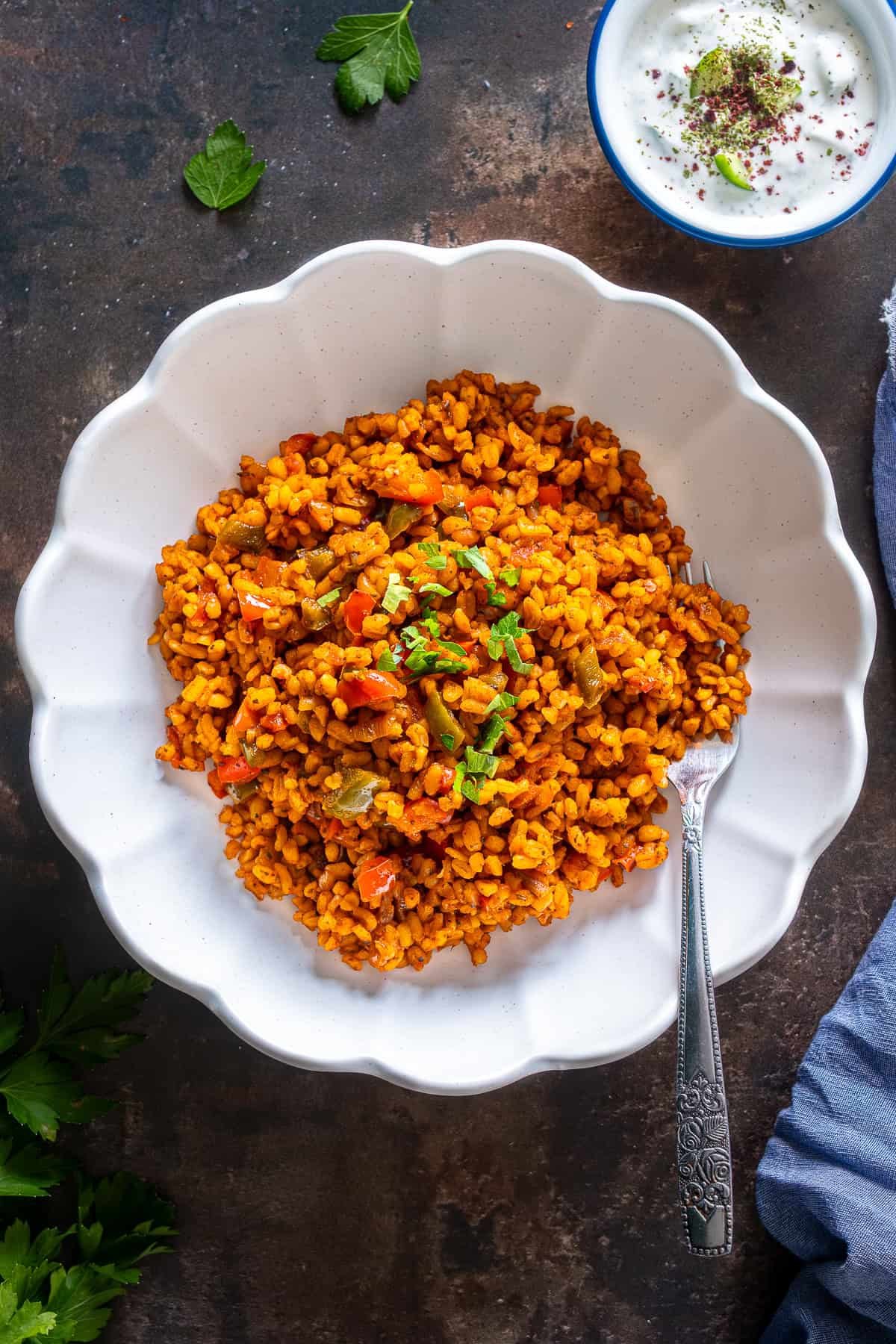
The Most Traditional Side Dish in Turkey
In Turkish cuisine, bulgur pilaf is one of the most traditional side dishes. Whatever the main meal is, there’s a good chance this pilaf will be served right next to it. When we ask ourselves “What should we cook on the side tonight?” the answer is often bulgur pilaf.
Maybe it’s because bulgur is more budget-friendly than rice or simply because it’s easier to cook.
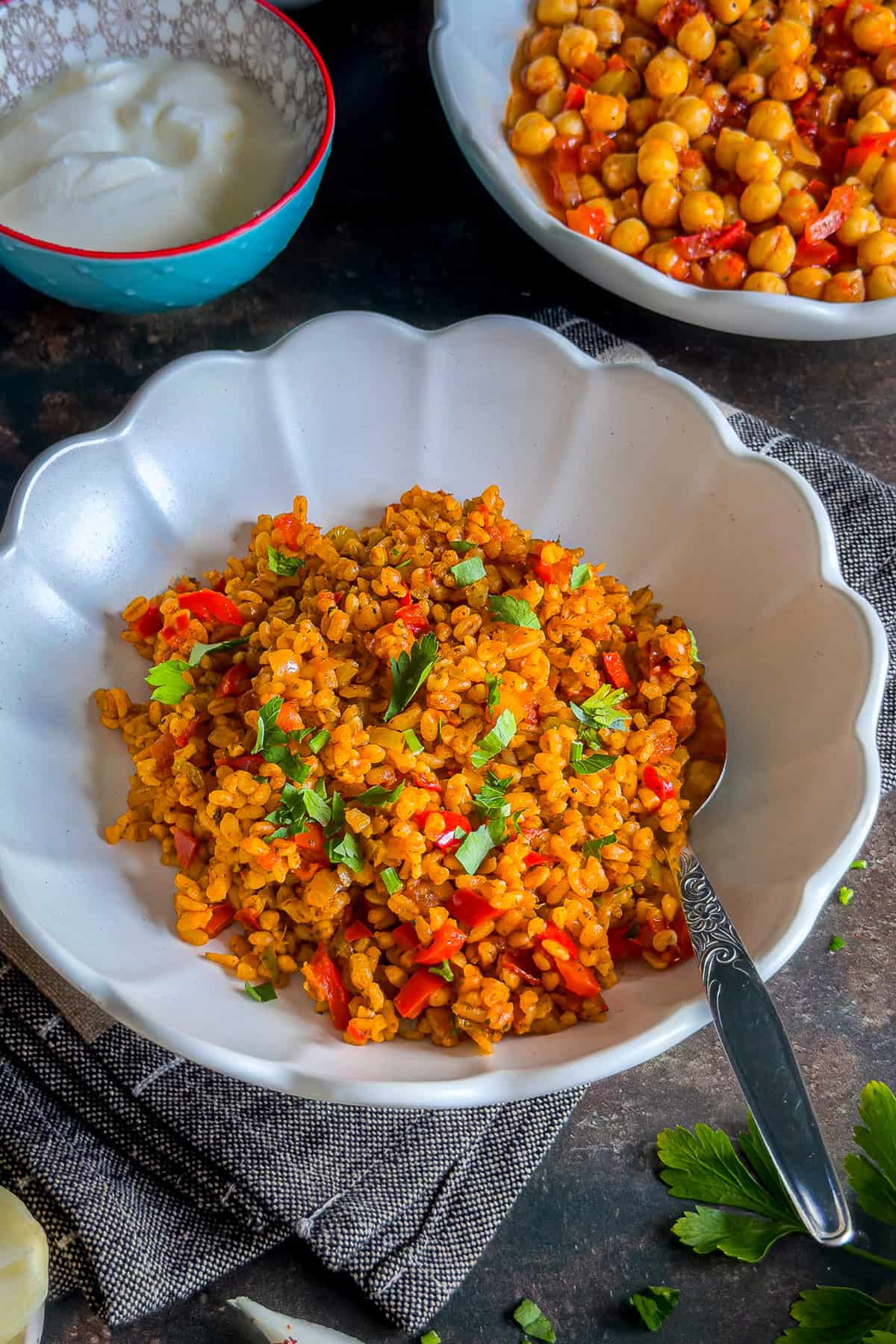
Also, bulgur has always felt like true countryside food. If you have roots in a village like we do, you’ll know exactly what we mean; bulgur pilavi is the go-to choice.
There are several versions of bulgur pilaf in Turkey, but today we’re talking about the most popular one: domatesli bulgur pilavi — bulgur pilaf with tomatoes.
About The Ingredients
You can find the full list of ingredients with exact measurements in the recipe card below.
Here, let’s quickly talk about what goes into our Turkish bulgur pilaf. Well, you don’t need anything fancy, just a few simple ingredients. Some of them are optional, but we think they really make a difference.
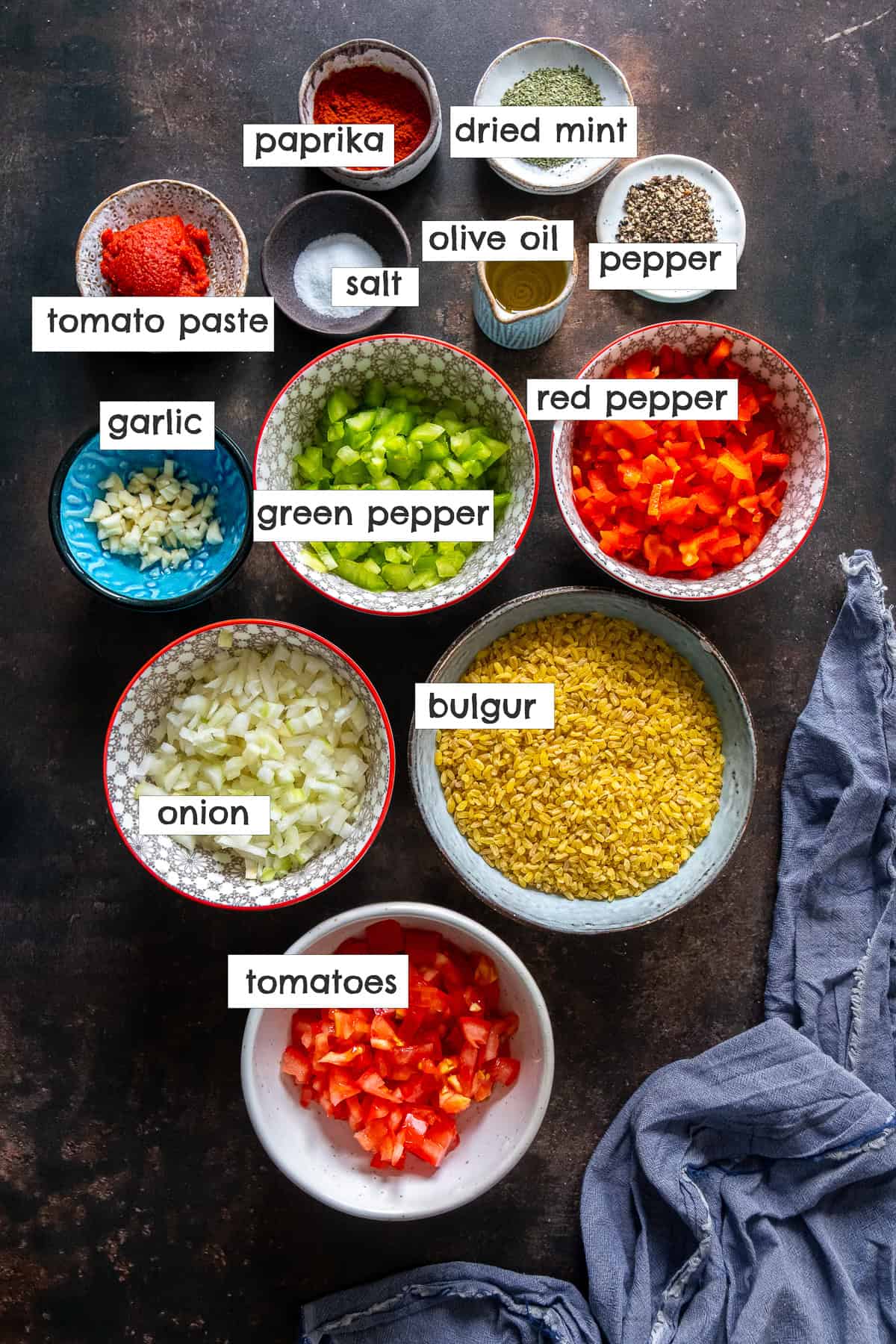
- Bulgur (cracked wheat): For this recipe, you definitely need coarse or extra coarse bulgur wheat. You can usually find it at Middle Eastern grocery stores.
- Tomatoes: We usually use fresh chopped tomatoes, but canned ones work fine too.
- Green pepper: A must-have ingredient in Turkish bulgur pilaf. You can use a small green bell pepper or one Turkish carliston biber (similar to banana pepper). We also like to add a red pepper for extra color and flavor.
- Garlic (optional but highly recommended): Adds a wonderful extra layer of flavor.
- Spices: Salt, black pepper, paprika, and dried mint. Don’t skip any of these, they are what make the pilaf taste so good.
- Water: We keep it simple and only use water, but you can use chicken or vegetable stock if you prefer. We just love the plain version.
How to Make Turkish Bulgur Pilaf
You can find the full instructions in the recipe card at the end of this post. But really, there isn’t an easier side dish than this. Here’s how it goes:
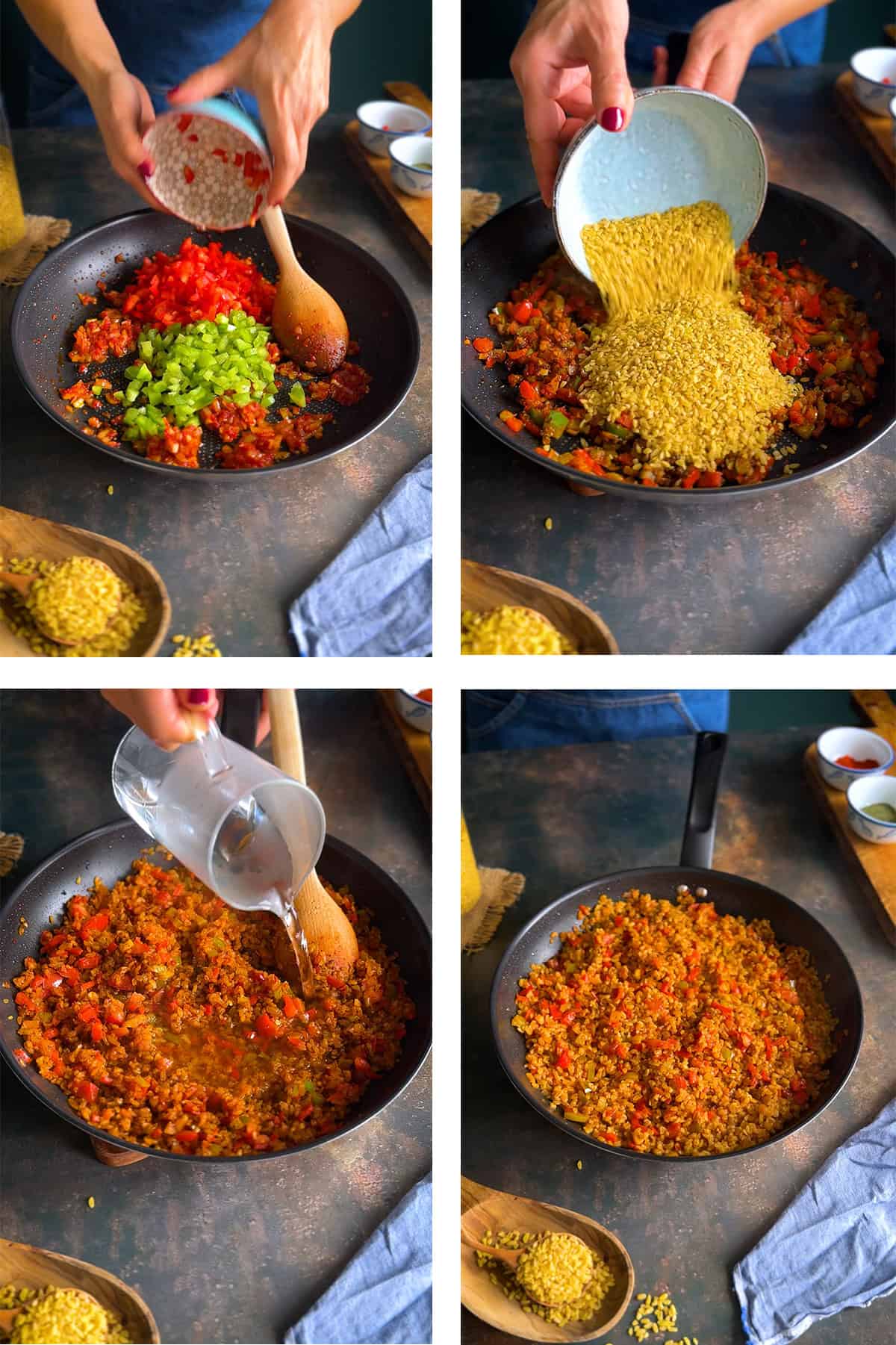
First, sauté the onion in olive oil. Stir in the tomato paste, then add finely diced garlic. Next, toss in the chopped peppers and season with spices. Cook until the peppers start to soften.
Add the bulgur and stir it for a couple of minutes. Then add the tomatoes, cover the pan, and let them cook gently until they soften a little. Carefully pour in hot water, bring it to a boil, then cover and cook on the lowest heat until all the liquid is absorbed.
Turn off the heat and let the pilaf rest for about 15 minutes with the lid on. Finally, fluff it gently with a spoon and serve.

Don’t Use Fine Bulgur to Make Bulgur Pilaf!
For a traditional Turkish Bulgur Pilaf recipe, you need coarse, medium coarse, or extra coarse bulgur, never fine bulgur. Fine bulgur is very thin and doesn’t even need cooking. In Turkey, it’s never used for bulgur pilavi. Instead, it’s mostly used in recipes like kısır, bulgur salad.
So make sure to pick the right type of bulgur to get that perfect texture.
Water Ratio Tips
The amount of water needed can change depending on the type of bulgur you use.
The ratio we share for this Turkish bulgur pilaf recipe works best for medium coarse and extra coarse bulgur. If your bulgur pilaf still feels a bit firm after cooking, don’t worry. Just add a little more hot water (about ¼ cup), cover again, and let it simmer on low heat. The bulgur will absorb the extra water and turn out just right.
Serving Suggestions
Turkish bulgur pilaf is such a versatile side dish, it goes well with almost any meal. Our favorite pairings are with classic Turkish stews like kuru fasulye (bean stew), nohut yemeği (chickpea stew), taze fasulye (green beans), or Turkish beef stew.
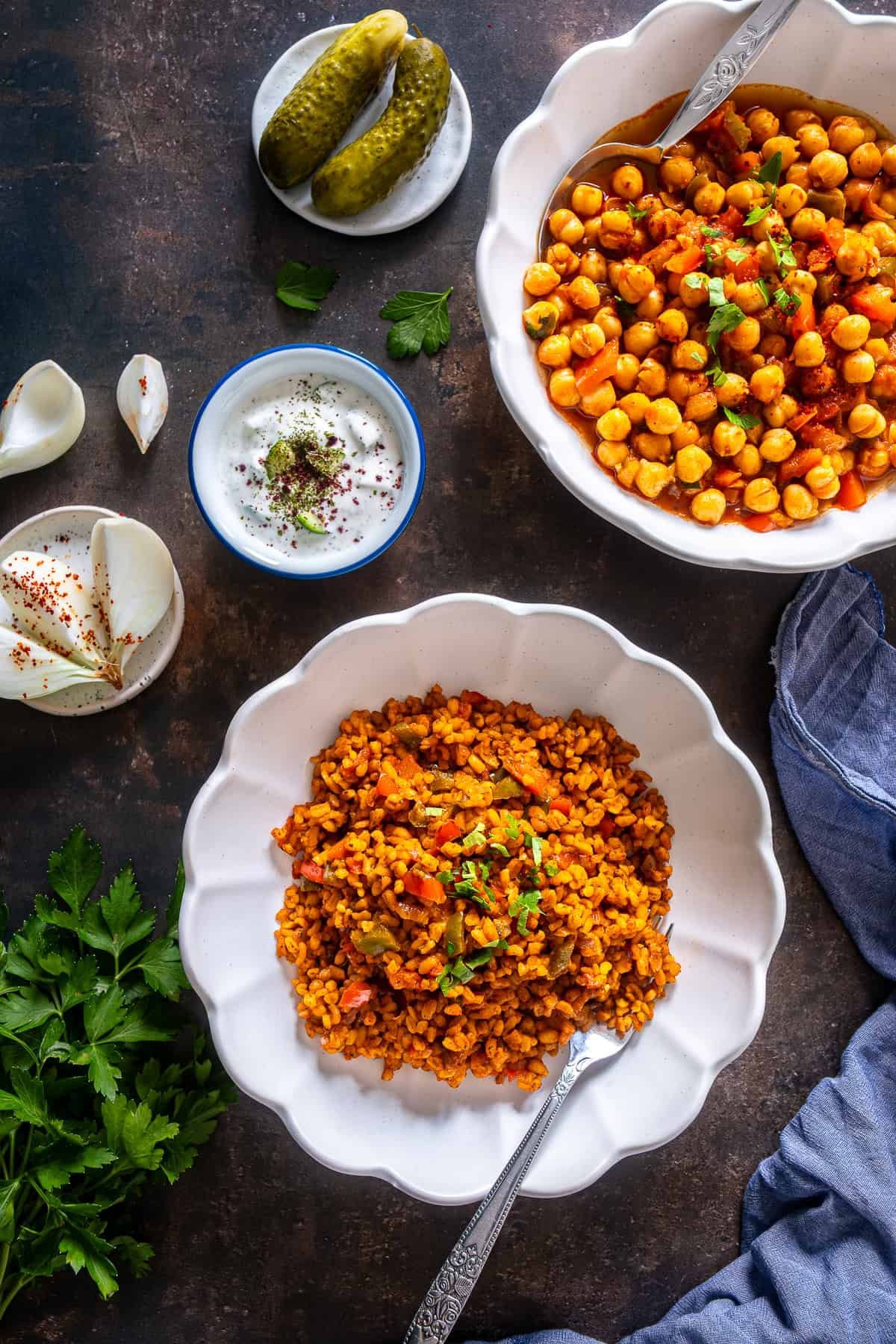
It also matches perfectly with grilled dishes like köfte (meatballs) or chicken.
Add a simple shepherd salad or purslane salad a bowl of cacık (yogurt with cucumber) on the side, and you’ve got a perfect meal.
And here’s a little bonus: if you have leftovers, bulgur pilavi makes a quick main dish the next day, just serve it with some Turkish yogurt and you’re set.
Storage & Reheating Tips
If you have leftovers, let your Turkish bulgur pilaf cool completely before storing it. Keep it in an airtight container in the fridge, and it will stay fresh for up to 3–4 days.
To reheat, just warm it in a pan over low heat. Add a splash of water, cover, and let it steam until heated through. You can also reheat it in the microwave, again, with a little water so it doesn’t dry out.
More Turkish Bulgur Recipes
- Kisir (Turkish Bulgur Salad)
- Mercimek Koftesi
- Cig kofte
- Ezogelin Soup
Also, check out our collection of all Turkish Bulgur Recipes!
Sign up for the FREE Give Recipe Newsletter to get the new recipes into your inbox!
And stay in touch with us on Facebook, Pinterest, YouTube and Instagram for all the latest updates.
📖 Recipe

Turkish Bulgur Pilaf with Tomatoes
Video
INGREDIENTS
- 2 tablespoons olive oil
- 1 onion medium, finely chopped
- 1 tablespoon tomato paste
- 2 cloves garlic finely diced
- 1 green pepper finely diced
- 1 red pepper finely diced
- 1 cup bulgur extra coarse
- 1 teaspoon salt
- 1 teaspoon paprika
- 1 teaspoon dried mint
- ½ teaspoon black pepper
- 2 tomatoes medium, diced
- 1½ cups hot water
INSTRUCTIONS
- Heat olive oil in a pan and sauté the chopped onion until soft.
- Stir in the tomato paste, then add diced garlic and cook for 1 minute.
- Add diced peppers and cook until they start to soften.
- Add the bulgur and spices. Cook for 2–3 minutes, stirring occasionally.
- Stir in the chopped tomatoes and cook for another 2–3 minutes until softened.
- Carefully pour in the hot water. Bring to a boil.
- Reduce the heat to the lowest, cover, and cook for about 15 minutes or until the water is absorbed.
- Remove from heat and let it rest, covered, for at least 15 minutes before serving.
NOTES
- Do not cook the bulgur over high heat.
- Bring the mixture to a boil, then reduce the heat to its lowest possible setting. Remember to keep your lid on the pot to prevent moisture from evaporating.
- You cannot use fine bulgur for this pilaf recipe. Pilaf has to have some texture otherwise it turns out more like couscous. Medium, coarse or very coarse bulgur will work best and give a nice mouth-feel.
- Allowing your bulgur to rest before serving it is another essential step, especially for coarse and very coarse bulgur. This allows the grains to continue cooking without losing additional moisture.
NUTRITION
Nutrition information is automatically calculated, so should only be used as an approximation.

mn says
I spent a month in and around Istanbul in 2014. The simple bulgur pilaf I got hooked on included a small amount of bieber salcasi, which is the secret imo. I can't find the extremely simple version of the recipe which includes onion and tomato paste. I 'm no longer sure if I'll recognize the name if I see it. It's a simple side served with a lot of things at the low end lunch places. What is it called?
Anika says
Stumbled upon your beautiful recipes last week. Today I have made the tomato bulgar pilaf for a family dinner. It is so simple to prepare and the taste is so delicious. My fiancé & I love Turkish food so I will be making my way through all your recipes.
Zerrin & Yusuf says
Hi Anika,
Glad you enjoyed our bulgur pilaf. It is a staple side dish for us. We pair it with any main course.
Really easy to make. We are so happy to hear that you two liked it too.
Cheers!
Meryl says
I made this pilaf for a potluck party the other day and it was a hit! I garnished it with cherry tomatoes and serve with lettuce leaves. YUM!
samir says
this is a staple dish of the levant( lebanon,syria,palestine,jordan) ..it is also made with rice instead of bulgar..
Zerrin says
Nihal- Mersin'de de sık yapılan bir pilavdır bu ama dediğin gibi pekçok kişi bilmez.
Mediterranean Turkish Cook says
Ne guzel mercimekli bulgur pilavini eklemissin. Pekcok Turk yemek bloglarinda gormuyorum bunu pilavi. Belki de bilinmediginden dolayidir. Hatay'da cok yapiliyor bu pilav ve ben de cok seviyorum.
Daily Spud says
Mmm, I do like pilafs made with bulgar, this is a nice variation to try!
Tangled Noodle says
A great alternative to rice pilafs (which is what I'm most used to). This looks delicious and the addition of cinnamon sounds so intriguing!
lisaiscooking says
It looks so delicious in your photo! This sounds like a perfect combination.
OysterCulture says
Two flavors that taste so good separately can only be that much better together. Can you hold off on these yummy recipes for a bit - my husband is going surfing in Nicaragua and I cannot eat these dishes by myself - I am going to be backed up with wonderful ideas! Just kidding =) As always - it looks fantastic.
Diana says
I bought bulgur the other day, now I have a recipe to use it in, thanks.
Sara says
This looks like a great pilaf, I love the flavor and texture of green lentils!
Natasha - 5 Star Foodie says
Great pilaf recipe and I love your presentation!
Lauren says
that pilaf looks wonderful! very similar to what I ate last night!
Nurit - 1 family. friendly. food. says
Wow, this looks great. I think I’ll try and make this at home.
Great pics.Sound delicious!