
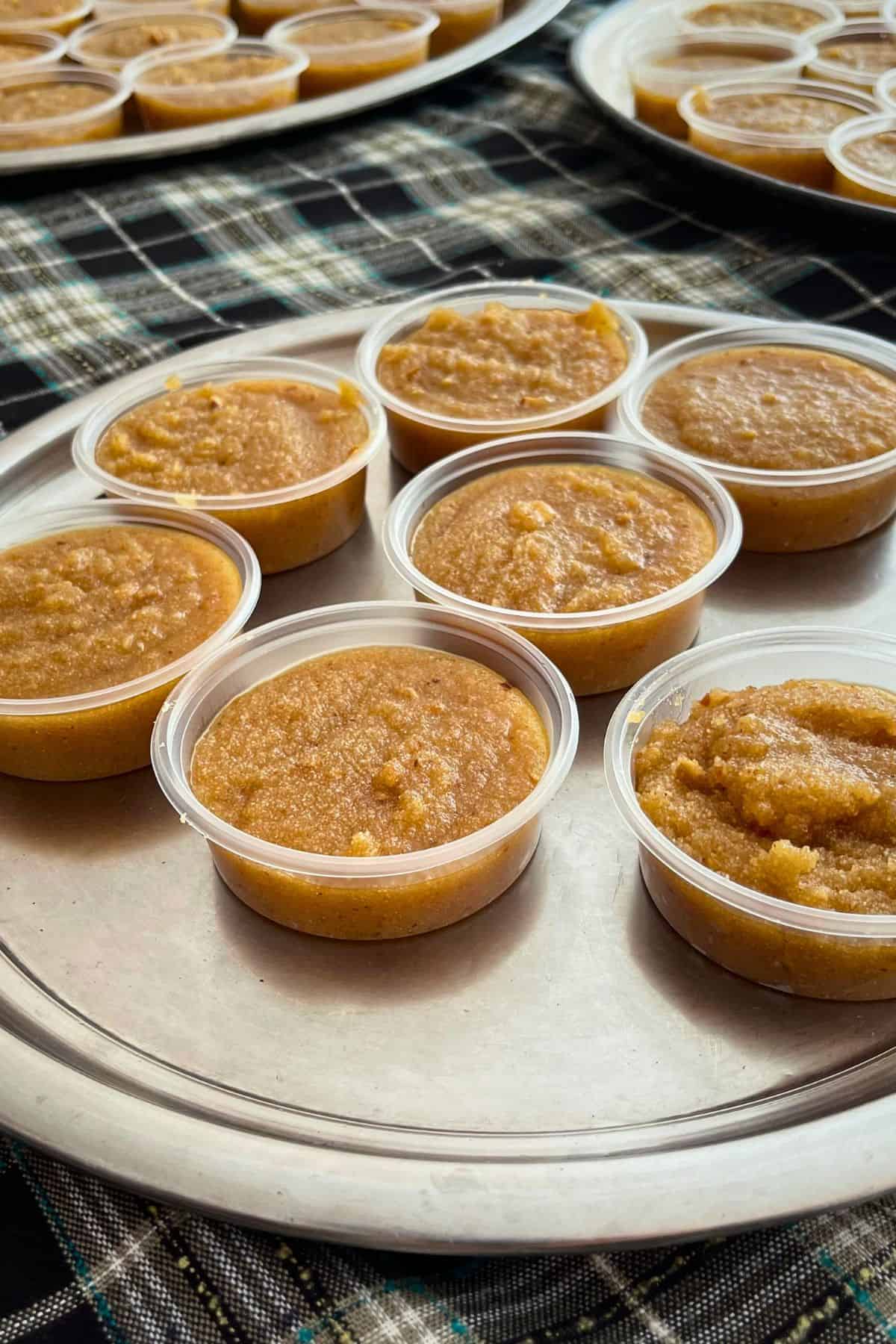
Turkish Semolina Halva (İrmik Helvası) is a comforting dessert made with toasted semolina, pine nuts and a simple sugar syrup. In Türkiye, it's often made for family gatherings and special occasions, but we love making it whenever we're craving something sweet. It's so easy to make, too!

İrmik Helvası: More Than Just a Dessert in Türkiye
Turkish semolina halva, or irmik helvası, is more than just a dessert in Türkiye. We make it for family gatherings, celebrations and also when someone passes away. It's often made in large amounts and shared with family, friends and neighbors.
Last summer, when we were visiting Türkiye, we lost someone very dear to us, our beloved Fatma Nene. She was the eldest member of our extended family, and we all loved her very much.
For her funeral, semolina halva was made in two huge pots to share with everyone who came. The semolina took a long time to toast, so family members and others who knew and loved her took turns stirring it. It was a simple way for everyone to be part of the process and remember her together.
Before serving the helva, prayers were said for her. Then it was shared with those who had come to pay their respects.
That day reminded us how much meaning this simple dessert can carry. It's not just about the food, but also the memories, love and traditions that come with it.
About The Ingredients
You only need a few ingredients for Turkish semolina helva.
Semolina: Known as irmik in Turkish. It is a type of textured semolina flour made from durum wheat. Use coarse or extra coarse semolina for this recipe.
Oil: We use light olive oil, but you can use vegetable oil or sunflower oil too. Authentic semolina helva is made with butter instead of oil. So, you can do this as well. But for a lighter taste (which is what we prefer), we use olive oil.
Pine Nuts: Traditional irmik helvasi is made using pine nuts but you can also use walnuts or almonds.
Sugar: We use granulated white sugar.
Lemon zest: It is completely optional and not very traditional. But we do like the zesty fresh flavor it adds to the semolina.
Cinnamon powder: We use it as a garnish for the topping of semolina halva.
Find the full list of the ingredients in the recipe card below.

How To Make Turkish Semolina Halva
Making Turkish semolina halva is easier than you might think! Everything comes together in one pan, and the key to getting that lovely nutty flavor is to toast the semolina well.
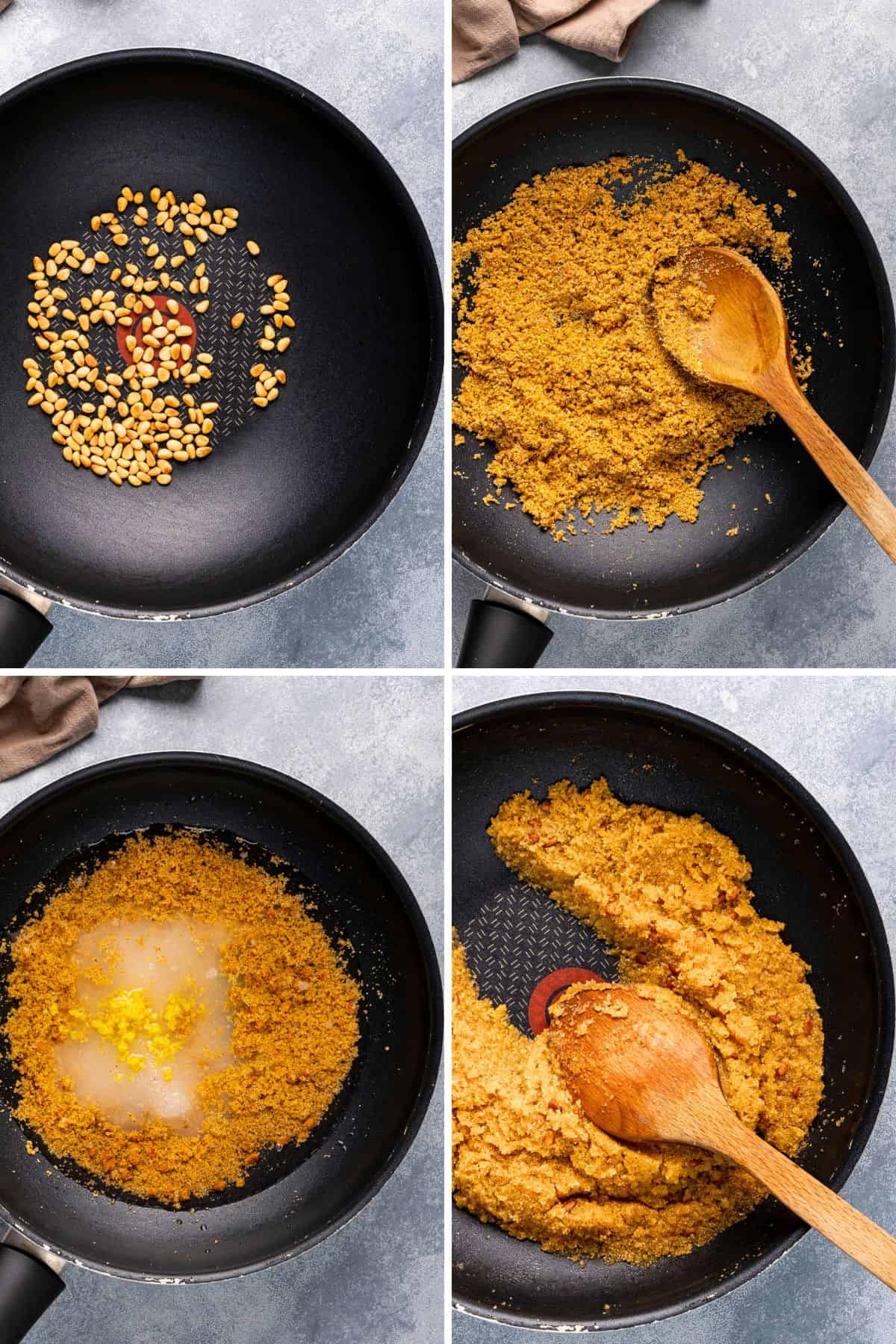
We start by toasting the pine nuts until lightly golden. Then we add olive oil and semolina and cook them together, stirring often. As the semolina toasts, it slowly turns golden brown and starts to smell wonderfully nutty. Don't rush this part, as it's what gives the halva its delicious flavor.
Next, we stir in the sugar and lemon zest, then carefully add the water. The mixture will bubble up at first, so be careful! We cover the pan and let it cook over low heat until the water is absorbed.
Finally, we turn off the heat and let the halva rest, covered, for about 15 minutes. This gives it time to settle and develop its lovely texture. Give it a gentle stir before serving, and enjoy!
You can find the full step-by-step instructions in the recipe card below.
Serving Suggestions
Traditionally, Turkish Semolina Halva is served in small bowls or shaped into domes.
We like to sprinkle a little cinnamon on top, but that’s totally up to you.
The most classic way to enjoy it is with a cup of Turkish tea or coffee on the side. And if you want to take it to the next level, add a scoop of ice cream (dondurma).

Storage
You can store Turkish semolina halva at room temperature for one day. If you store it properly inside the fridge, it will even last up to a week.
Keep it inside an airtight container to help preserve its flavor and texture.
We don't recommend freezing it. It doesn't keep well, and won't be as good as when made fresh.
Our Tips
- Keep an eye on the pan at all times. Semolina can burn quickly once it heats up. Stir constantly until it turns golden or light brown. Just follow the steps and cooking times in the recipe card below.
- Be careful when adding the water. Since the semolina in the pan is very hot, it can splatter and burn you.
- Let the semolina halva rest for 15 minutes before serving. This step helps it develop a better texture and flavor.

More Turkish Desserts
Sign up for the FREE Give Recipe Newsletter to get the new recipes into your inbox!
And stay in touch with us on Facebook, Pinterest, YouTube and Instagram for all the latest updates.
📖 Recipe

Turkish Semolina Halva (Irmik Helvasi)
INGREDIENTS
- 3 tablespoons pine nuts
- 80 ml (⅓ cup) olive oil, 3 fl oz, or butter, see Note 2
- 200 grams (1¼ cups) semolina, coarse or extra coarse, 7 oz
- 1 teaspoon lemon zest, optional
- 225 grams (1 cups) sugar, 8 oz
- 320 ml (1⅓ cups) water, 11 fl oz
- ½ teaspoon cinnamon, optional
INSTRUCTIONS
- Toast the pine nuts: Heat a non-stick pan over medium-high heat and add the pine nuts. Toast them, stirring constantly, until they turn lightly golden. This usually takes about 3–4 minutes. At first, it might look like nothing is happening, but once they start changing color, they brown quickly, so don’t leave the pan unattended.
- Cook the semolina: Add the olive oil and semolina into the pan. Cook over medium heat, stirring all the time, until the semolina turns golden and smells nutty. This will take about 8 minutes.
- Add flavorings and water: Stir in the lemon zest (if using) and sugar. Then carefully pour in the water. The semolina will be very hot at this stage, and if you add the water too quickly it can splatter and burn you. Give it a quick stir, cover the pan, and let it come to a boil.
- Simmer: As soon as it starts boiling, lower the heat to the minimum and let it simmer until the liquid is fully absorbed, about 3–4 minutes. You can give it a gentle stir once or twice while it cooks.
- Rest: When all the water is gone, remove the pan from the heat. Cover it with a lid and let the halva rest for 15 minutes.
- Shape or serve: Spoon it into bowls and serve. If you want the traditional dome shape, use a small porcelain or glass bowl (other materials don’t work well because the halva sticks). Lightly wet the inside of the bowl, fill it with semolina halva, press it down firmly, then place a small plate on top and flip it over.
- Finish and enjoy: Serve warm or at room temperature. Sprinkle with cinnamon right before serving.
NOTES
- Use extra coarse semolina, NOT fine semolina.
- We use olive oil for a lighter flavor, but butter is actually more traditional in Turkish semolina halva. If you prefer butter, use 100 g (3.5 oz) of unsalted butter instead. Melt it in the pan before adding the semolina.
- You shouldn’t leave the pan when cooking this helva. After reaching a certain temperature in the pan, semolina might burn very quickly. So you should keep an eye on it and cook stirring constantly. We want the semolina to get golden or very light brown. If you follow the steps with their time in the recipe card below, everything will be fine.
- Be careful when pouring water into the pan once the semolina in it gets golden. As the pan is really hot, water might spill.
- Don’t serve it before letting the helva sit for 15 minutes. The texture will get better and the flavors will bend better.
NUTRITION
Nutrition information is automatically calculated, so should only be used as an approximation.
ADDITIONAL INFO
You might also like:


Ozlem says
I tried your semolina halva recipe today and it turned out absolutely delicious! The instructions were very clear and easy to follow. My family loved it so much. Thank you, Zerrin and Yusuf, for sharing such a wonderful recipe with us.
Zerrin & Yusuf says
Hi Ozlem! We’re so happy to hear that you and your family enjoyed it! Thank you for trying our recipe and for your lovely words. It means a lot to us. 🥰
Denise says
This is how I exactly like semolina halva. With oil and pine nuts. Thank you for the recipe!
Zerrin & Yusuf says
Hi Denise,
Happy to hear that 🙂
Mina Joshi says
Wow - another dish we Indians love and make. This semolina halva is one of my favourites, I make it very similar to you but have never added lemon zest.
Wendy says
This looks lovely, Zerrin! I have a question about the word "halva". Does it mean something? The middle eastern halva I am used to is made with sesame seeds and is a very firm candy. This sweet reminds me of the semolina filling in the Greek pastry galaktoboureko (my personal favorite).
Zerrin says
Hi Wendy! Halva is the name we use for desserts made with flour, semolina or sesame seeds. In its origin, halva was used in place of the word dessert. Now we have 3 types of halva. Tahini halva, one you know, which is very firm; semolina halva and flour halva. Never heard of galaktoboureko, must search for it!
Reeni says
This looks so elegant and special Zerrin! Especially so when made by Grandmas. I like the mix of flavors you infused into it - irresistible!
Zerrin says
Thank you Reeni! Grandmas always know the best! Lemon zest and currants were definitely perfect and I guess my grandma would be proud of me!
Ilke says
Nice looking halva! So inviting. We used to make it in the middle of the night when we were back in college and pulling all nighters. No wonder we stayed up till morning with that sugar rush 🙂
Zerrin says
I don't know how, but we crave for it at nights too! I'm sure my neighbors would get angry with me if I made these at night. Its smell becomes more tempting in the middle of night!
Rosa says
A delicious treat! That is something I'll have to make very soon...
Cheers,
Rosa
Chris at Hye Thyme Cafe says
Funny timing - I have only ever had the pine nut version (known to me as Imrig Halva), but I was also thinking about a new version ... I received a sample of chocolate Cream of Wheat in the mail, and that was the first thing I thought of. Trying a chocolate version - maybe with almonds. I love the idea of the currants in this one, and that would give me something to use them in besides scones and stuffed grape leaves. 🙂
Zerrin says
Chris, chocolate version of irmik halva sounds great! Almonds would be a perfect addition too!
TasteofBeirut says
Very pretty and so delicious! I like this with cheese interlaced with it!
Zerrin says
Joumana, I remember now that I ate a kind of semolina dessert with unsalted cheese at a kebab restaurant, and it was fantastic! I must search for its recipe now!