

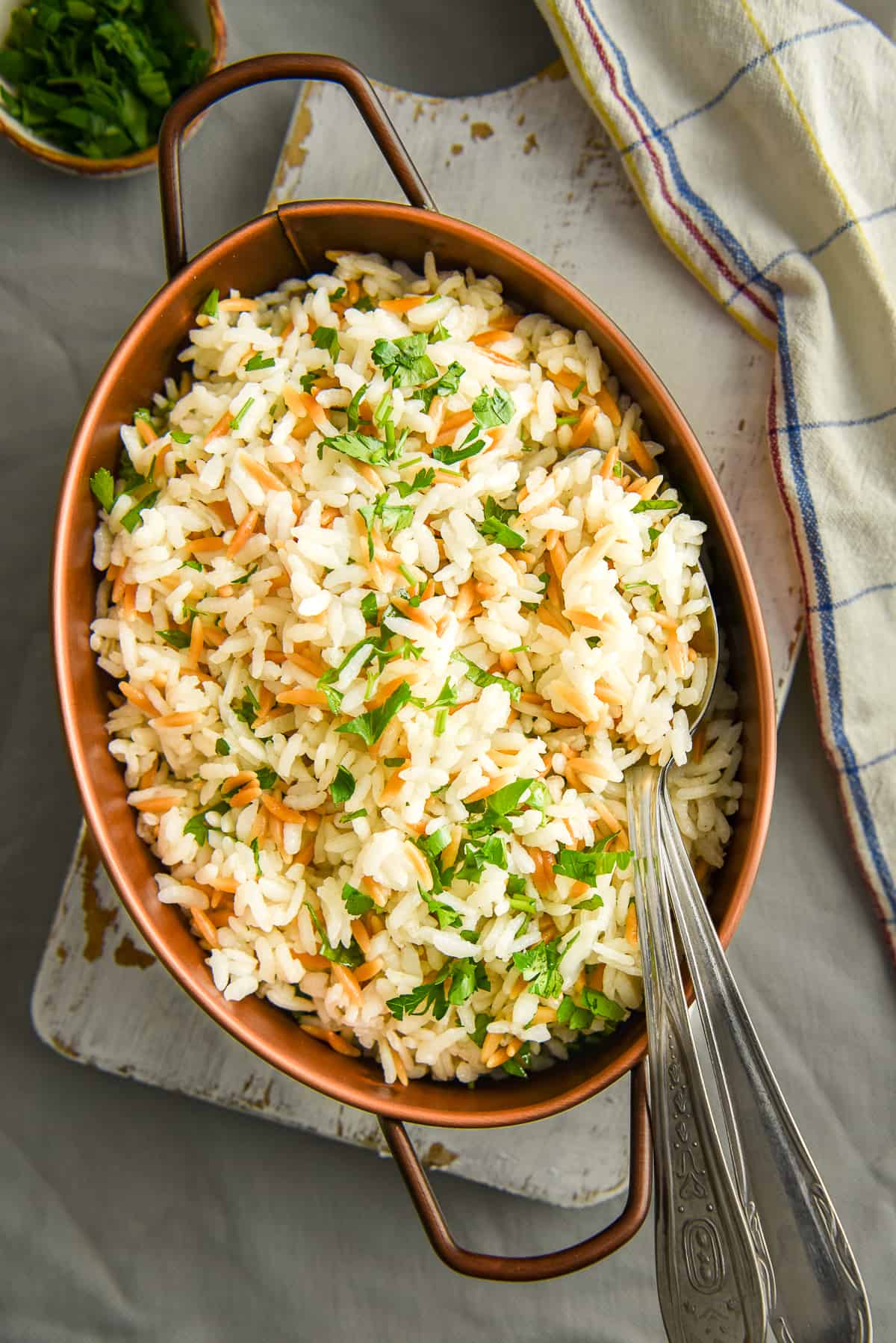
Turkish Orzo Rice Pilaf (Arpa Şehriyeli Pirinç Pilavı) is one of those everyday sides we make on repeat. It’s simple, light, and a great alternative to heavier dishes. Perfectly fluffy every time, it pairs well with almost anything you serve it with.
Orzo and Rice Together
When we say pilav, this orzo rice pilaf is the one that comes to mind for us.
Orzo and rice are a perfect match. The nutty flavour of the toasted orzo and the soft, fluffy rice balance each other beautifully, both in taste and texture.
If you’ve ever eaten at a small esnaf lokantası (restaurants that serve classic home-style dishes) in Turkey, chances are you’ve seen orzo rice pilaf on the table. It’s also one of the most commonly made rice pilafs in Turkish homes.
About the Ingredients
This orzo rice pilaf is made with just a few basic ingredients.
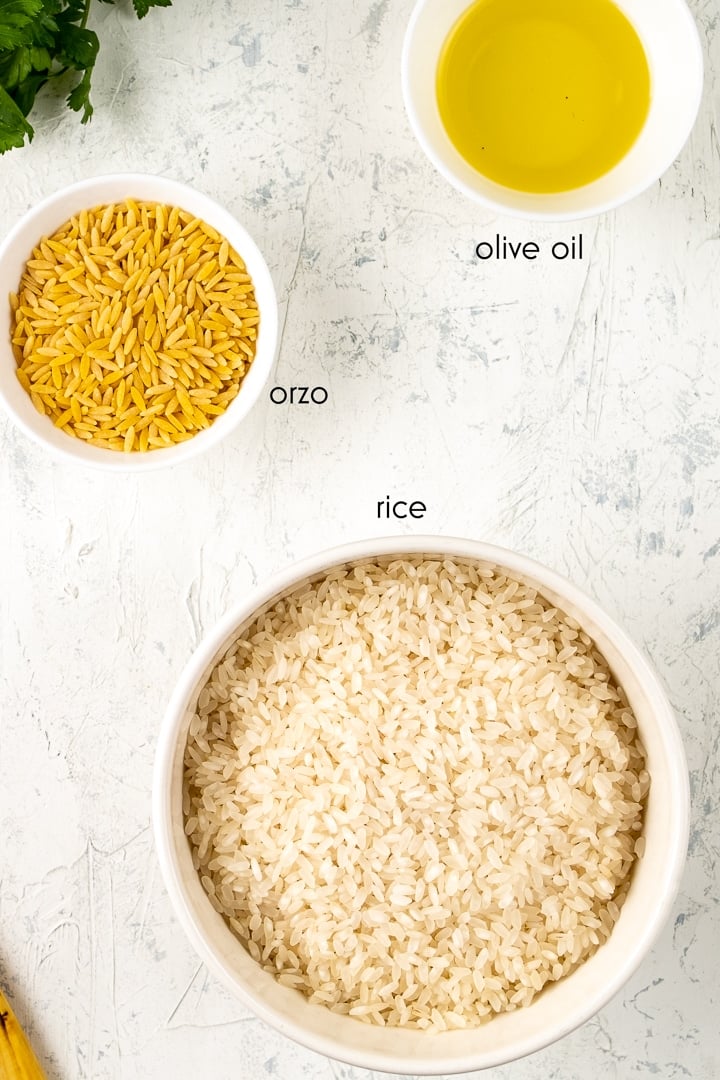
Olive oil is our go-to choice for this recipe. You can also use vegetable oil or sunflower oil, but we prefer olive oil for the flavour it adds to the pilaf.
For the rice, the most commonly used type for pilaf in Turkey is Baldo rice. It has larger grains compared to many other varieties and is known for staying fluffy and separate when cooked. You can usually find it in grocery stores which sell Turkish products.
If you can’t get Baldo rice, Italian Arborio rice is the closest alternative we’ve tested. A good-quality long-grain rice you’re familiar with will also work.
Orzo (arpa şehriye) is easy to find in most supermarkets. You’ll find it in the pasta section.
How to Make Orzo Rice Pilaf
This orzo rice pilaf is straightforward and made with simple steps. Including the resting time, it comes together in about 30 minutes.

Start by rinsing the rice well under running warm water until the water runs mostly clear. This step helps remove excess starch and is key to getting fluffy, separate grains.
Heat the olive oil in a shallow pan and toast the orzo, stirring regularly, until it turns a deep golden colour. Add the drained rice and salt, then continue cooking for a few minutes, stirring gently. Toasting the rice together with the orzo helps prevent it from sticking later.
Pour in the boiling water, give everything a quick stir, cover, and bring to a boil. Once boiling, reduce the heat to the lowest setting and let it simmer until all the water is absorbed.
Remove the pan from the heat, gently loosen the rice, cover again, and let it rest. This resting stage allows the steam to escape and helps the pilaf finish cooking evenly.
Fluff gently and serve.
You can find the full instructions in the recipe card below.
Our Tips for Perfect Orzo Rice Pilaf
- Make sure you remove the excessive starch of rice. Rinse rice in a sieve under warm water very well and drain.
- Cook the rice covered and on the lowest heat after the water in the pan comes to a boil. This gives the rice time to absorb the cooking water and develop flavor.
- Finally, allow your rice pilaf to rest for about 10-15 minutes before serving.
Serving Suggestions
In fact, this Turkish orzo rice pilaf is our go-to side for dishes like Turkish Beans Kuru Fasulye (as in the picture below).
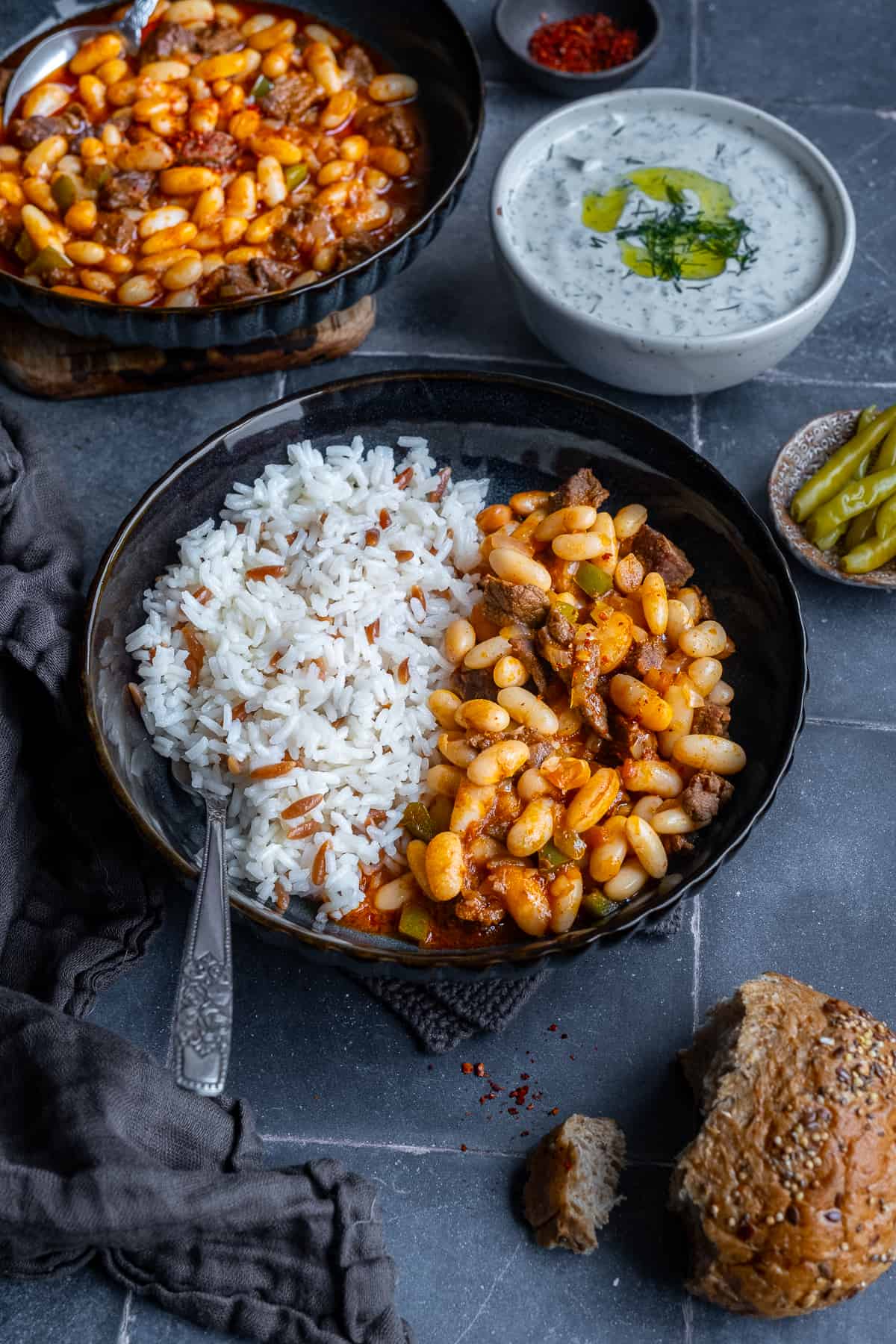
Some other main dishes we love to pair orzo rice pilaf with are:
- Lamb Stew
- Turkish Chicken and Potatoes
- Bamya (Turkish style okra)
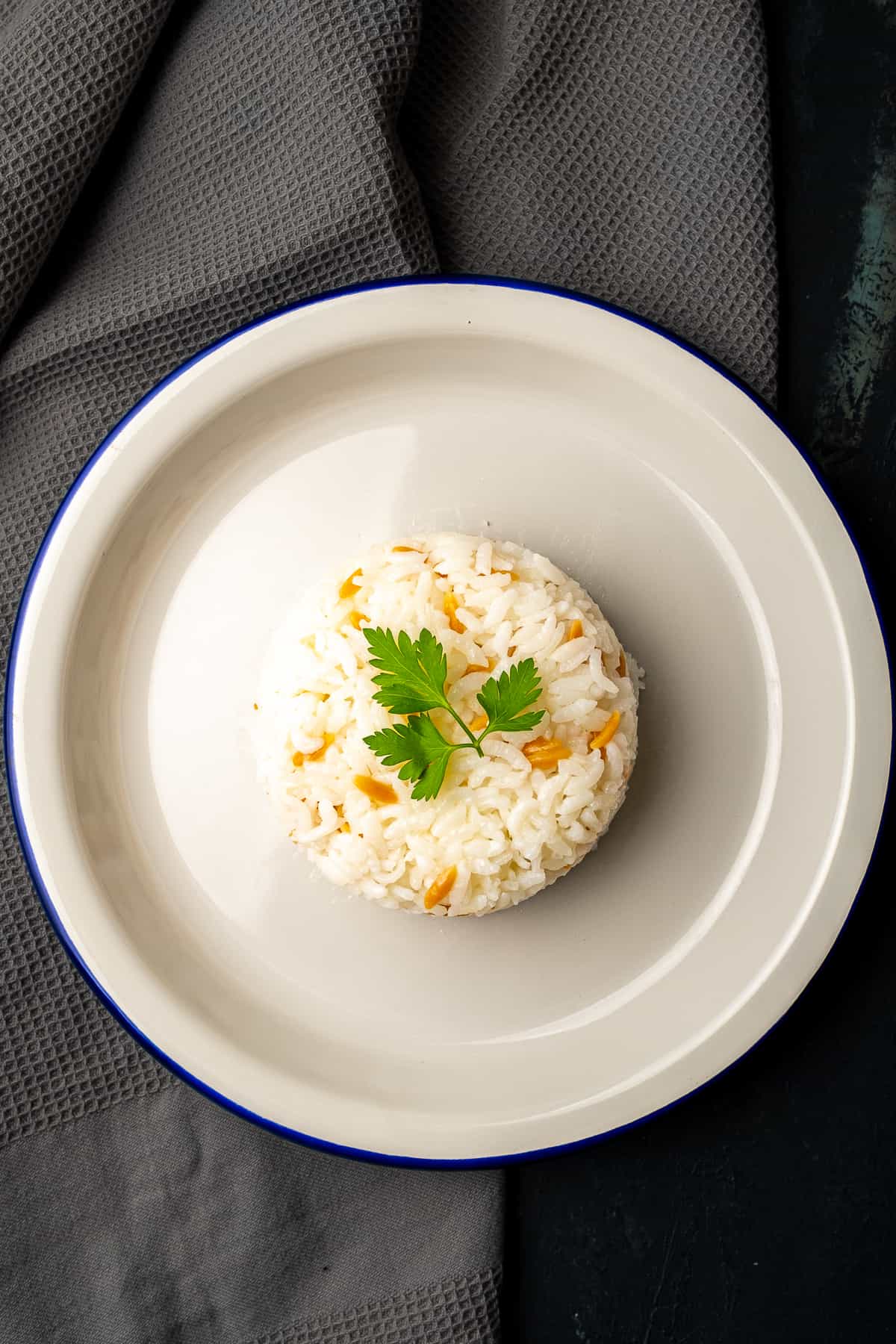
One interesting thing about Turkish orzo rice pilaf: It is mostly served in a dome shape at restaurants. If you want to do the same, wet a bowl and put some rice pilav in it pressing over it gently and then transfer it on a plate upside down.
Water Ratio for Rice Pilaf
The water ratio can vary depending on the type and even the brand of rice you use.
For this recipe, we usually rinse the rice (Turkish baldo rice or long-grain rice) well under running water until the water runs clear, then toast it in oil before adding the water. With this method, 1 cup of rice to 1¼ cups of hot water is usually enough for us.
You can find the exact measurements in grams and millilitres in the recipe card below.
That said, rice can behave differently from brand to brand. For this reason, we recommend treating this ratio as a minimum. As the rice nears the end of cooking, check the pot.
If the water has been absorbed but the rice still looks a little firm, add about a splash of water, cover, and continue cooking on the lowest heat until fully tender.
FAQs
- Why is my rice pilaf mushy? Some reasons for mushy rice are adding too much water, cooking it in a pan that is not suitable for pilaf, stirring it too much and soaking rice beforehand for a long time.
- Which pan is the best for making pilaf? Shallow pans with a thick bottom are the best because the heat spreads evenly, which is ideal for the perfect rice pilaf.
- What can I make with mushy rice? Don’t worry, you won’t waste it. You can use it when making rice yogurt soup.
- How long does cooked rice last in the fridge? You can keep it up to 2-3 days. The taste won’t be as good if you keep it longer than this. Also, if you reheat it once, don’t keep it any longer if there is still leftovers.
- How do you reheat rice pilaf? The best way is to reheat it in a non-stick pan with a splash of water on the stove, over medium or low heat, stirring occasionally. Don’t forget to cover the pan with a lid when reheating. Alternatively, you can reheat rice in the microwave again with a splash of water for a few minutes. Make sure the dish you are using is microwave-safe.
Alternative Flavors
If you’d like to up the flavor in this Turkish rice with orzo recipe you can use stock instead of water to cook the rice and orzo. Keep it vegan with vegetable or mushroom stock or try chicken or beef stock. Remember that stock usually contains salt, so you can season the pilaf a little less.
If you want to turn your orzo rice pilaf to a filling meal, you might want to check out our Chicken Rice Pilaf (Tavuklu Pilav). You can see it below.
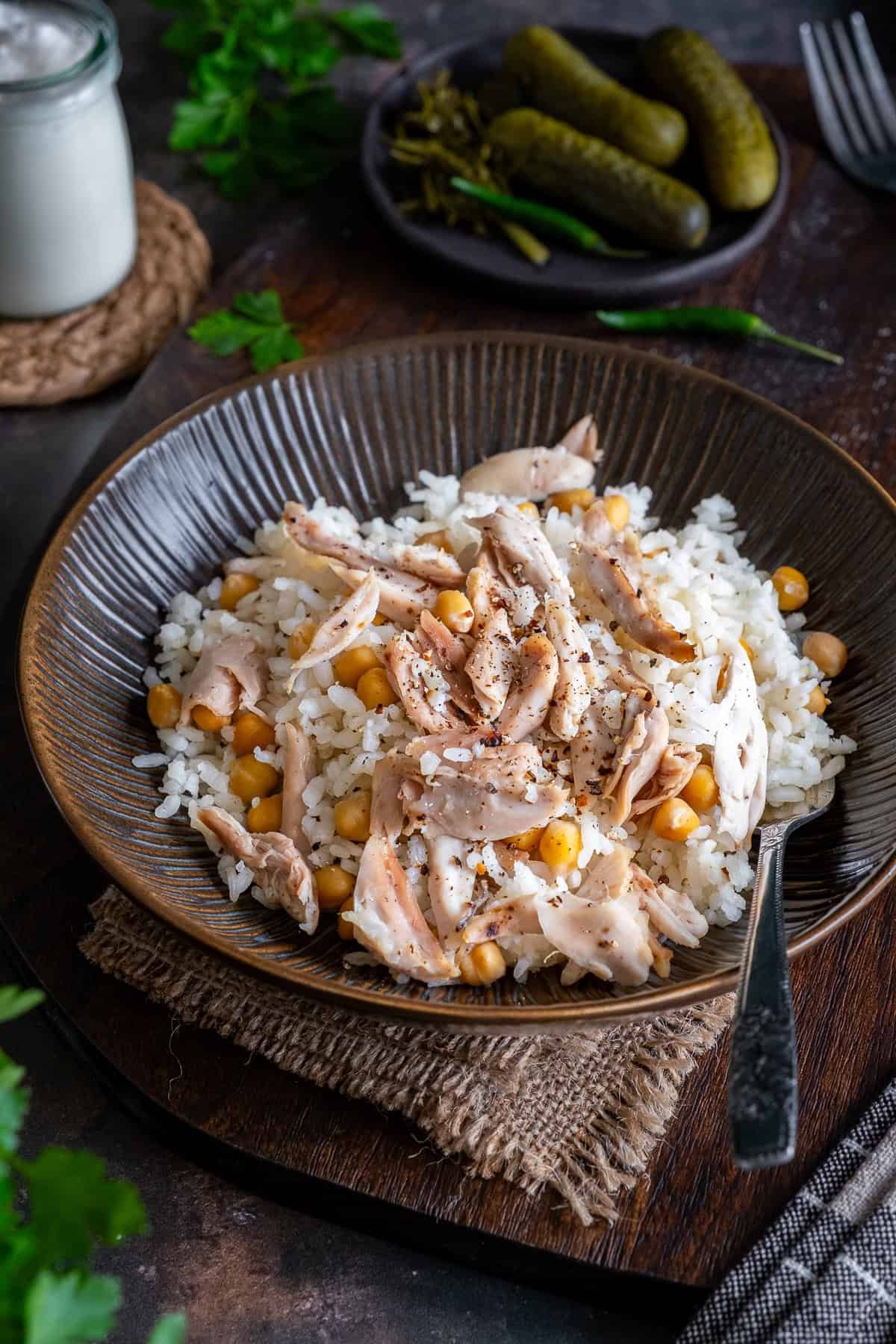
You may also want to try adding other flavorings to the pilaf when it’s simmering. Try stirring in raisins or chickpeas. Nuts such as pine nuts or chopped almonds can be added during the simmering process and sprinkled on top for texture.
Is This Pilaf Vegan?
Our orzo rice pilaf recipe is 100% vegan! Since it uses olive oil and water to toast and cook the pilaf there are absolutely no animal products in this pilaf.
If you’re not concerned about this being vegan and prefer the flavor of butter, you can add some when your pilaf is cooked, right before letting it rest.
More Turkish Rice Recipes
- Ic Pilav
- Turkish Rice Pilaf
- Chicken Pilaf(Rice with Chicken)
- Turkish Rice Salad
Sign up for the FREE Give Recipe Newsletter to get the new recipes into your inbox!
And stay in touch with us on Facebook, Pinterest, YouTube and Instagram for all the latest updates.
📖 Recipe
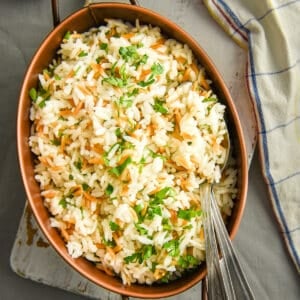
Orzo Rice Pilaf
Video
INGREDIENTS
- 300 g rice We use Turkish Baldo rice. Italian Arborio rice would work too. Read the notes 1 and 2 below.
- 2 tablespoons olive oil
- 60 g orzo
- 1 teaspoon salt
- 375 ml water
- 1 tablespoon parsley for garnish, optional
INSTRUCTIONS
- Put the rice in a sieve. Rinse under warm water well to remove the starch until the water gets clear. Drain well.
- Heat olive oil in a large shallow pan. Add orzo and cook it over medium heat until brown, stirring occasionally.
- Add in rice. Cook stirring occasionally until the rice gets bright white, about 5 minutes.
- Pour hot water over rice, add salt, cover the pan and bring it to boil.
- Bring the heat to the lowest when it boils and let it simmer until all the water is absorbed, for about 10 minutes. Remove from heat. Give it a gentle stir.
- Let it rest covered for 10 minutes before serving.
- Gently stir with a wooden spoon or fluff with a fork and serve.
NOTES
- Turkish baldo rice is the ideal choice for making a classic pilaf in Turkish cuisine. If baldo rice is unavailable, Italian arborio rice is a good substitute due to its similarity. In the absence of both, high-quality long-grain white rice will also work well.
- The water-to-rice ratio we use: 1¼ cups of water for 1 cup of rice. If, during cooking, the rice looks undercooked or the liquid has evaporated too quickly, add 1–2 tablespoons of hot water, cover, and continue cooking on low heat until tender. If needed, you can slightly increase the water next time, up to about 1⅓ cups per cup of rice.
- Always simmer at the lowest heat for the best results.
NUTRITION
Nutrition information is automatically calculated, so should only be used as an approximation.

Sandy Walton says
Please provide metric amounts for UK cooks. Thanks
Zerrin & Yusuf says
Hi Sandy,
Thank you for this comment. We've just added the metric amounts next to each ingredient. Hope this helps.
Cheers 🙂
Christine says
I made this tonight along with tavuk sote. I took it to my friend's house and it was a winner! I've never made baldo rice before. It was so easy and I love the texture
Zerrin & Yusuf says
That sounds wonderful! We’re so happy to hear it was a hit! Baldo rice is our favorite for pilaf. It always turns out fluffy with the perfect texture. Thanks for giving it a try!
Cat says
Made this today and really really loved it. My only tip here it to specify the type of rice we should use (basmati, jasmine, long grain). I used basmati and needed to add more water as the rice cooked.
Ariane Pamay-Ochoa says
Your instructions, tips and suggestions are very detailed. I can’t wait to try cooking your recipes!! 😊
Em says
Great recipe, makes the absolute perfect rice
Zerrin & Yusuf says
Thank you Em! Glad you liked this classic Turkish pilaf recipe.
Maria says
Great tips ! Why add salt to soaking rice ? Ty
Zerrin says
Hi Maria, salt helps to remove the starch of rice when soaked in hot water.
Liz says
I was just searching for a rice dish to serve to company next weekend! Your pilaf will be perfect---and I love all the excellent tips!
Zerrin says
Thank you Liz! Glad you find the tips helpful.