

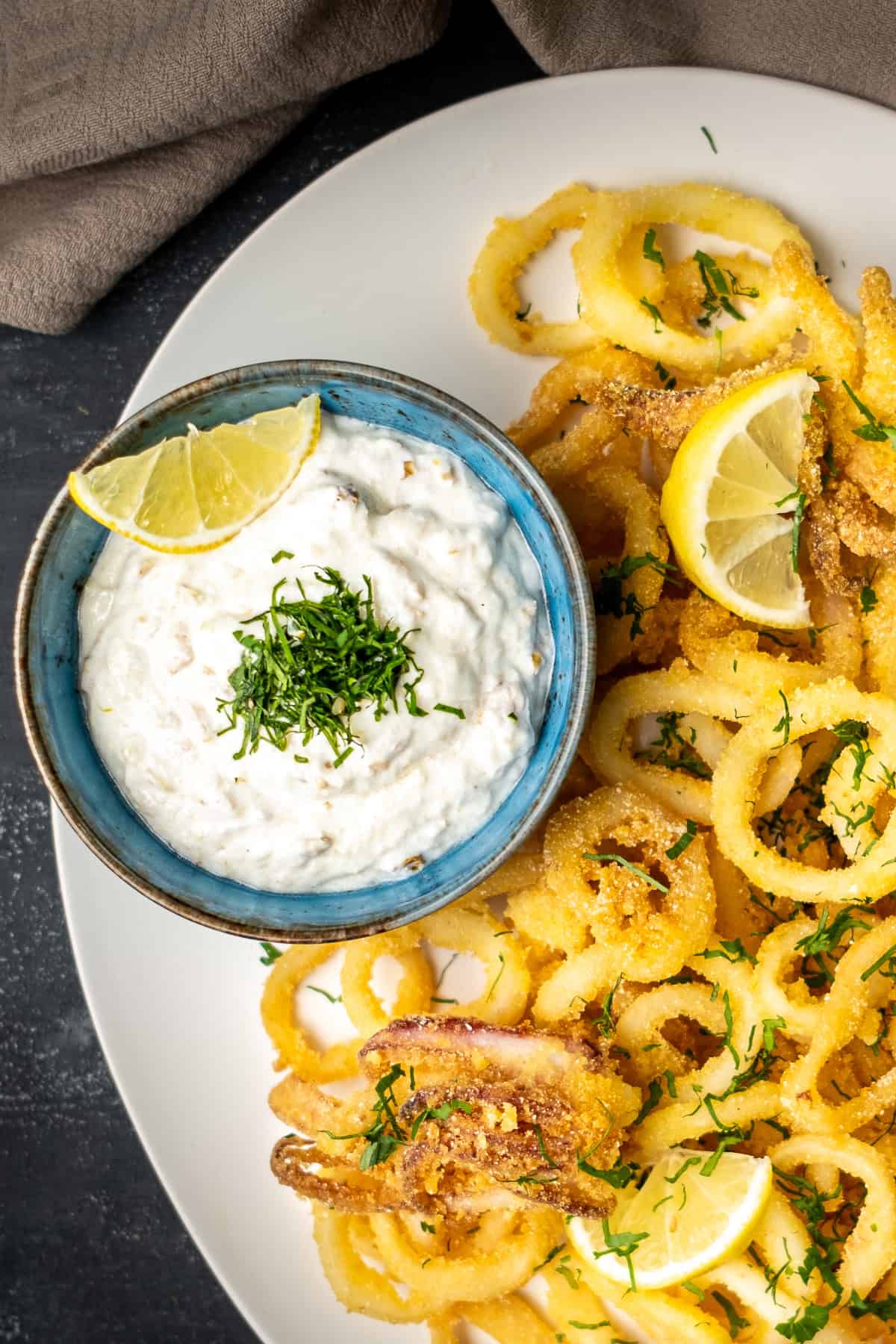
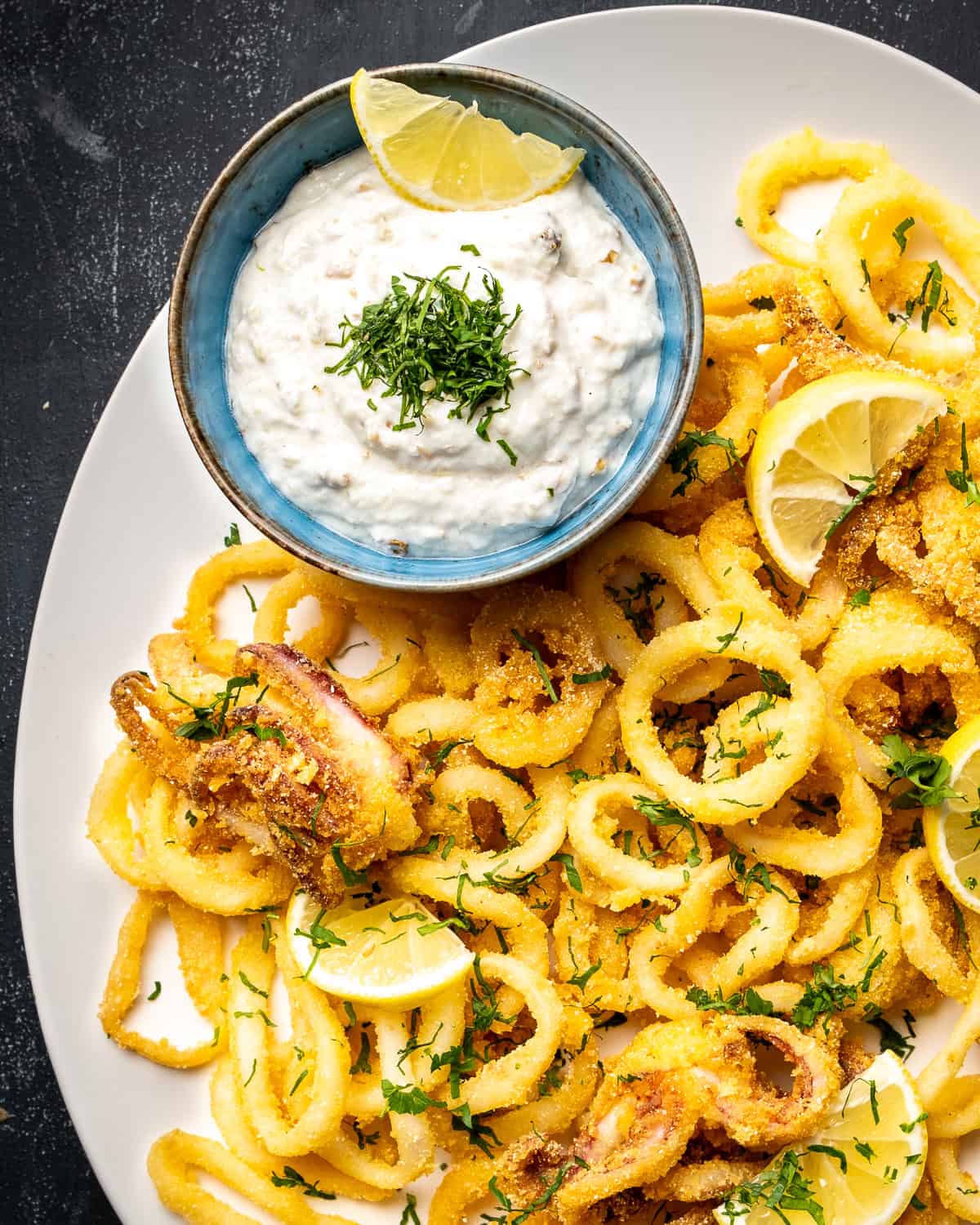
Love fried calamari? Meet Turkish Calamari Sauce (Kalamar Sosu)! This is the sauce always served with it in Turkey. It’s rich, tangy, and slightly nutty, and it takes crispy fried calamari to the next level. It also pairs wonderfully with all kinds of fish.
Have you ever been to Turkey’s beautiful coasts for a summer holiday?
If you have, you’ve probably come across kalamar tava, or fried calamari. It’s one of the most delicious starters on the menu at seaside restaurants, always paired with a creamy and flavorful dip called tarator sos, or as the locals call it, kalamar sosu (sauce for fried calamari).
For us, kalamar tava and tarator are a perfect match. Whenever we’re in coastal towns like Marmaris, Selimiye, Göcek, or Bodrum, it’s always the first thing we order and it always comes with that irresistible calamari sauce on the side.
What is Calamari Sauce?
In Turkey, this calamari sauce is a creamy dip made with yogurt and walnuts, traditionally served with kalamar tava (fried calamari). It has a rich, nutty, and slightly tangy flavor that pairs perfectly with seafood.
Locally, this sauce is also known as tarator sos, but when served with fried calamari, it’s most commonly referred to as kalamar sosu.
About The Ingredients
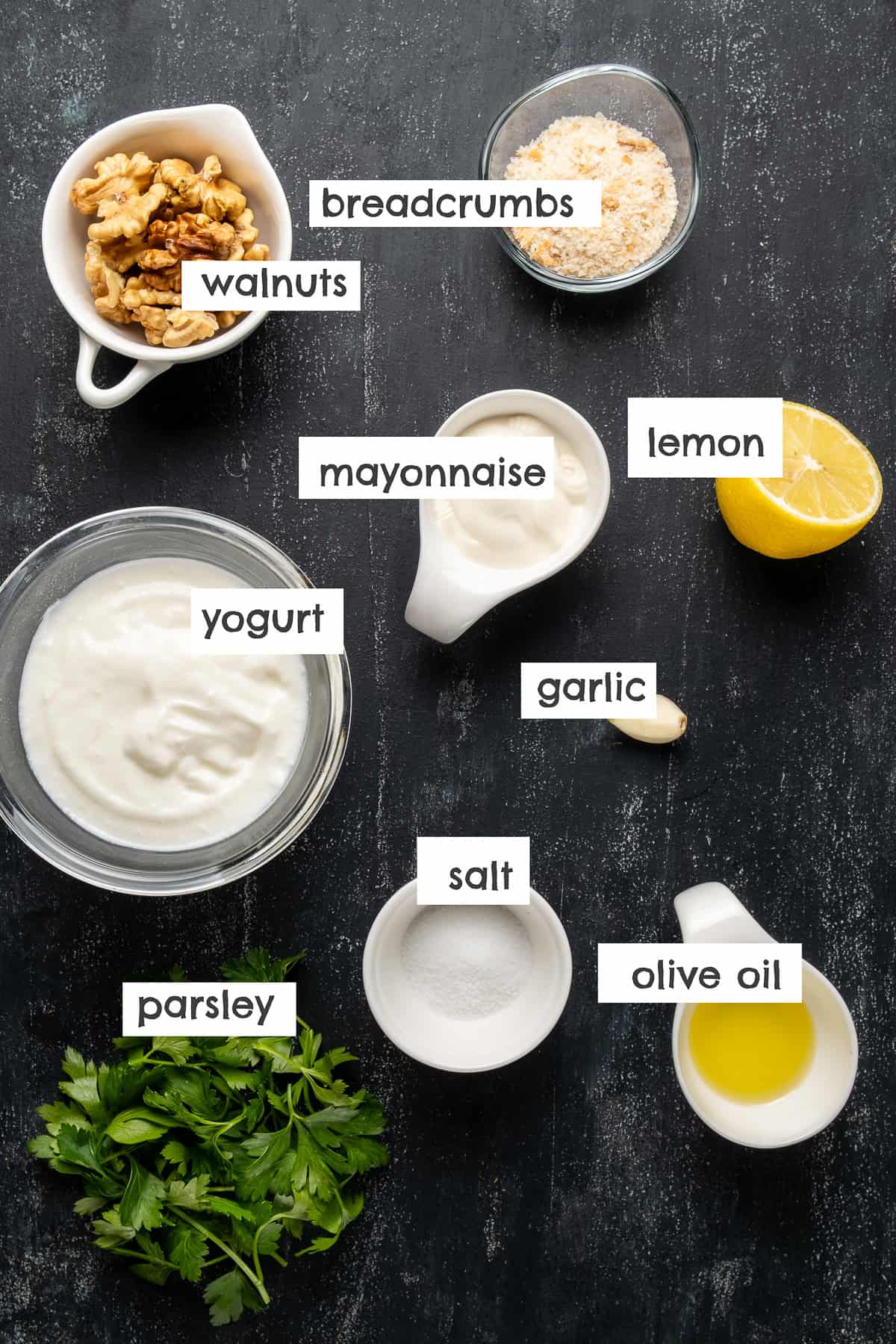
Turkish calamari sauce gets its unique flavor and texture from a few key ingredients:
Breadcrumbs: Traditionally, stale bread is used as it crumbles easily and blends smoothly into the sauce. If you don’t have stale bread, toasted bread works just as well. You can also use store-bought breadcrumbs.
Yogurt: Use plain Turkish yogurt or Greek-style yogurt as the base. If you’re using strained yogurt (known as süzme yogurt in Turkish), thin it out with a little water to reach the right consistency.
Mayonnaise: This is optional, but we like the extra richness it adds. For a lighter version, you can skip it.
Garlic: A small clove is enough to add a gentle kick without overpowering the sauce.
Walnuts: These are essential for the signature flavor. We don’t recommend skipping them, as they are what make this calamari sauce so distinctive.
How to Make Calamari Sauce
Making this calamari sauce is simple and comes together in just a few steps. In a mixing bowl, combine breadcrumbs, yogurt, mayonnaise, mashed garlic, walnuts, olive oil, fresh lemon juice, and salt. Mix well until everything is evenly combined.
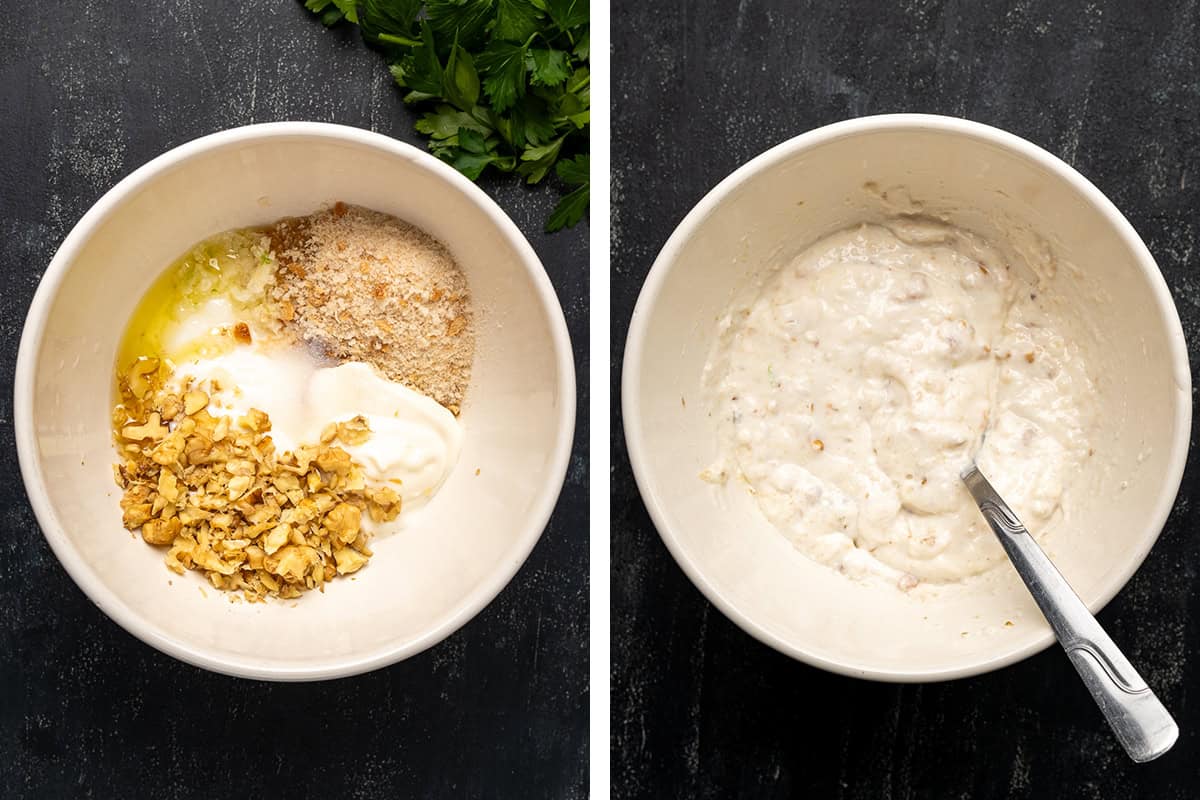
If the sauce is too runny, add a bit more breadcrumbs to thicken it. If it’s too thick, loosen it with a little more yogurt. Taste and adjust the salt if needed.
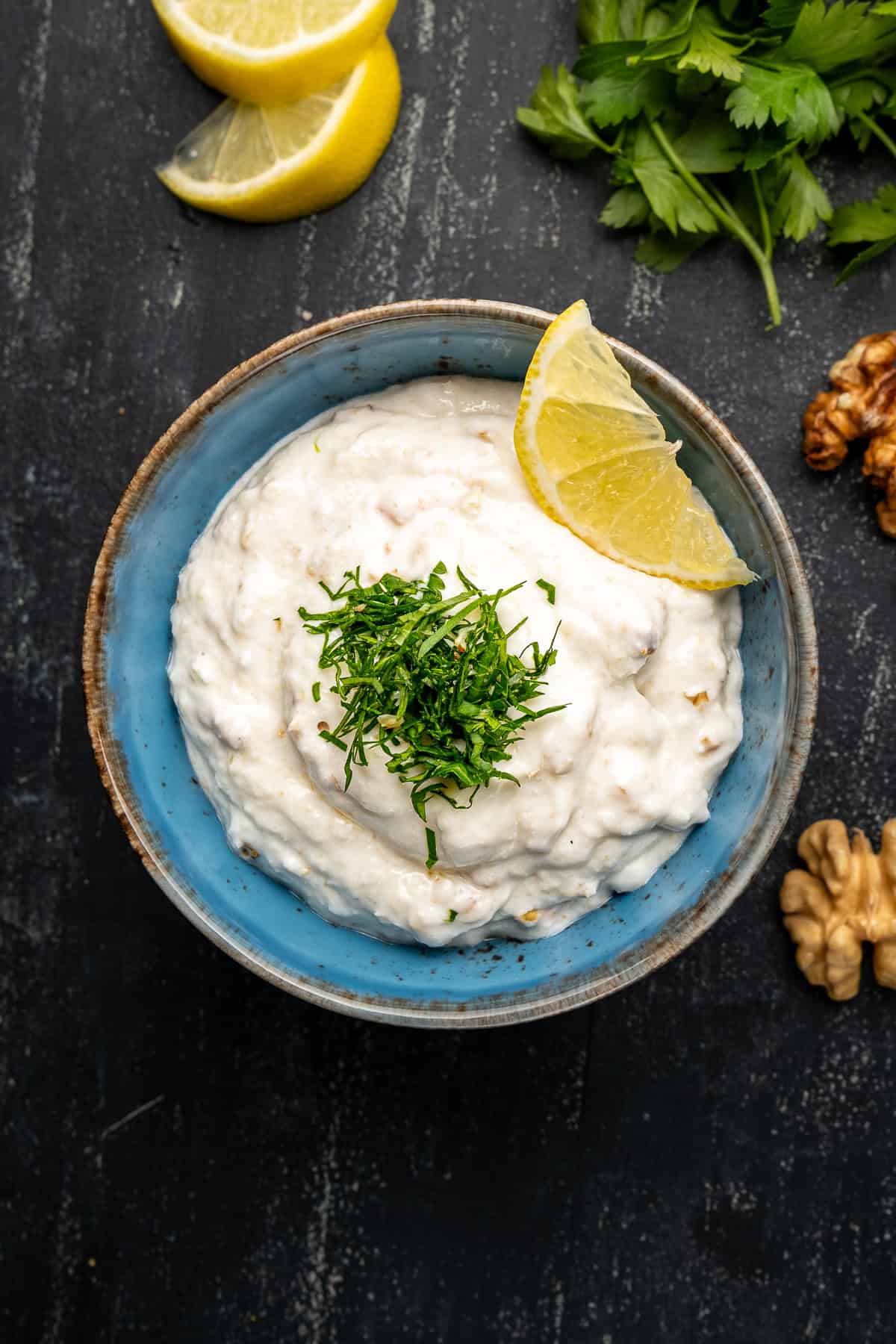
For a slightly chunky texture (our favorite), it’s ready to serve as is.
If you prefer a smoother result, transfer the mixture to a food processor and blend until creamy.
Make Breadcrumbs from Stale Bread
Stale bread is 2-3 days old, dry but not moldy or spoiled. It’s perfect for calamari sauce because it crumbles easily and doesn’t turn soggy.
To make breadcrumbs, tear the bread into pieces and crumble it into a bowl with your fingers. You can use a mortar or a food processor as well.
Fresh bread won’t crumble as easily and might make the sauce soggy, so stale bread is the way to go for the best texture.
No Stale Bread At Home?
If you don’t have stale bread, don’t worry! You can easily make your own by toasting fresh bread. Slice the bread and place it in the oven at a low temperature (about 150°C / 300°F) for 10–15 minutes, until dry but not browned. Let it cool completely, then crumble it.
Alternatively, you can use store-bought breadcrumbs if that’s what you have on hand.
Alternative Add-Ins
Looking to customize your calamari sauce? Add finely chopped pine nuts, pickled gherkins, or capers! They all work great and can bring a unique twist to this classic dip.
Serving Suggestions
In Turkey, this calamari sauce is traditionally served with fried calamari (kalamar tava) and fried mussels. It’s also a great match for other seafood dishes like:
- Baked Sea Bass
- Hamsi tava (Turkish style fried anchovies)
- Fried Sardines
Its creamy, tangy flavor complements almost any seafood.
But this calamari sauce is not just for seafood. You can also serve it as part of a mezze spread, alongside fresh cucumbers and carrots for dipping.
Although not traditional, we sometimes drizzle it over salads or serve it with grilled vegetables too.
Storage
Store calamari sauce in an airtight container in the refrigerator. It will stay fresh for up to 3 days. Before serving, give it a good stir to make sure all the ingredients are well combined. For the best flavor, let it sit at room temperature for about 15 minutes before serving.
You Might Also Like
Sign up for the FREE Give Recipe Newsletter to get the new recipes into your inbox!
And stay in touch with us on Facebook, Pinterest, YouTube and Instagram for all the latest updates.
📖 Recipe

Calamari Sauce (Kalamar Sosu)
INGREDIENTS
- ¼ cup breadcrumbs, from stale bread or store-bought (See Note 1)
- ¼ cup plain yogurt, See Note 2
- 1 tablespoon mayonnaise, optional
- 1 clove garlic, mashed or grated
- 2 tablespoons crumbled walnuts, See Note 3
- 1 tablespoon olive oil
- ½ tablespoon lemon juice
- ½ teaspoon salt
- 1 tablespoon Parsley, optional
INSTRUCTIONS
- Combine all ingredients—breadcrumbs, yogurt, mayonnaise, garlic, walnuts, olive oil, lemon juice, and salt—in a bowl. Mix well until evenly combined.
- If the sauce is too runny, add more breadcrumbs. If it’s too thick, add a little more yogurt to reach your desired consistency.
- Taste the sauce and adjust the salt if necessary.
- Garnish with finely chopped parsley or fresh dill, if desired.
- Serve chilled with fried calamari (kalamar tava) or any seafood dish.
NOTES
- Stale bread crumbles easily and works best. Use your hands, a mortar, or a food processor to make crumbs. Store-bought breadcrumbs are also fine.
- Use plain Turkish or Greek yogurt. If using strained yogurt (süzme yogurt), thin it with a few tablespoons of water before mixing.
- Roughly chop or crush them in a mortar. If you are after a smoother texture, grind them in a food processor.
- The nutrition information provided is for guidance only.
NUTRITION
Nutrition information is automatically calculated, so should only be used as an approximation.



Leave a Reply