

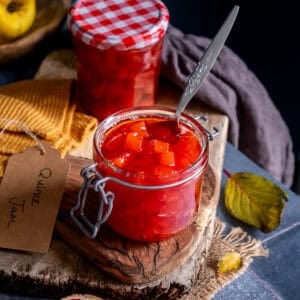
Got some quinces and not sure what to do with them? Try this homemade quince jam! It has a wonderful fruity flavor, a beautiful natural color and tender pieces of quince in every spoonful. And with just 4 ingredients, it's easy to make your own batch.
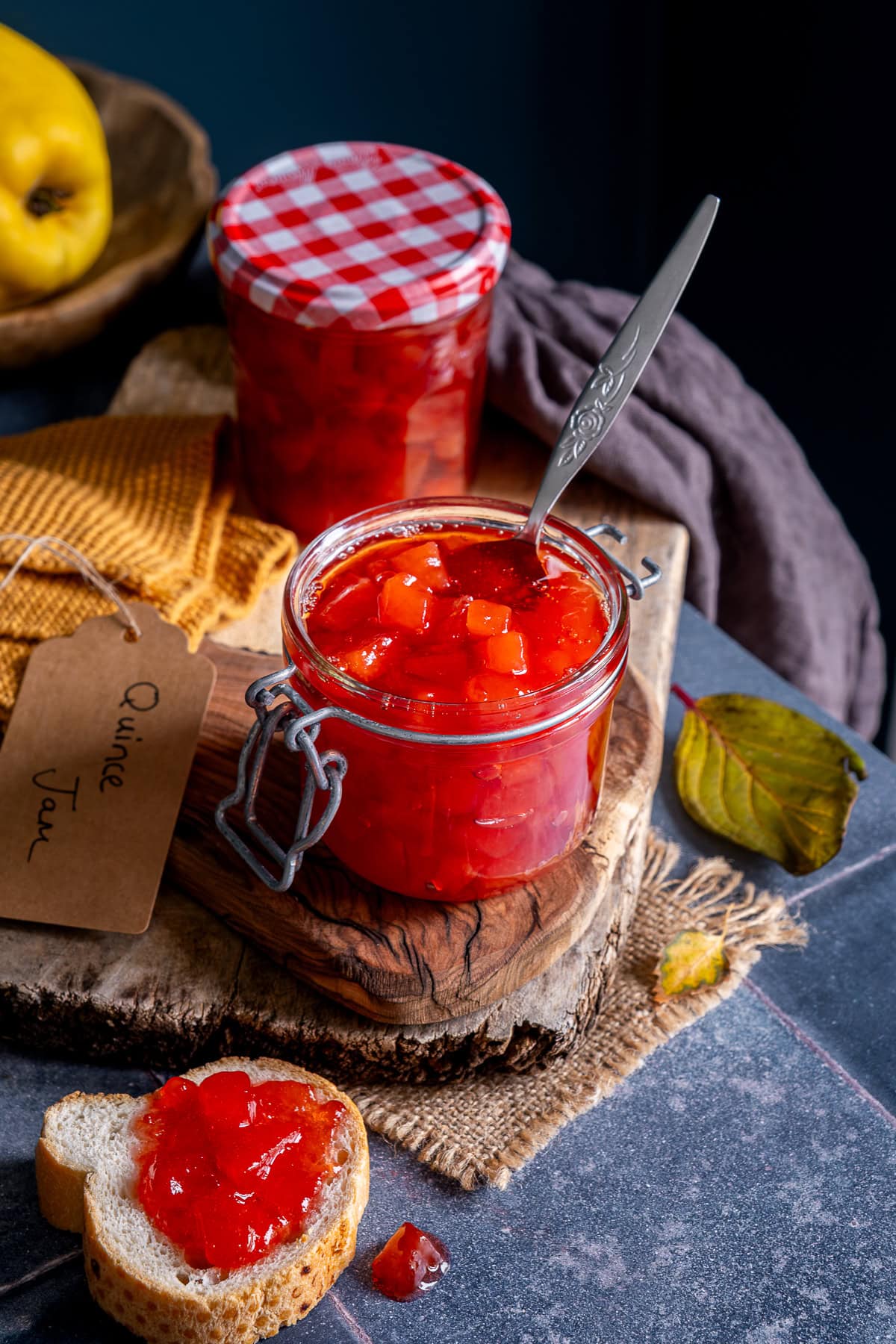
A Taste That Takes Us Back to Türkiye
Quinces always remind us of fall in Türkiye. We love eating them fresh, with their slightly tart, astringent taste, but quince jam (ayva reçeli) has always been extra special to us.
Back in Türkiye, we used to get jars of homemade quince jam from our relatives in Tarsus. It was always the star of our breakfast table, especially with fresh bread and butter or kaymak (Turkish clotted cream).
Now, whenever we spot quinces in a shop here in the UK, we can't resist buying some to make our own jam. The wonderful smell as it cooks and that first spoonful take us right back to Türkiye.
If you have more quinces to use up, you might also like our Turkish quince dessert.
About the Ingredients
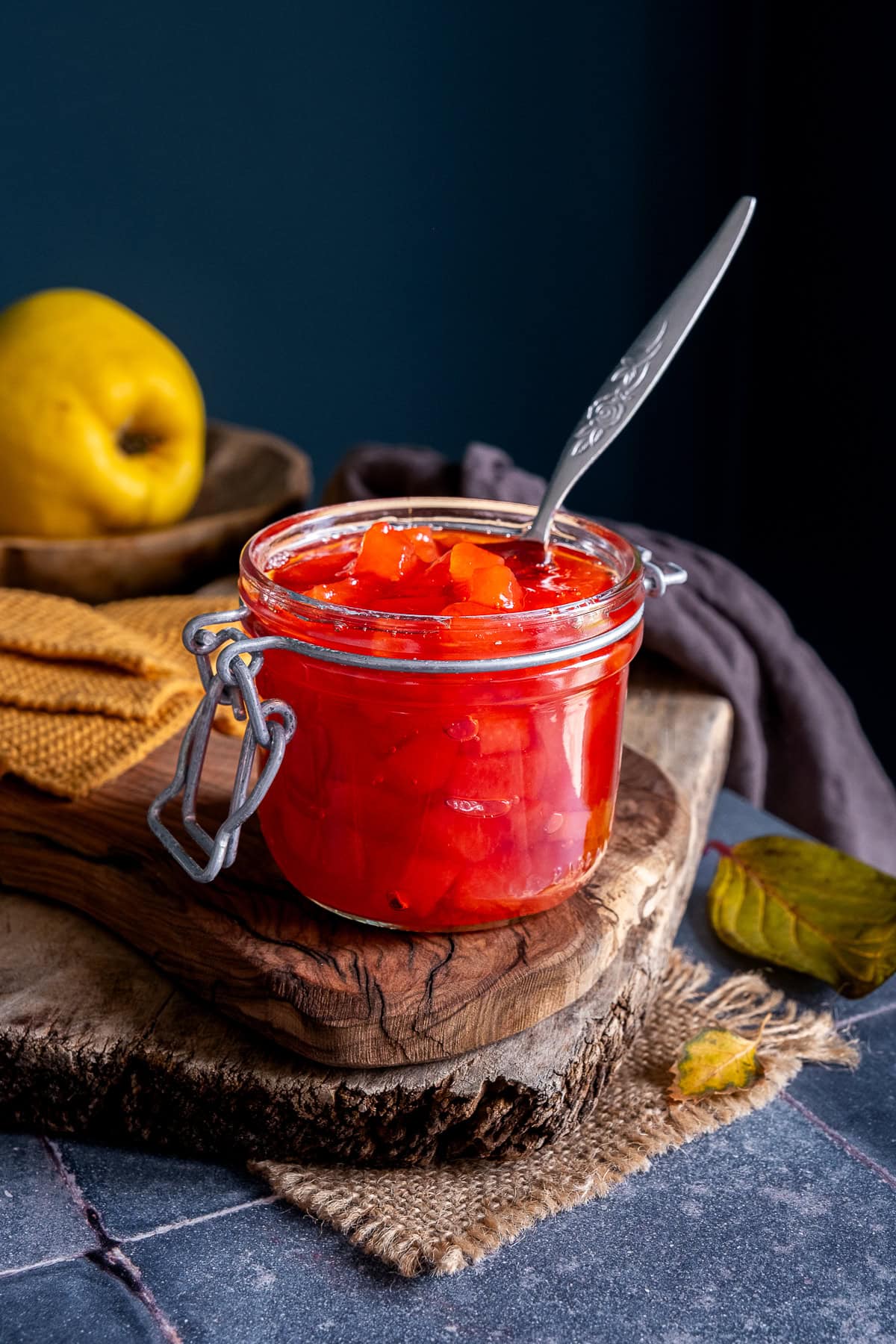
You only need quinces, sugar, lemon juice and water to make this jam. Here are a couple of things worth knowing before you start.
Quinces: Choose ripe, fragrant quinces that are yellow and firm, without soft or bruised spots. Quinces are naturally high in pectin, so there's no need to add any to this jam.
Sugar: Regular granulated sugar is all you need. Sugar also helps preserve the jam, so we don't recommend reducing the amount too much.
You can find the full ingredient list with exact measurements in the recipe card below.
How to Make Quince Jam
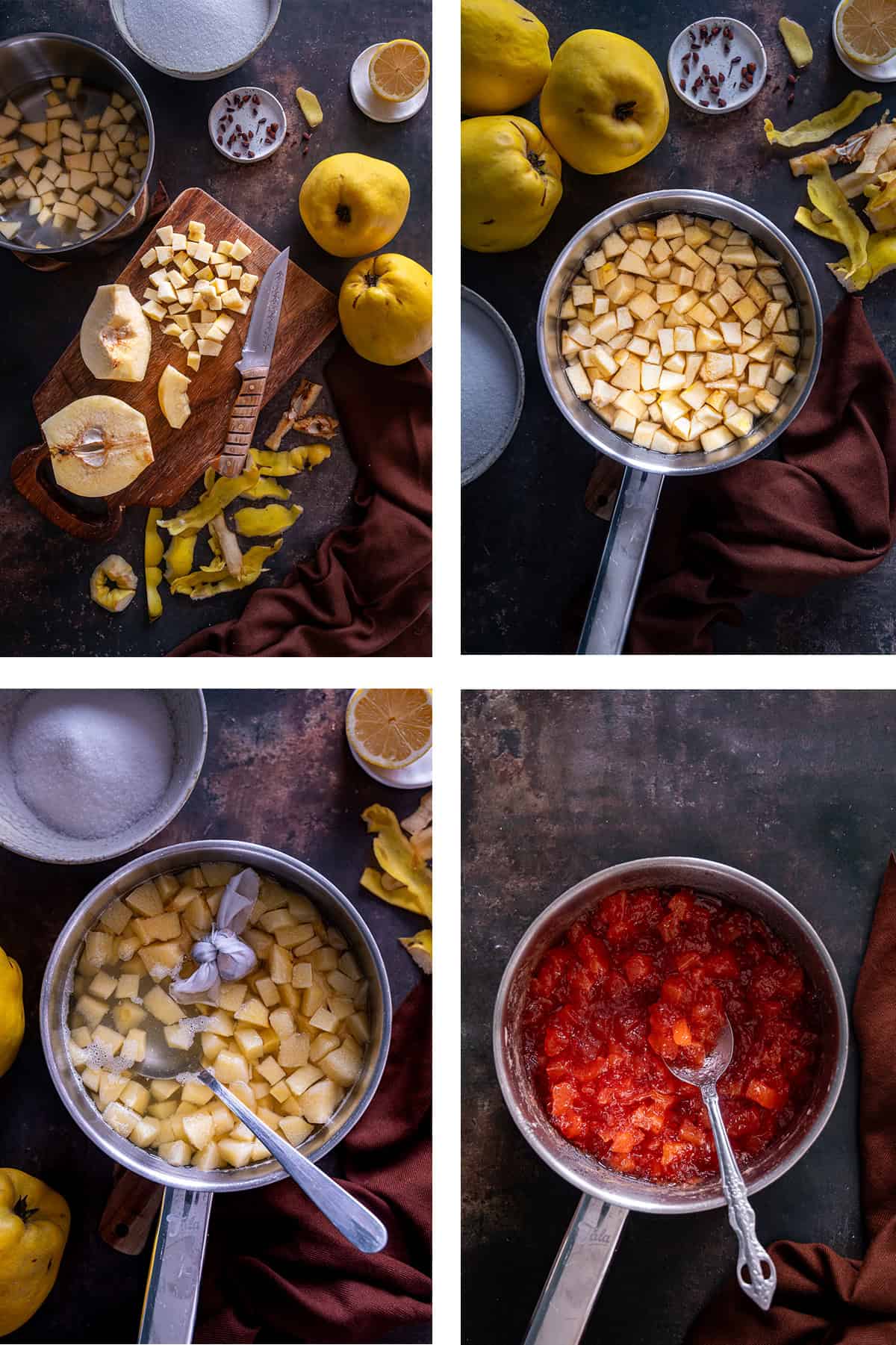
Start by cutting the quinces into small cubes. Don't throw away the seeds! Set them aside because you'll need them later.
Add the diced quinces straight to a pot of hot water as you go. Work fairly quickly so they don't turn too brown. Cook for 5–7 minutes, until they soften.
Next, add the sugar and the reserved quince seeds. You can tie the seeds in a small piece of muslin to make them easier to remove later. Let the jam simmer gently over medium-low heat, uncovered, for a little over an hour. Stir occasionally and skim off any foam that collects on the surface.
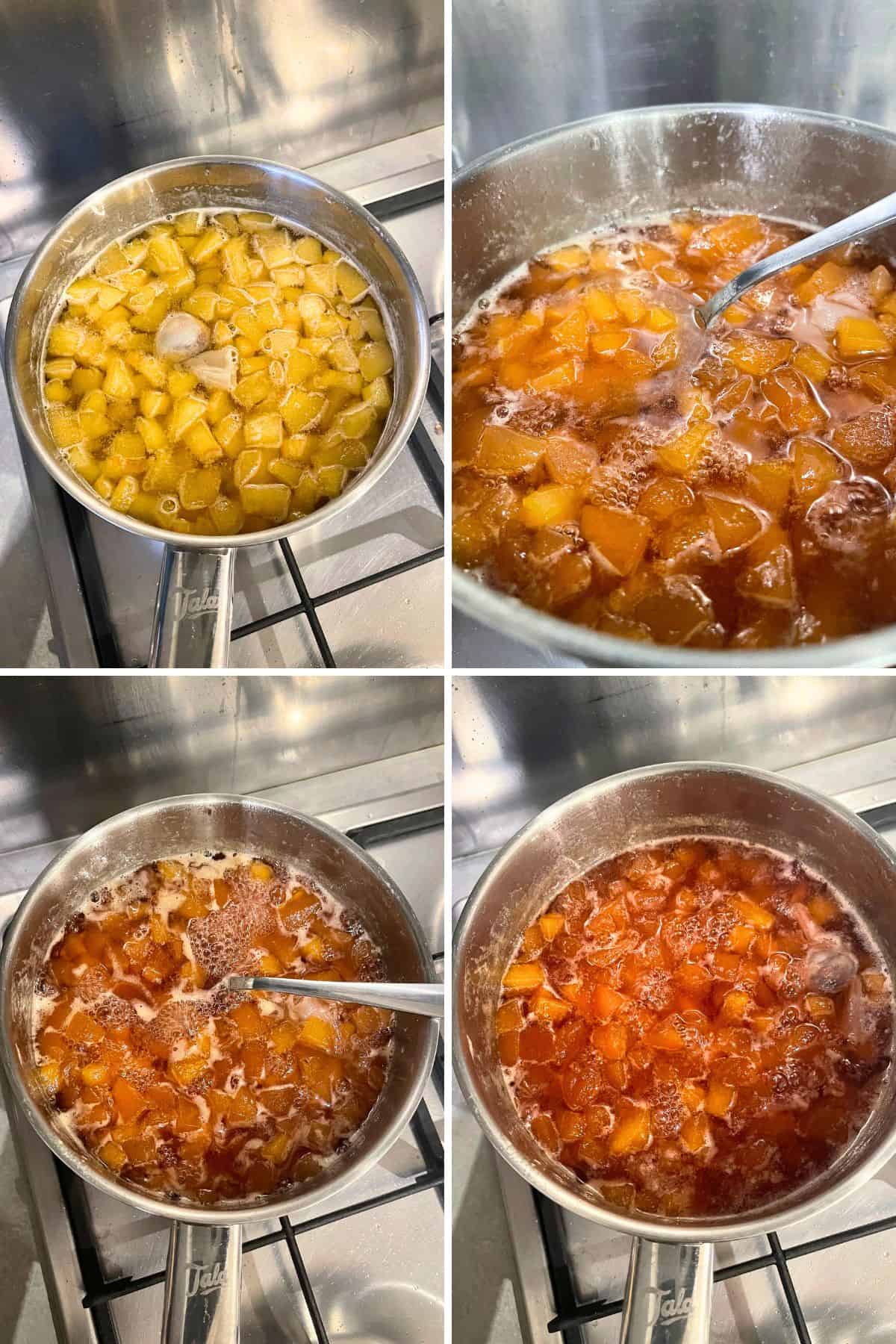
As the jam cooks, it will gradually change color and thicken. Ours took about 1 hour and 10 minutes to reach a lovely pinkish-red color and the right consistency.
Add the lemon juice and cook for another 10 minutes. Then remove the pot from the heat. Don't worry if the jam still looks a little runny. It will thicken more as it cools.
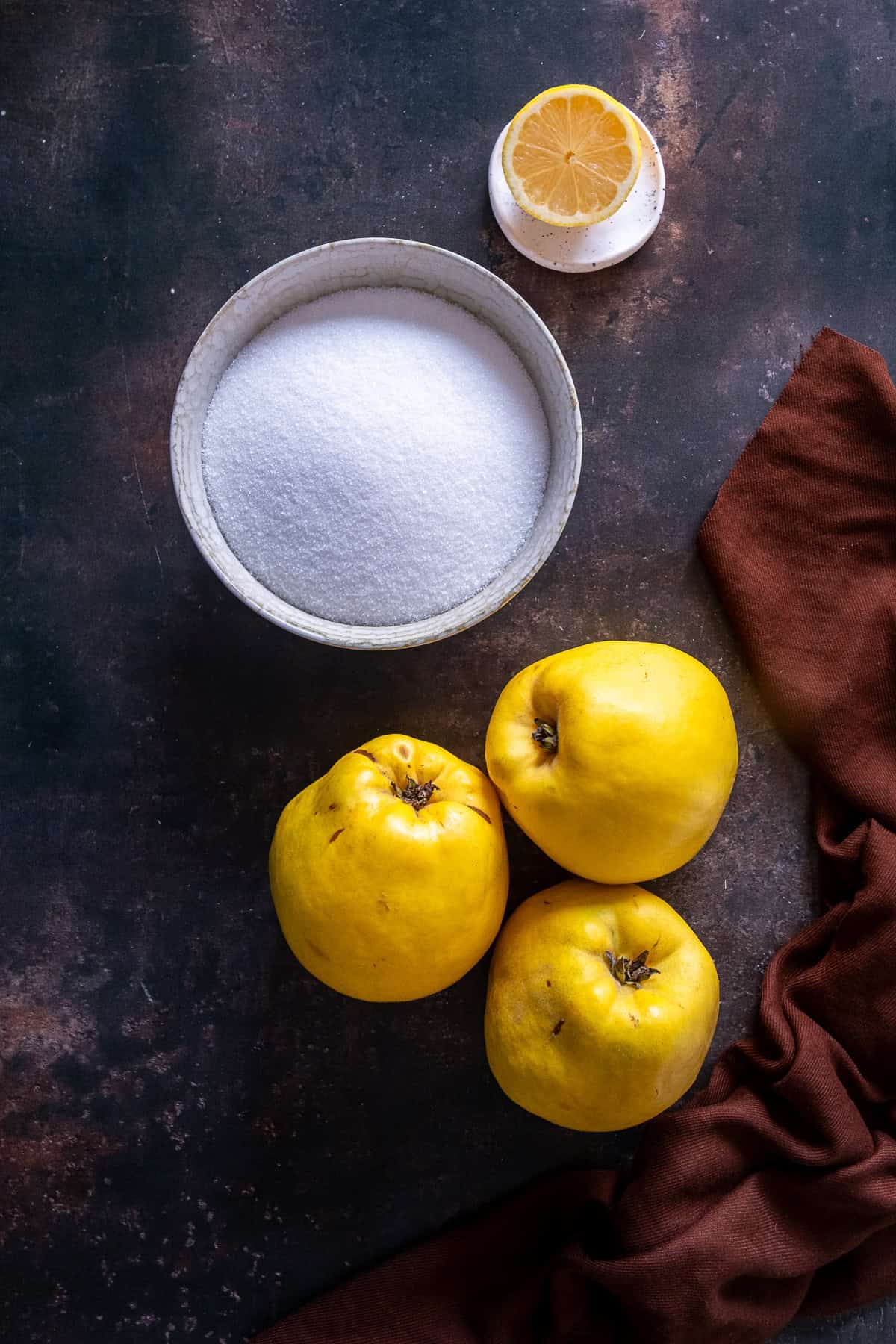
Once the jam has cooled completely, remove the seeds and transfer it to clean jars. It's now ready to eat! See our storage tips below for how to keep it.
You can find the full step-by-step instructions in the recipe card below.
How to Store Quince Jam
You can fill your sterilised jars while the jam is still hot or wait until it has cooled completely. We've tried both, and the results were slightly different.
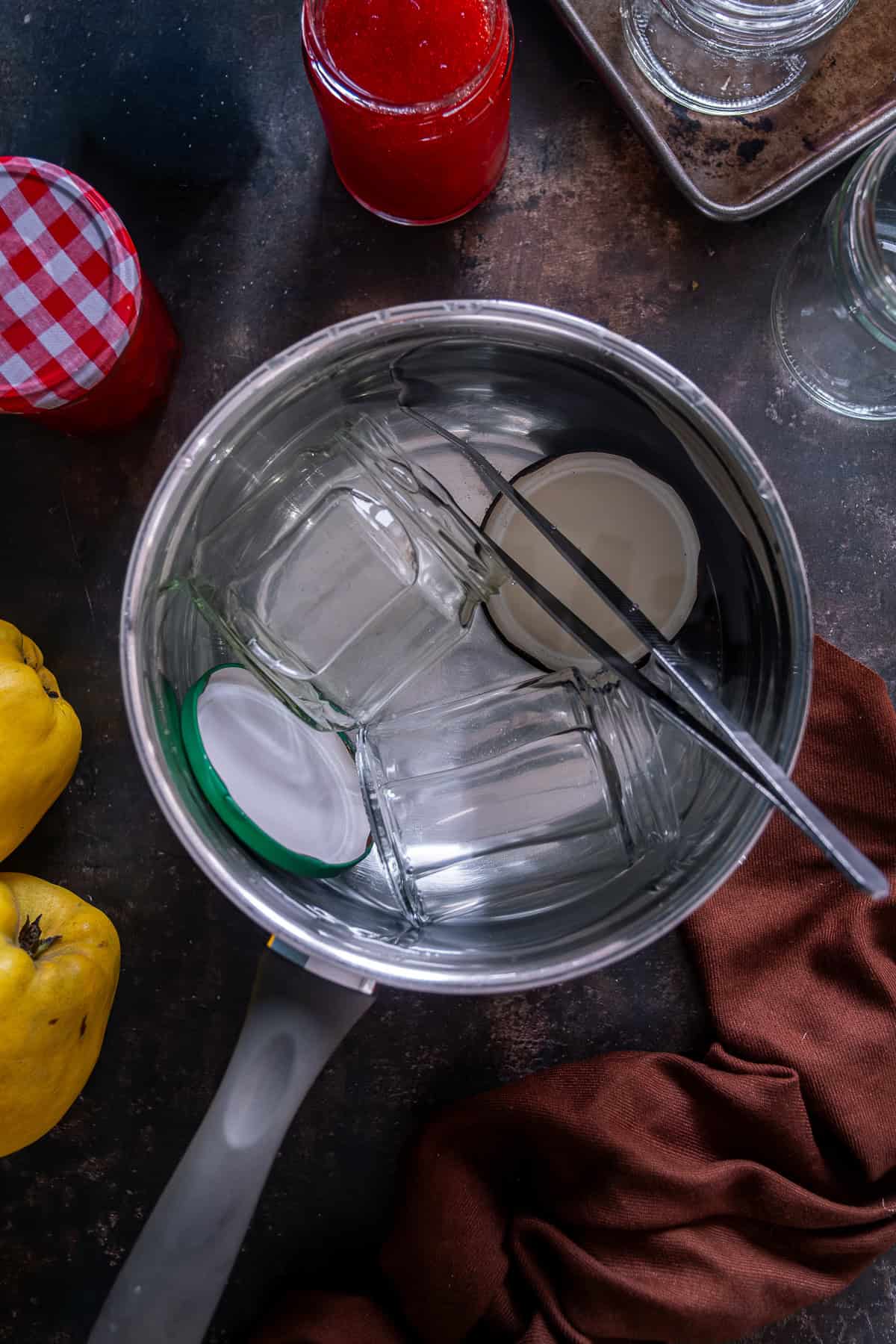
To sterilise the jars, fill a large pot with water and add your clean jars, making sure they're fully covered. If your metal lids are suitable for boiling, you can add them too. Otherwise, prepare them according to the manufacturer's instructions. Add a pair of metal tongs, keeping the handles outside the pot. Bring the water to a boil and keep it at a steady boil for 10 minutes.
Use a clean tea towel to hold the tongs by the handles and carefully lift the jars out of the water. Place them on a clean tea towel to air dry.
To fill the jars while the jam is hot, start preparing them during the last 20 minutes of cooking. This way, both the jars and the jam will be hot when you're ready. Fill the jars, leaving a little space at the top, and close the lids tightly. Use a tea towel to protect your hands from the heat.
Alternatively, you can let the jam cool completely and then spoon it into the sterilised jars. Again, leave a little space at the top and close the lids tightly.
What's the difference? The jam we put into jars while hot was thick but still slightly runny when we opened it later, just like traditional quince jam in Türkiye. The batch we let cool first was much thicker. Both were delicious, so it depends on how thick you like your jam.
We always let the jars cool completely and keep them in the fridge, just to be on the safe side, especially when we're planning to store the jam for several months.
If you want to store your jam outside the fridge, you'll need to follow a proper canning process, such as water bath canning, to make sure it's safe for long-term storage.
Should You Peel Quinces for Jam?
We prefer to peel the quinces because we don't like the texture of the skin in our jam. It's easy to remove with a vegetable peeler. But peeling is optional, and some people make quince jam with the skin on.
Why Does Quince Jam Turn Pink?
In Türkiye, many people, including our relatives, say that quince seeds give the jam its pink or reddish color. But the color actually develops in the fruit itself as the jam cooks slowly, uncovered, over low heat.
The final color can vary depending on the variety and ripeness of the quinces. Some batches are lighter, while others turn a deeper pink or red.
After about an hour of cooking, our jam looked like the last photo in the collage below. We cooked it for another 20 minutes, and it developed the beautiful reddish color you see in our finished jam photos.
Why Do We Use Quince Seeds in Jam?
Quince seeds help the jam thicken naturally as it cooks.
When you remove the seeds from the fruit, you'll notice how slippery they feel. The jelly-like coating around the seeds helps the jam thicken, so there's no need to add extra pectin.
Can I Add Other Flavors?
Yes! Quince has a lovely fruity flavor on its own, but adding a cinnamon stick or a few cloves is also very common in Türkiye. They give the jam a warm, spiced flavor. You can tie them in a small piece of muslin, just like the quince seeds, to make them easier to remove later.
We prefer keeping ours simple so the flavor of the quinces really comes through.
Serving Suggestions
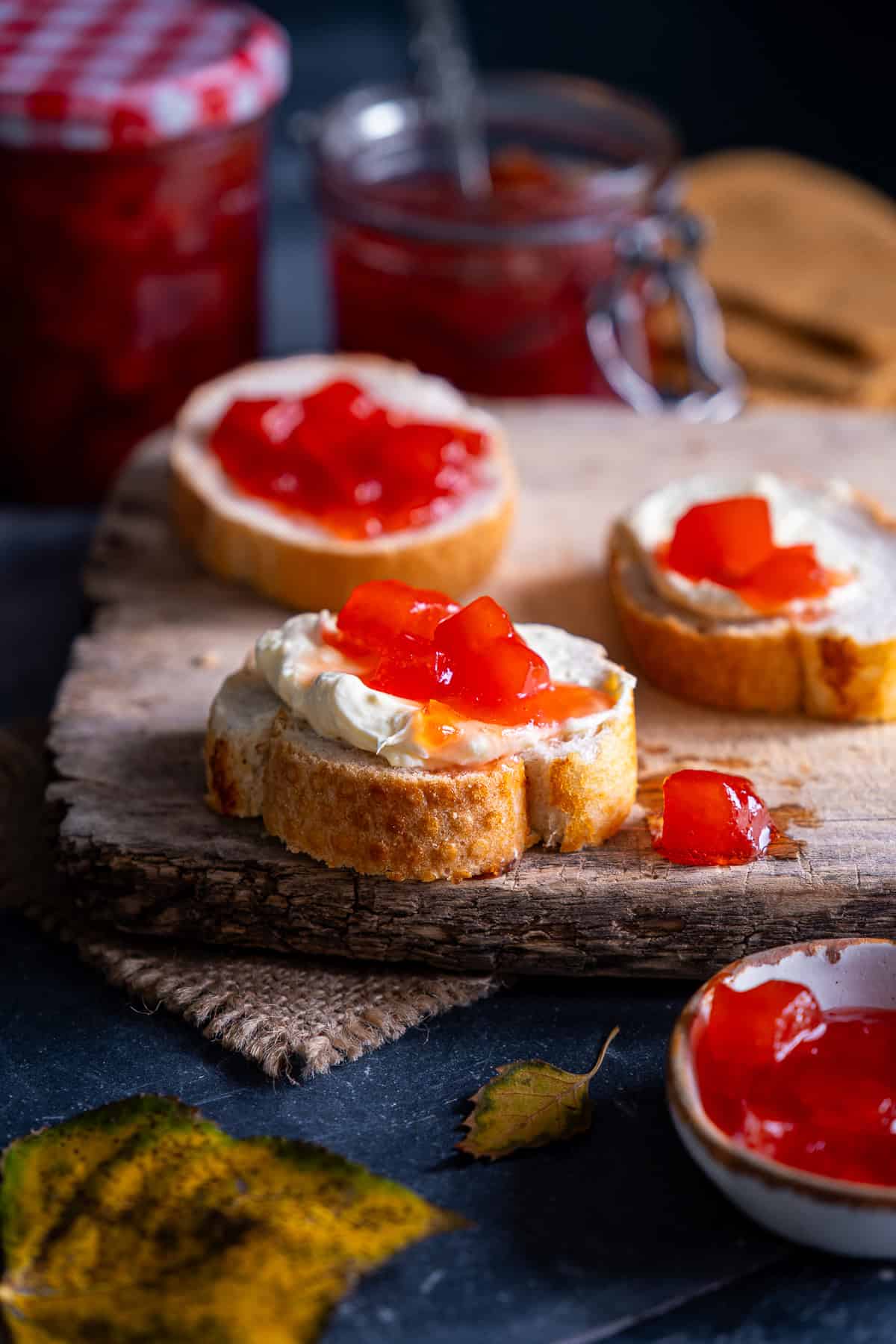
Quince jam is a lovely addition to a traditional Turkish breakfast. We love it with fresh bread and butter or a generous spoonful of kaymak (Turkish clotted cream).
It's especially good with warm homemade bazlama or Turkish pide bread. Just tear off a piece of bread, spread on some butter and top it with a little quince jam.
More Turkish Jam Recipes
You Might Also Like

Sign up for the FREE Give Recipe Newsletter to get the new recipes into your inbox!
And stay in touch with us on Facebook, Pinterest, YouTube and Instagram for all the latest updates.
📖 Recipe
Homemade Quince Jam
INGREDIENTS
- 1 litre (4¼ cups) water
- 1 kg (2.2 lb) quince, weighed after peeling and removing the cores, reserve the seeds
- 1 kg (2.2 lb) granulated sugar
- 1 tablespoon lemon juice
INSTRUCTIONS
- Heat the water in a kettle and pour it into a large pot. Alternatively, you can heat the water directly in the pot.
- Peel and core the quinces, keeping the seeds aside. Cut the fruit into small cubes and add them straight to the hot water as you go to prevent browning.
- Put the pot on the heat and bring the water to a boil. Simmer for 5–7 minutes, or until the quinces soften.
- Once they soften, add the sugar and the reserved quince seeds. You can tie the seeds in a small piece of muslin to make them easier to remove later. Stir gently to help the sugar dissolve.
- Reduce the heat to medium-low and let the jam simmer gently, uncovered, for about 1 hour and 10 minutes. Stir occasionally and skim off any foam that forms on the surface.
- As the jam cooks, it will gradually thicken and change from pale yellow to a pinkish-red color.
- Add the lemon juice and simmer for another 10 minutes. Remove the pot from the heat. Don't worry if the jam still looks a little runny. It will thicken further as it cools.
- Remove the quince seeds. Transfer the jam to sterilised jars while it's still hot, or let it cool completely and then spoon it into sterilised jars. See the notes below for both methods and storage instructions.
NOTES
NUTRITION
Nutrition information is automatically calculated, so should only be used as an approximation.

Leave a Reply