

Doner kebab is one of the most popular Turkish street foods, made by stacking seasoned meat on a vertical rotisserie, where it slowly cooks and is sliced into thin, juicy pieces. It is served in different ways, from wraps and sandwiches to plates with rice.
As a Turkish couple who grew up in Turkey, this is a dish we’ve known and eaten all our lives. We’ve had it everywhere, from school and work cafeterias to small local shops, chain restaurants, and busy city streets. So for us, doner is just part of everyday life back home.
What Does “Doner Kebab” Mean?
The word “doner” comes from the Turkish verb dönmek, which means “to turn” or “to rotate.” It refers to the way the meat slowly turns on a vertical spit as it cooks.
“Kebab” (or kebap in Turkish) is a general term for dishes made with grilled or roasted meat.
How Doner Kebab Is Made
What makes doner kebab different from other kebabs is the way it’s cooked.
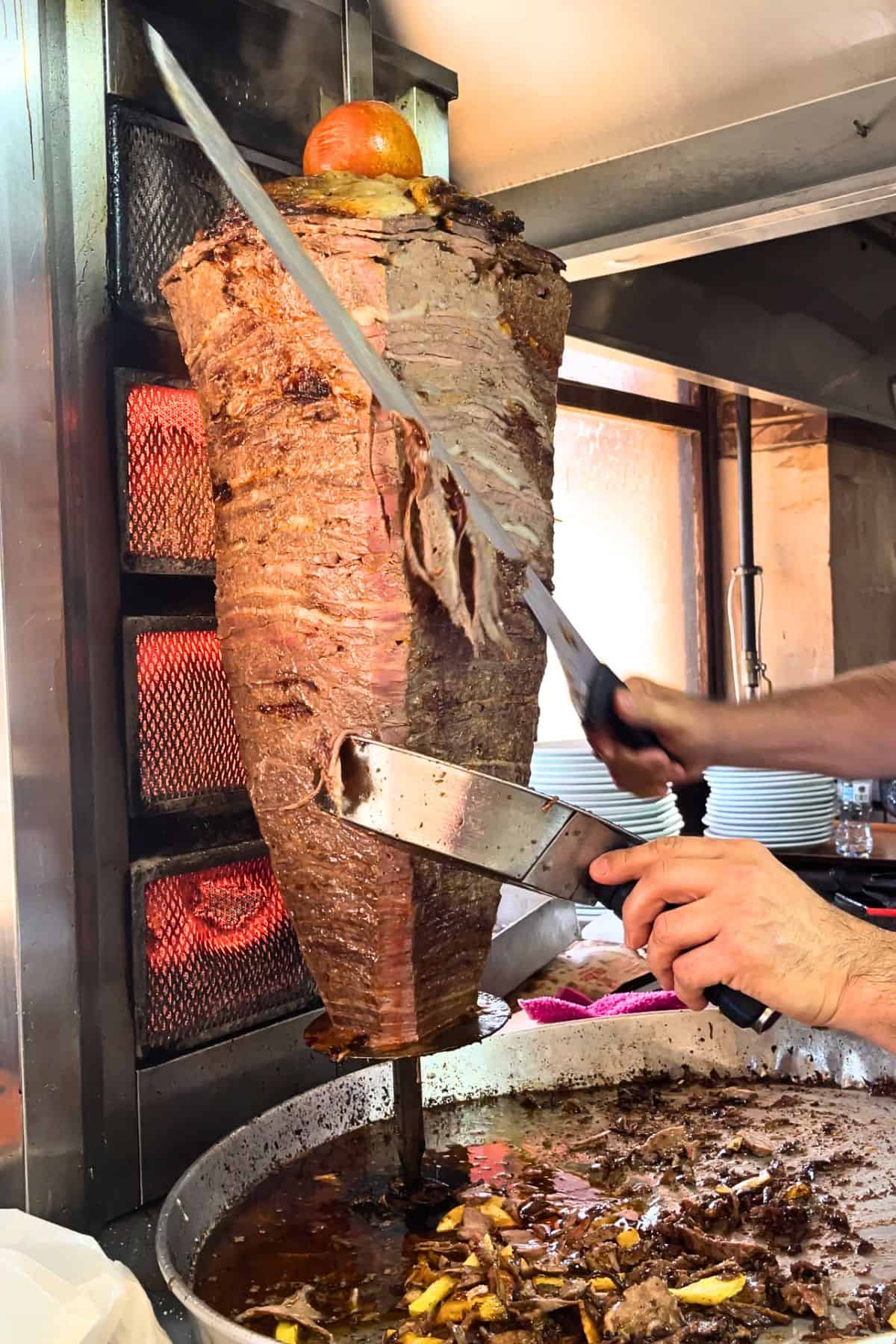
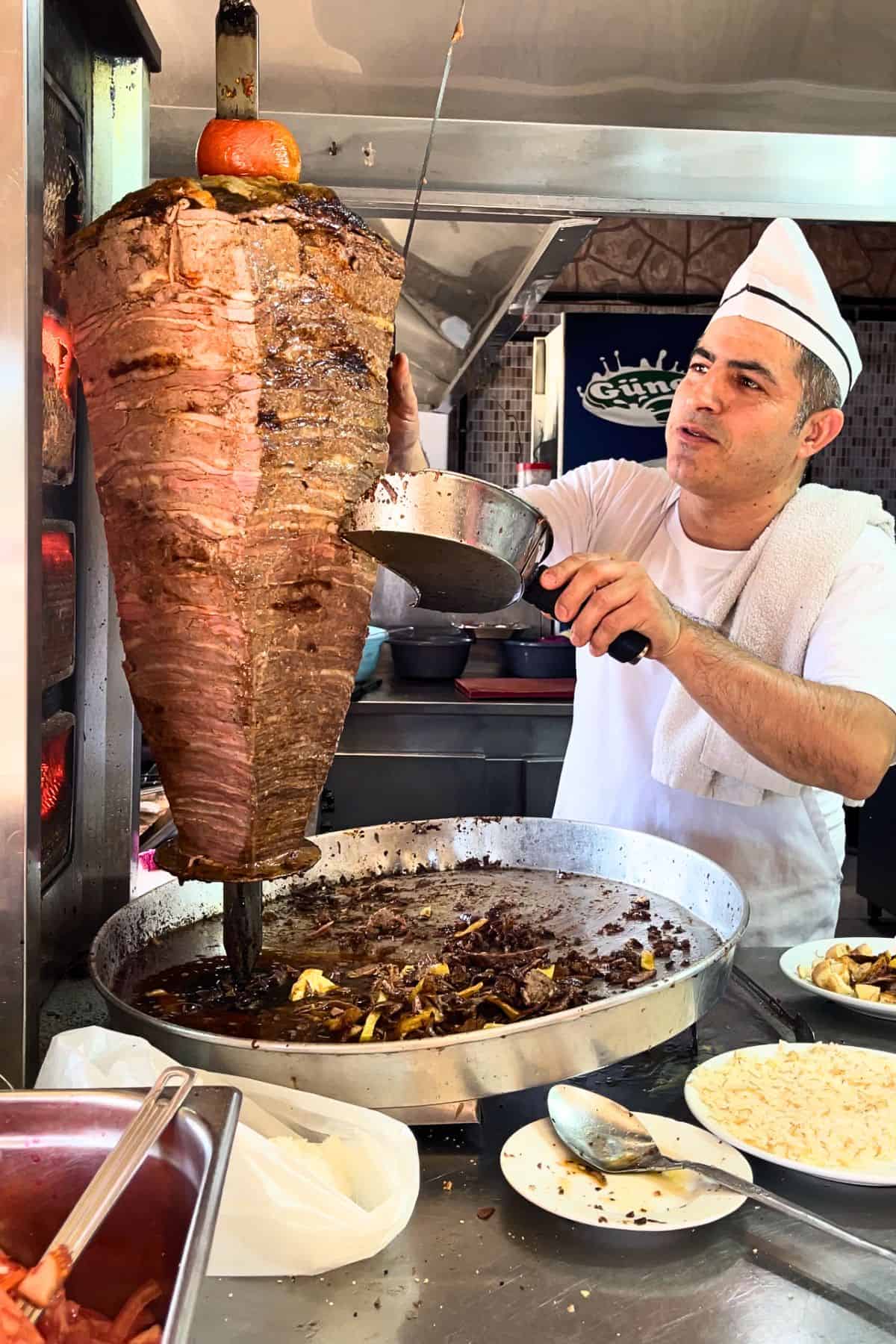
Instead of being grilled on skewers, the meat is stacked in layers on a large vertical spit. These layers are usually slices of marinated meat, placed one on top of another to form a tall, compact shape.
As the spit slowly rotates in front of the heat, the outer layer cooks first. Once it’s nicely browned, thin slices are shaved off with a long knife. Then the next layer continues cooking, and the process repeats.
This slow and rotating cooking method is what gives doner its signature texture and flavor.
What Meat Is Used In Doner Kebab?
Doner kebab can be made with different types of meat, but the most traditional options in Turkey are lamb, beef, or a combination of the two.
There are also two main ways the meat itself is prepared: sliced meat doner (yaprak döner) and ground meat doner (kıyma döner).
Yaprak doner is made with thin slices of whole cuts of meat, often layered with small amounts of fat, stacked on the spit. In Turkey, this is generally considered the higher-quality version, with a more natural meat flavor.
Kıyma doner, on the other hand, is made with seasoned ground meat that is shaped and pressed onto the spit. It is often more affordable.
Chicken doner (tavuk döner) is another very popular option. It’s usually marinated with yogurt and spices, which gives it a softer texture and a more seasoned flavor compared to meat doner.
As a Turkish couple who have eaten doner in different parts of Turkey, we’ve seen all these variations in real life, from simple street food spots to more specialized doner shops. Each has its own place, but if you’re looking for the classic experience, sliced meat doner is usually the one people think of first.
Types of Doner
While the meat itself can vary, doner kebab is often recognized by how it’s served in different forms. In Turkey, there are a few common ways you’ll come across it, each creating a slightly different dish.
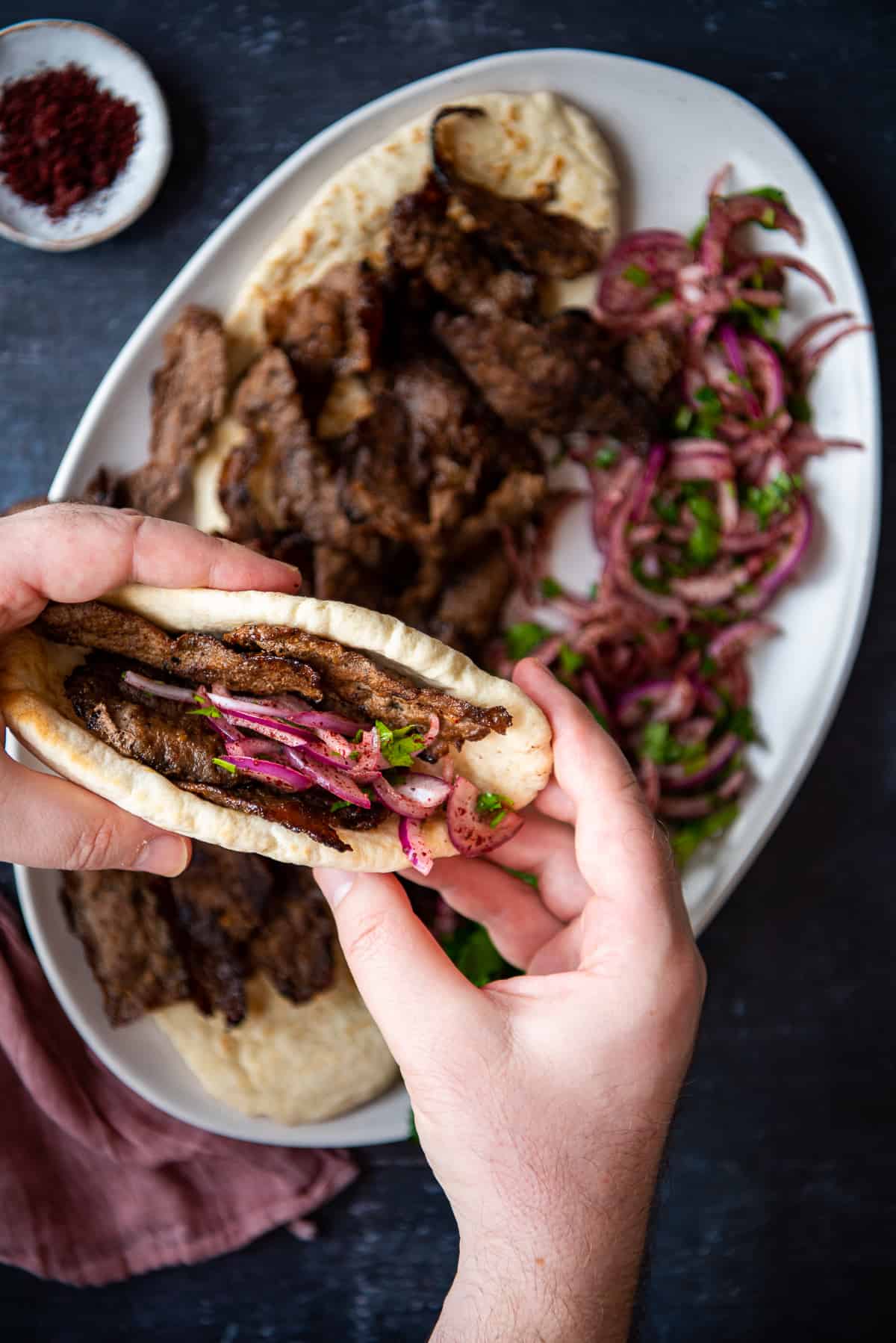
Meat Doner
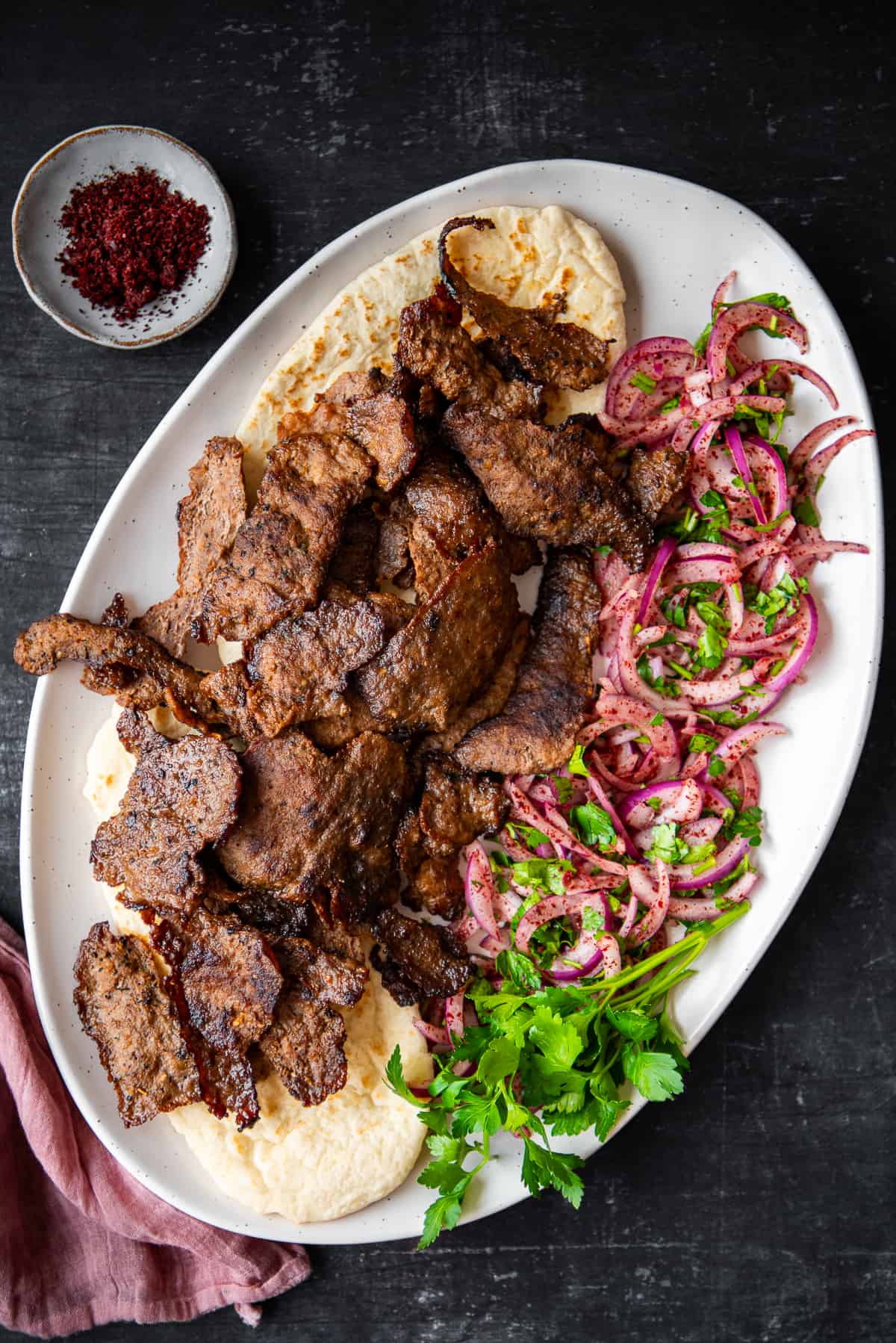
This is the classic version made with beef, lamb, or a combination of the two. It’s usually served either in bread as a sandwich or on a plate with rice, sometimes fries and a few simple sides.
If you want to try it at home, see our easy Turkish doner kebab recipe.
Chicken Doner
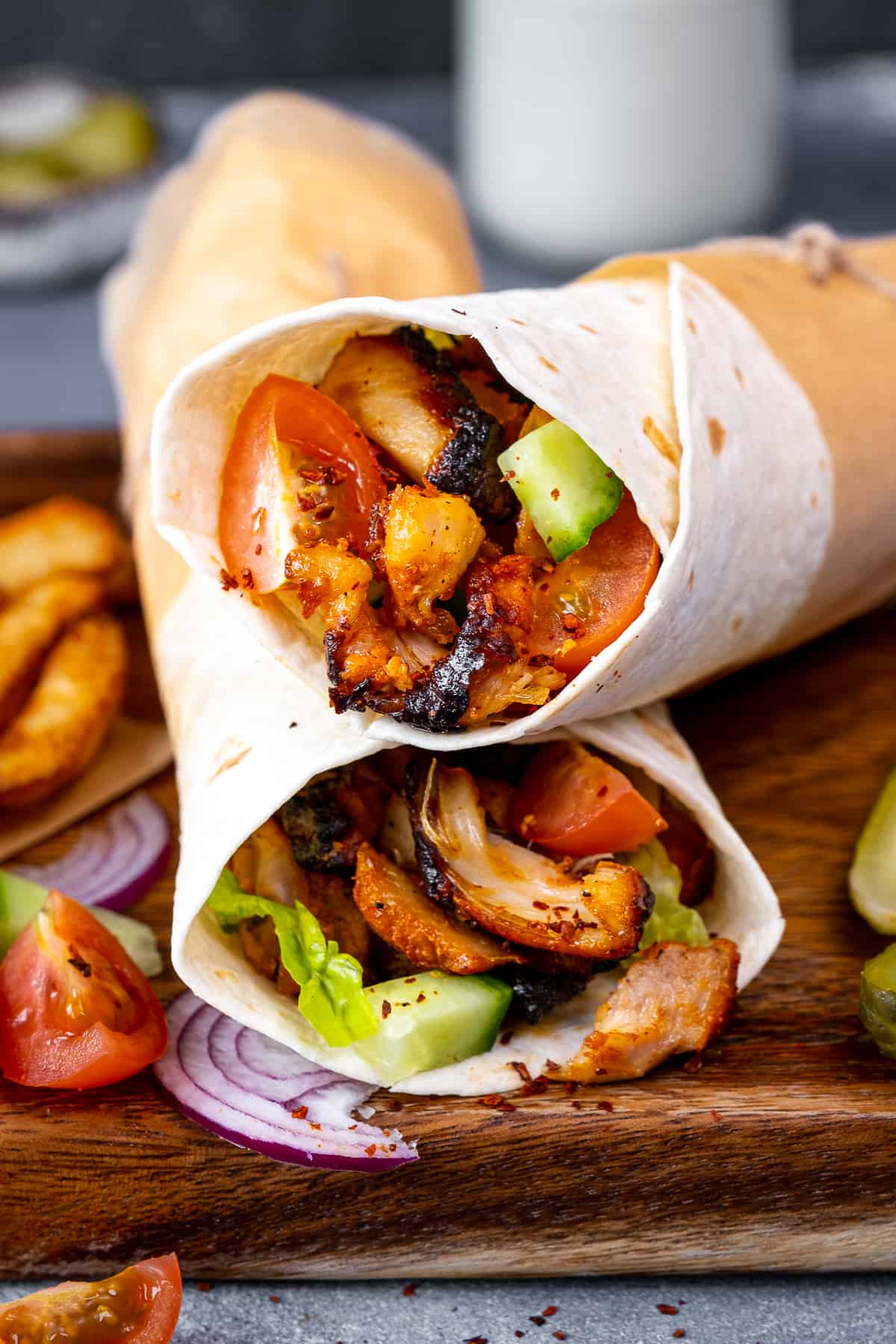
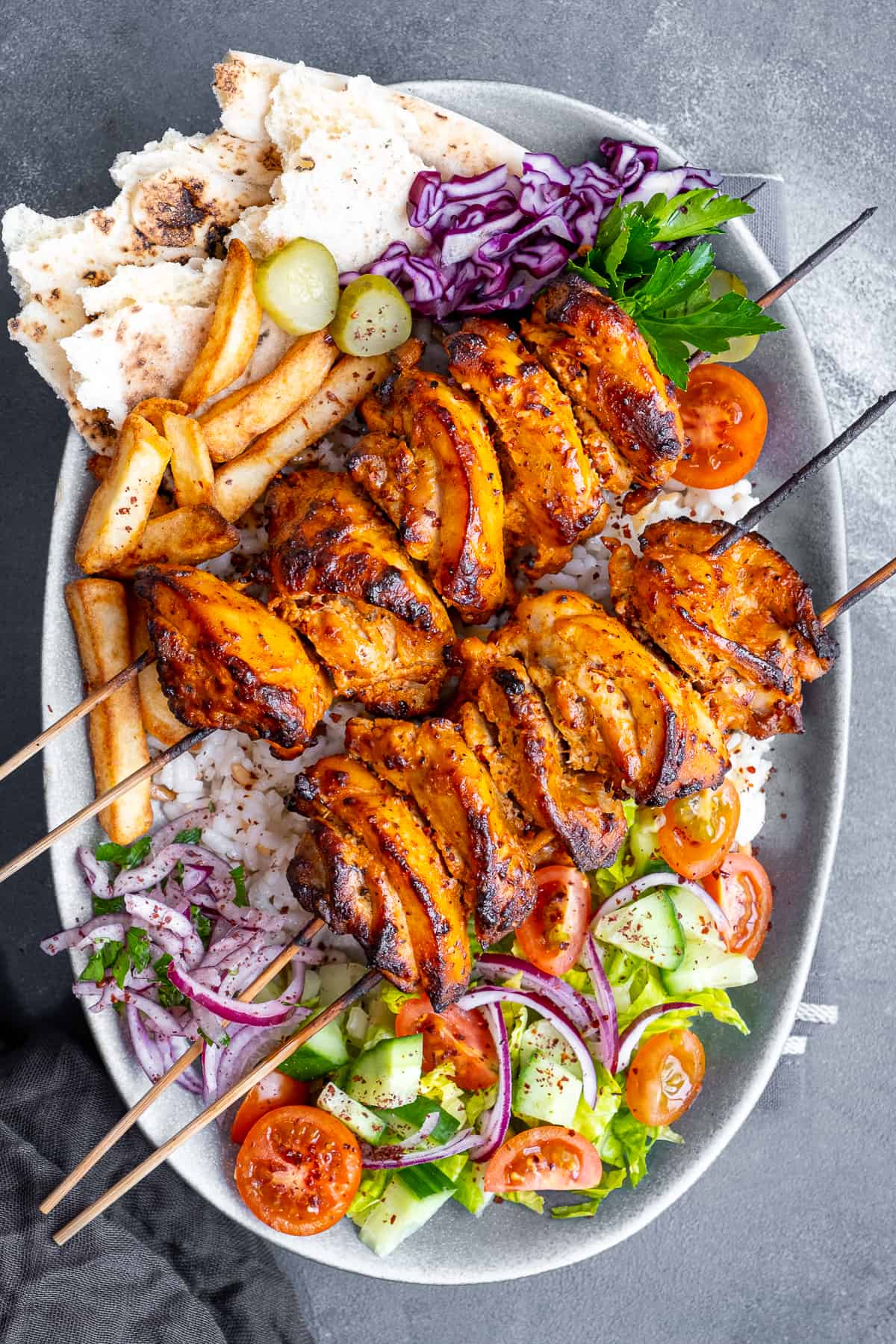
Chicken doner is a lighter and very popular alternative, especially for a quick meal. It’s often served as a wrap (dürüm) or in sandwich bread with salad.
You can find an easy version in our chicken doner kebab recipe.
Iskender Kebab
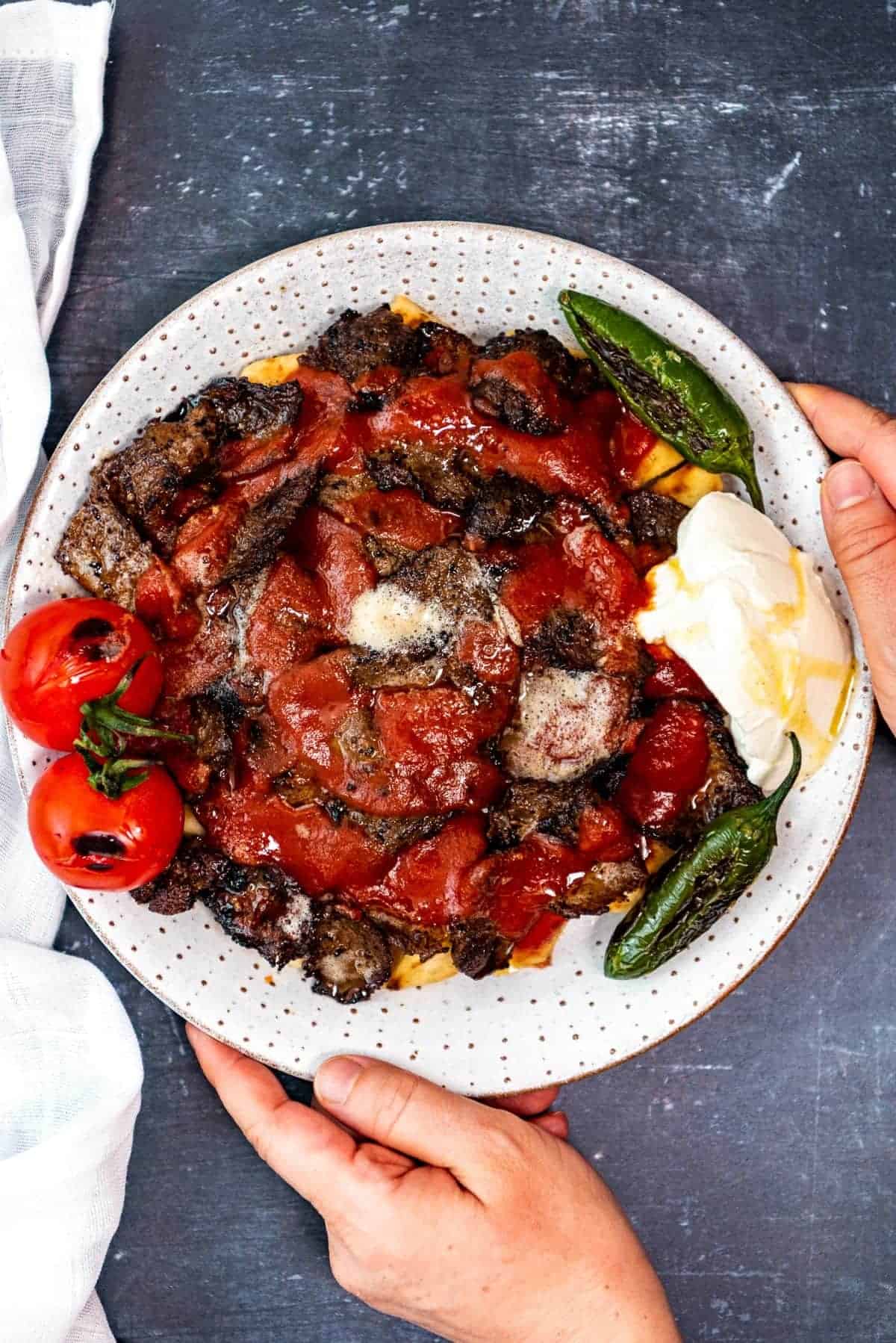
Iskender is one of the most well-known doner dishes in Turkey. It uses the same doner meat but is served in a completely different way. Instead of being served in bread, the sliced doner meat is placed over small pieces of pide bread and topped with tomato sauce and melted butter, and also with yogurt on the side.
See how to make it in our Iskender kebab recipe.
How It Is Served
In Turkey, doner kebab is served in several ways.
One of the most common is ekmek arası döner (doner sandwich), where the meat is served in bread. The bread is usually a simple Turkish white bread (somun ekmek), with a lightly crisp crust and a soft interior. In some places, a round, softer bread known as doner bread (gobit) is used instead. It’s typically filled with sliced doner, tomatoes, and plain onion slices or sumac onions.
Another classic is döner dürüm (doner wrap), where the meat is wrapped in thin lavash bread. It’s tightly rolled and easier to eat, making it a very popular street food option.
You’ll also see doner served as a plate, often called pilav üstü döner. In this version, the sliced meat is placed over rice pilav and served with a side of simple lettuce salad (mevsim salata). Some places also add a portion of fries. For more ideas, you can also explore our Turkish side dishes.
In traditional doner shops in Turkey, the focus is on the meat itself. It’s usually served with simple sides rather than heavy sauces, allowing the flavor of the doner to stand out.
Where Does Doner Come From?
Doner kebab dates back to the Ottoman period, and the city of Bursa in Turkey is widely considered its birthplace. It is often linked to the 19th-century cook İskender Efendi, who is credited with developing the vertical rotisserie method.
Today, you can find doner all across Turkey, not just in Bursa.
As a Turkish couple who grew up in Turkey, this is something we’ve always known as part of everyday food culture, not just a special dish.
Doner vs Gyro vs Shawarma
Doner kebab is often compared to gyro and shawarma because they’re all cooked on a vertical rotisserie and served in similar ways. While they may look alike, they differ in seasoning, toppings, and how they are typically served.
Doner kebab is originally from Turkey and is usually made with lamb, beef, or chicken. The seasoning is typically simple, letting the flavor of the meat stand out.
Gyro and shawarma are similar in appearance, but from what we’ve seen here in the UK, they are usually served with more sauces and stronger seasoning. Gyro is often paired with tzatziki, while shawarma tends to include a mix of spices and sauces like garlic sauce or tahini.
As a Turkish couple, doner is something we know very well from growing up in Turkey. Gyro and shawarma, on the other hand, are dishes we’ve mostly experienced abroad.
You might also notice a version often called German doner. This style, which became popular in Berlin, is usually served in bread with a variety of sauces and fillings. It’s quite different from the simpler versions in Turkey, where the focus is more on the meat itself rather than sauces.
Can You Make Doner Kebab At Home?
Absolutely! It may not be exactly the same as the doner kebab cooked on a vertical rotisserie at a real Turkish doner shop, but you can get very close in both taste and texture.
Give our homemade doner kebab recipe a try—we think you’ll love it.
Want to explore more? Take a look at our full guide to Turkish kebabs.
Sign up for the FREE Give Recipe Newsletter to get the new recipes into your inbox!
And stay in touch with us on Facebook, Pinterest, YouTube and Instagram for all the latest updates.

Cathy Varone-Smith says
I loved your Snack-E-Book recipes, I will make a few of them. If I
could make a suggestion I would show the picture of the recipe before most of us eat with our eyes first. I love that the recipes are easy to follow. I was looking for a pitta recipes using wheat flour is you have one to share. Thank you so much for your hard work. Cathy