

This Turkish Rice Pilaf is the most basic version of Turkish pilaf, the one you’ll see next to almost every main dish in restaurants in Turkey. It’s fluffy and so flavorful that you might even end up eating it as a main dish, paired with yogurt or a simple salad — just like we sometimes do.
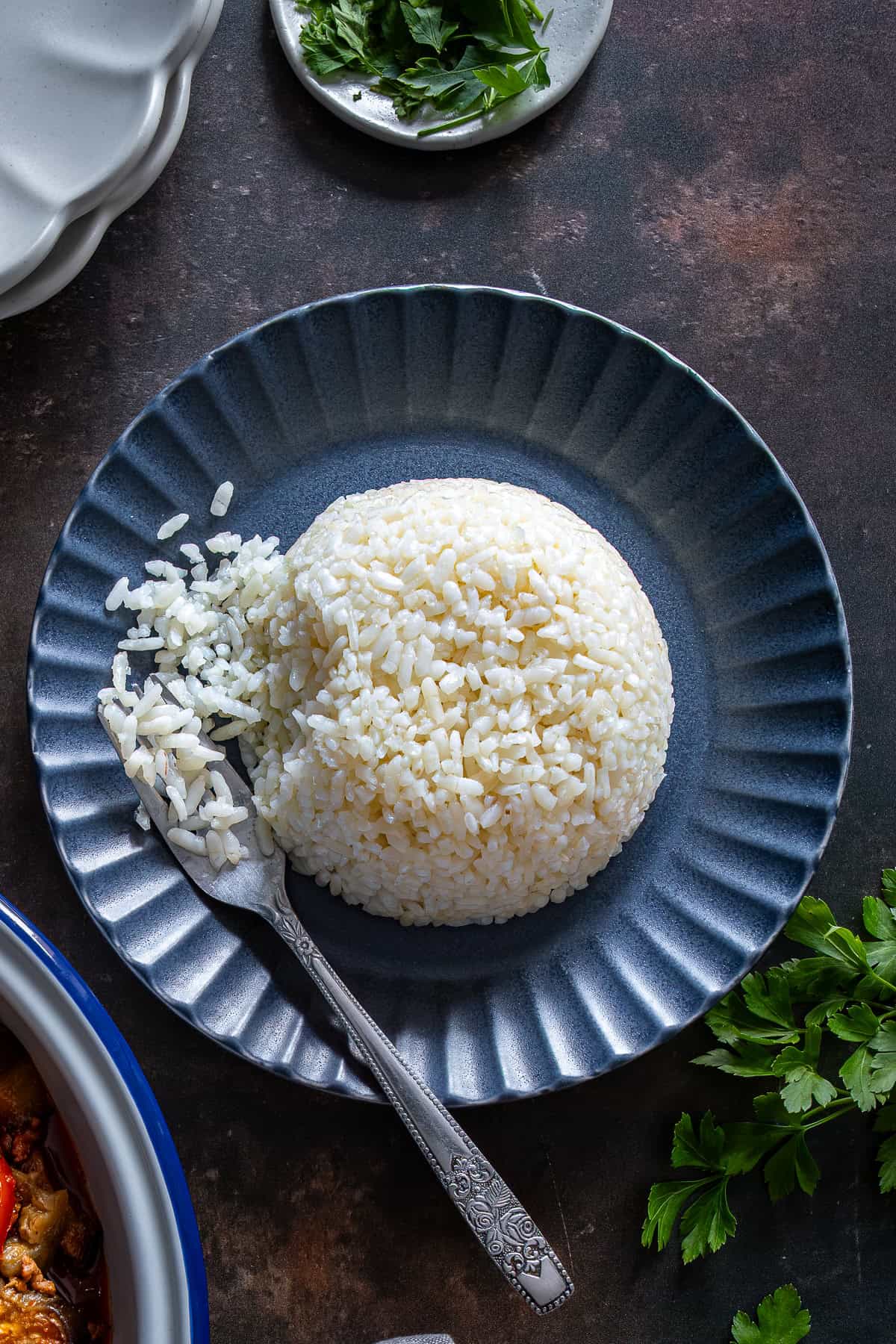
The Basic Turkish Rice Pilaf You Should Know
We think everyone into Turkish cooking should know how to make basic Turkish rice pilaf. It’s one of the core side dish recipes in Turkish cuisine.
It’s so simple that after making it a few times, you won’t even need to look at the recipe.
Use it as the starting point for other pilaf variations later on. You can add orzo pasta, vermicelli, chickpeas, chicken, spices or vegetables like carrots and peas.
You might want to check out our other rice pilaf recipes:
- Chicken Rice Pilaf (Tavuklu Pilav)
- Orzo Rice Pilaf (Arpa Sehriyeli Pilav)
- Spiced Rice Pilaf with Currants (Ic Pilav)
What Makes This Rice Turkish?
First, the rice is always rinsed well to remove excess starch. Then it’s sautéed in oil before any water goes in. That quick sauté step is really important. It helps keep the grains separate as they cook and gives the rice a deeper, better flavor.
Second, Turkish rice pilaf should be fluffy and tender, with clearly separate grains. If you’re serving it to your Turkish friends, this is the first thing they’ll notice. It should never be sticky or clumped together.
And finally, it shouldn’t be dry, but it shouldn’t feel greasy either. You want to taste the butter in the background.
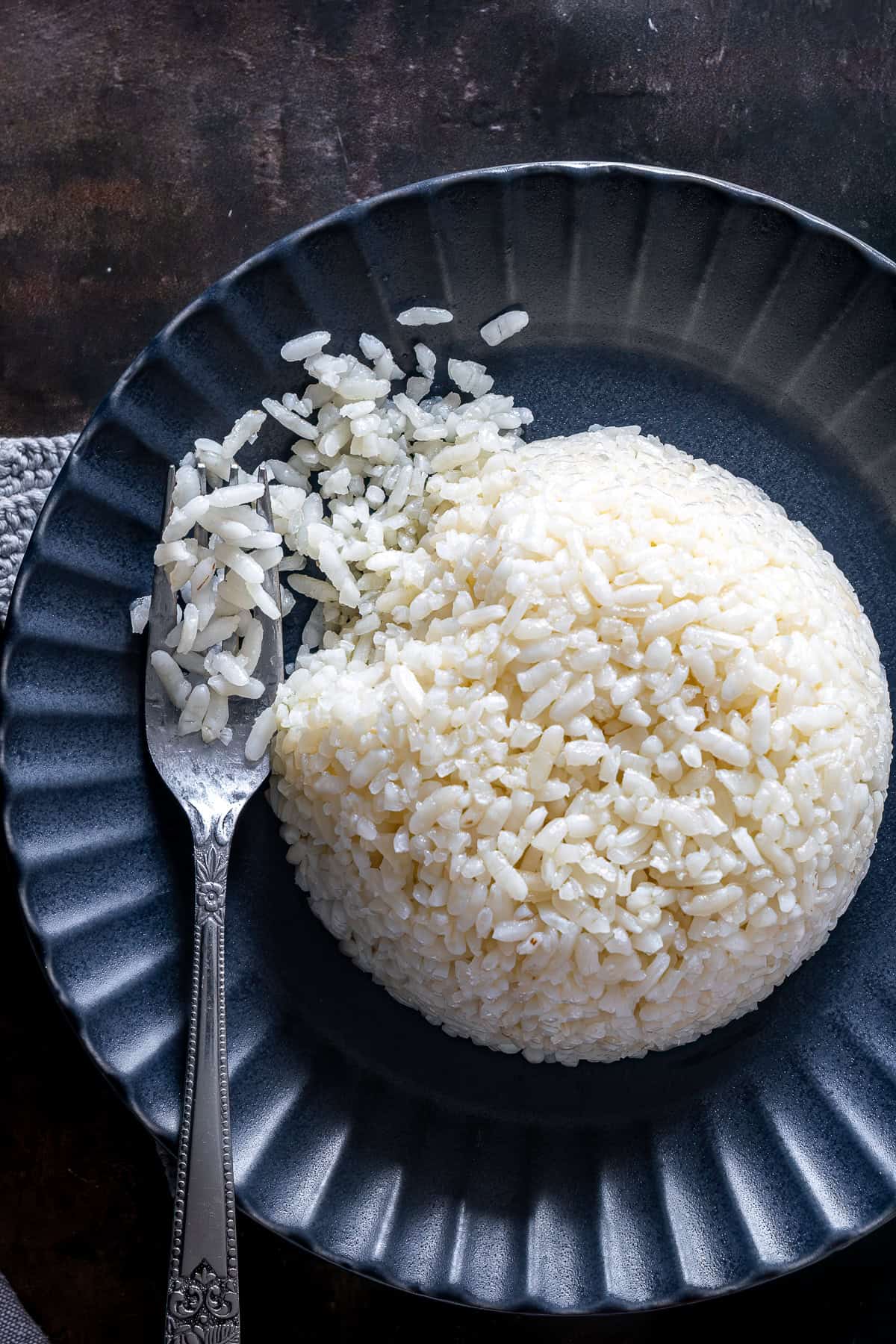
About the Ingredients
You only need a handful of ingredients to make an authentic Turkish rice pilaf: olive oil, rice, butter, salt, and water. That’s it.
We use both olive oil and butter in our recipe. The olive oil is for sautéing the rice first, which is an important step in Turkish-style pilaf. The butter gives the flavor we want. You can skip the butter if you prefer, but we think it adds a richer, more balanced taste.
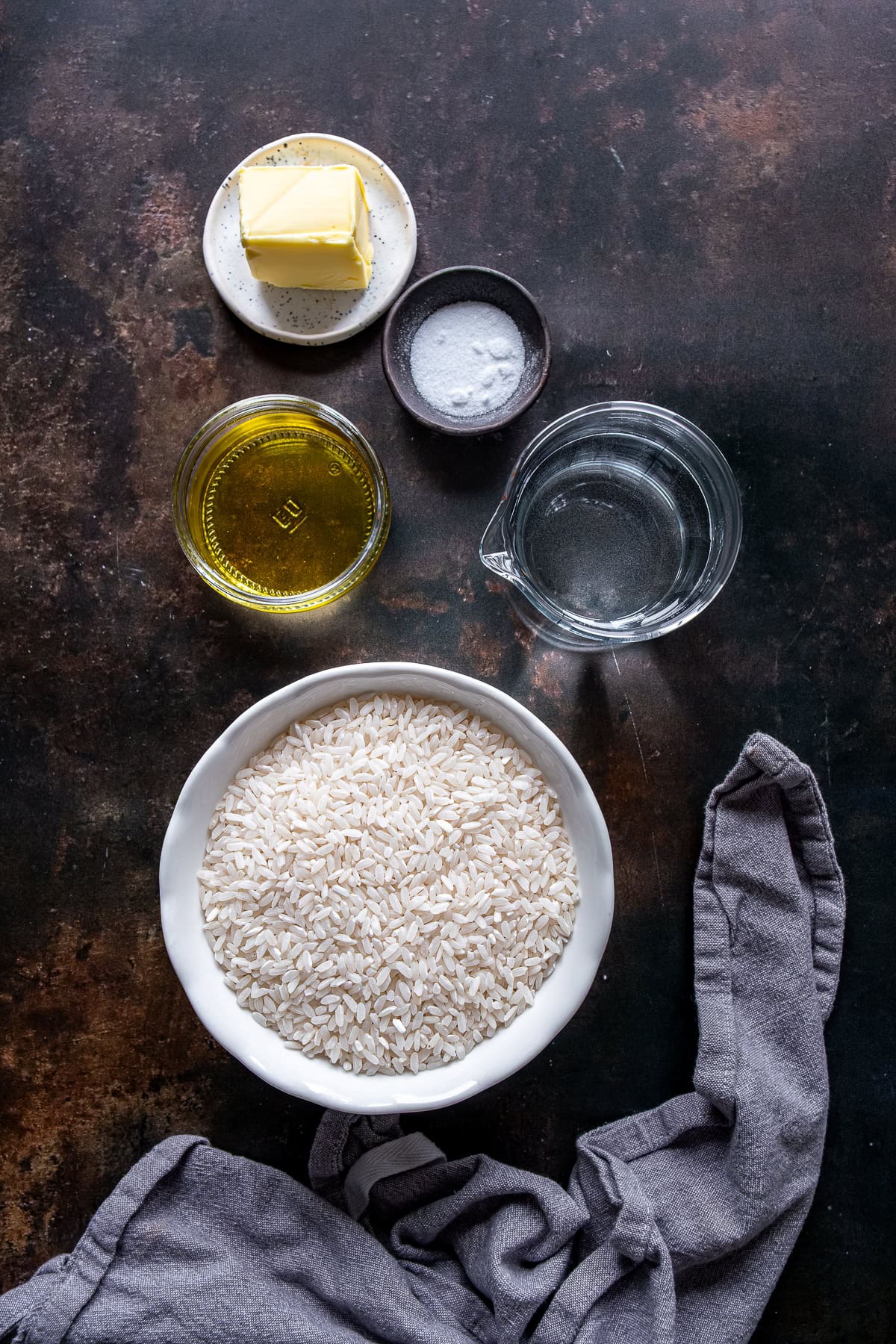
When it comes to rice, Baldo rice is the traditional choice in Turkey for classic rice pilaf. It gives that tender but separate grain texture we’re looking for. If you don’t want to search for Baldo in your area, white long-grain rice will also work.
For the liquid in this basic rice pilaf recipe, we use plain water. Most Turkish home cooks make it this way. But you can of course use chicken stock or vegetable stock if you prefer.
You can find the full ingredient list with exact measurements in the recipe card below.
Choosing the Right Rice for Turkish Pilaf
For us Turks, rice generally falls into two categories: rice for pilaf and rice for everything else. The “everything else” category includes rice used for stuffed vegetables (dolma) or other rice-based dishes.
What makes pilaf rice different is the size of the grain. Pilaf rice has larger, plump grains. That size helps create the texture we look for in Turkish pilaf — fluffy rice with clearly separate grains that don’t stick together.
The most popular rice for pilaf in Turkey is Baldo rice. It’s often described as a short-grain rice, but the Baldo varieties in Turkey are quite plump and not extremely short. That fuller shape is one of the reasons it works so well for Turkish rice pilaf.
In the UK, we can easily find Baldo rice in Turkish grocery stores or online markets. Simply search for “Baldo pirinç.” Well-known Turkish brands include Duru, Bodrum, and Reis.
If you can’t find it, Italian Arborio rice is the closest alternative in our experience. And when we don’t have any of these at home, we sometimes use regular white long-grain rice or even basmati and still get good results. It’s still Turkish-style rice pilaf, but the shape of the grain is a bit different.
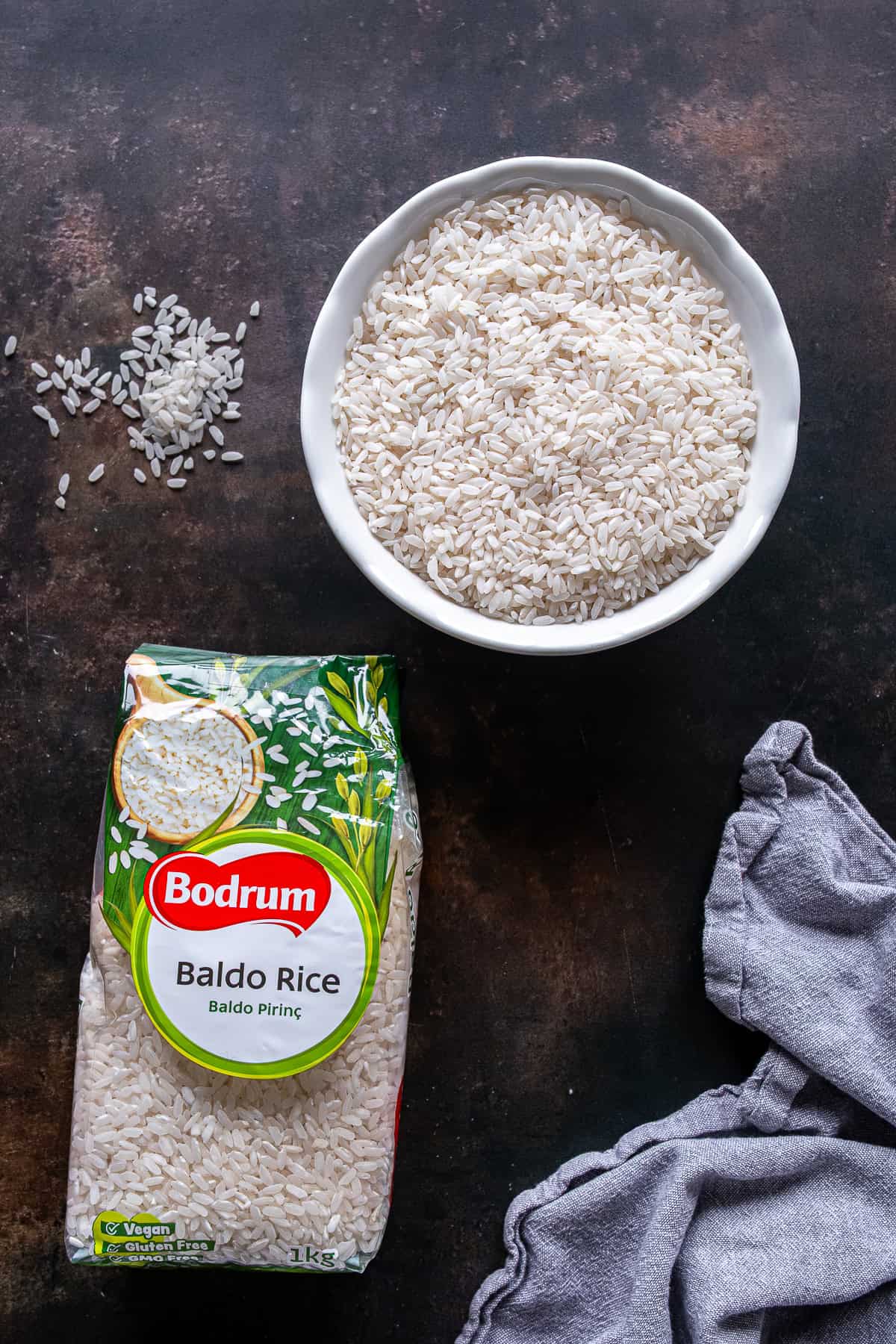
How to Make Turkish Rice Pilaf
Making Turkish rice pilaf is mainly about technique, and ideally using Baldo rice. That said, you can still make a delicious Turkish-style pilaf with any long-grain rice by following the same method.
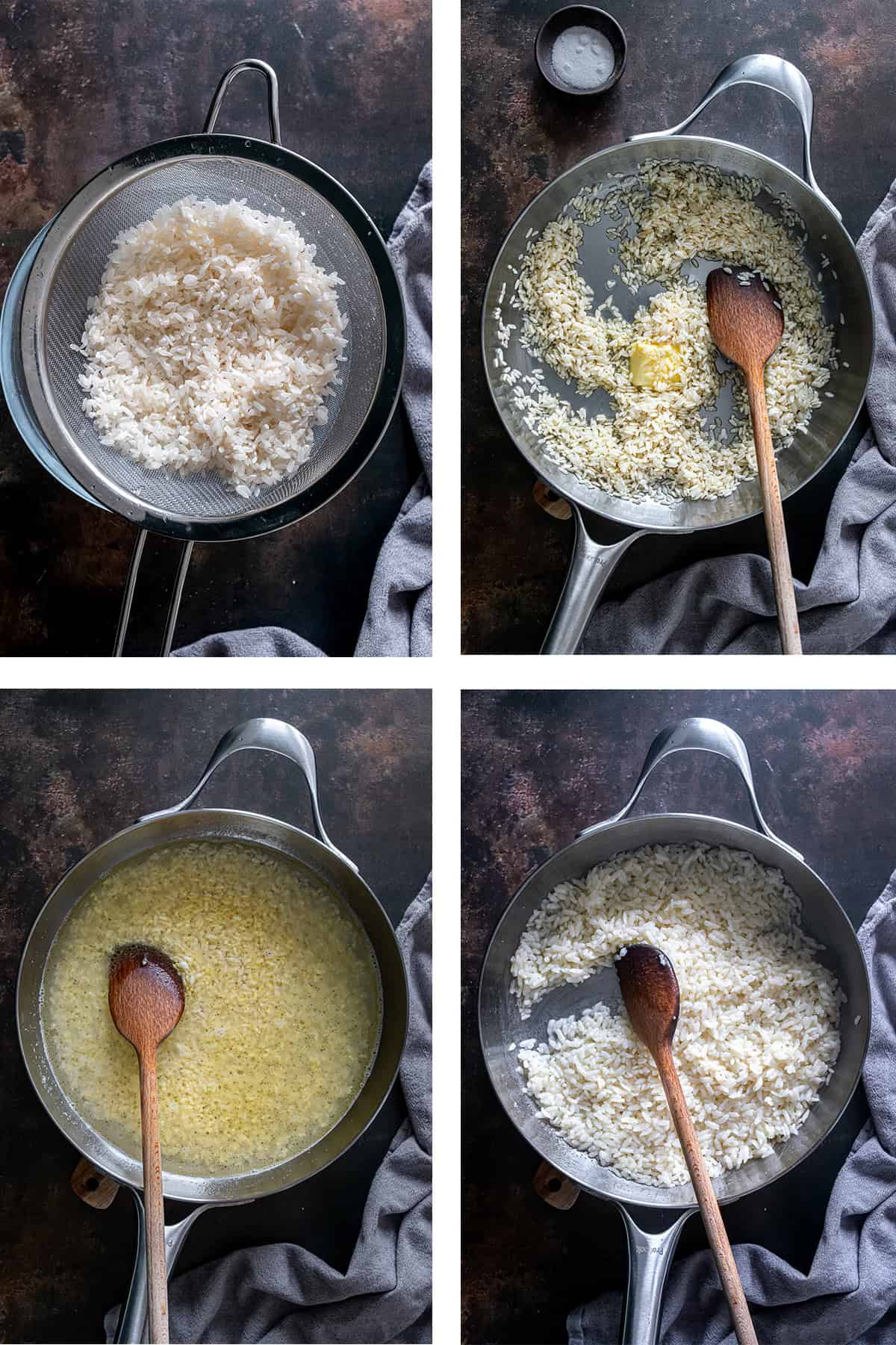
First, remove as much starch as possible. To do this, rinse the rice well in a sieve under running water until the water runs clear.
The second essential step in Turkish-style pilaf is sautéing the rice in oil. Don’t rush this part. Cook the rice, stirring often, until the grains separate and become slightly glossy. We don’t want any browning.
Once the rice is ready, add hot water and salt, cover the pan, and cook on the lowest heat. Low heat is key. The rice should absorb all the water and cook evenly. Remove it from the heat and let it rest before serving.
While resting, many Turkish home cooks place a paper towel over the rice and then put the lid on. We don’t think it’s really necessary — leaving the lid slightly ajar works just fine.
For detailed step-by-step instructions, see the full recipe card below.
Serving Suggestions
Turkish rice pilaf is usually served as a side dish, and it pairs beautifully with many classic Turkish mains. If you’re planning a full meal, here are some of our favorite dishes to serve it with:
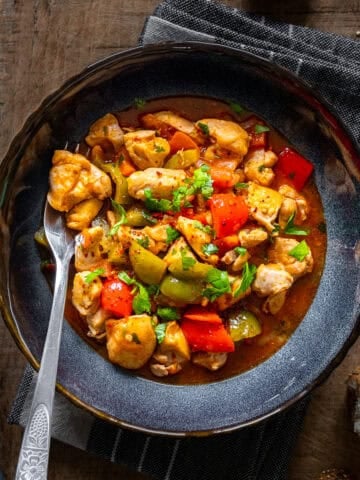
- Turkish Moussaka and Cacik, a very popular menu in Turkey (See the picture below)
- Turkish Lamb Stew
- Kuru Fasulye (Turkish Bean Stew)
- Tavuk Şiş (Chicken Shish Kebab)
- Taze Fasulye (Turkish Green Beans)
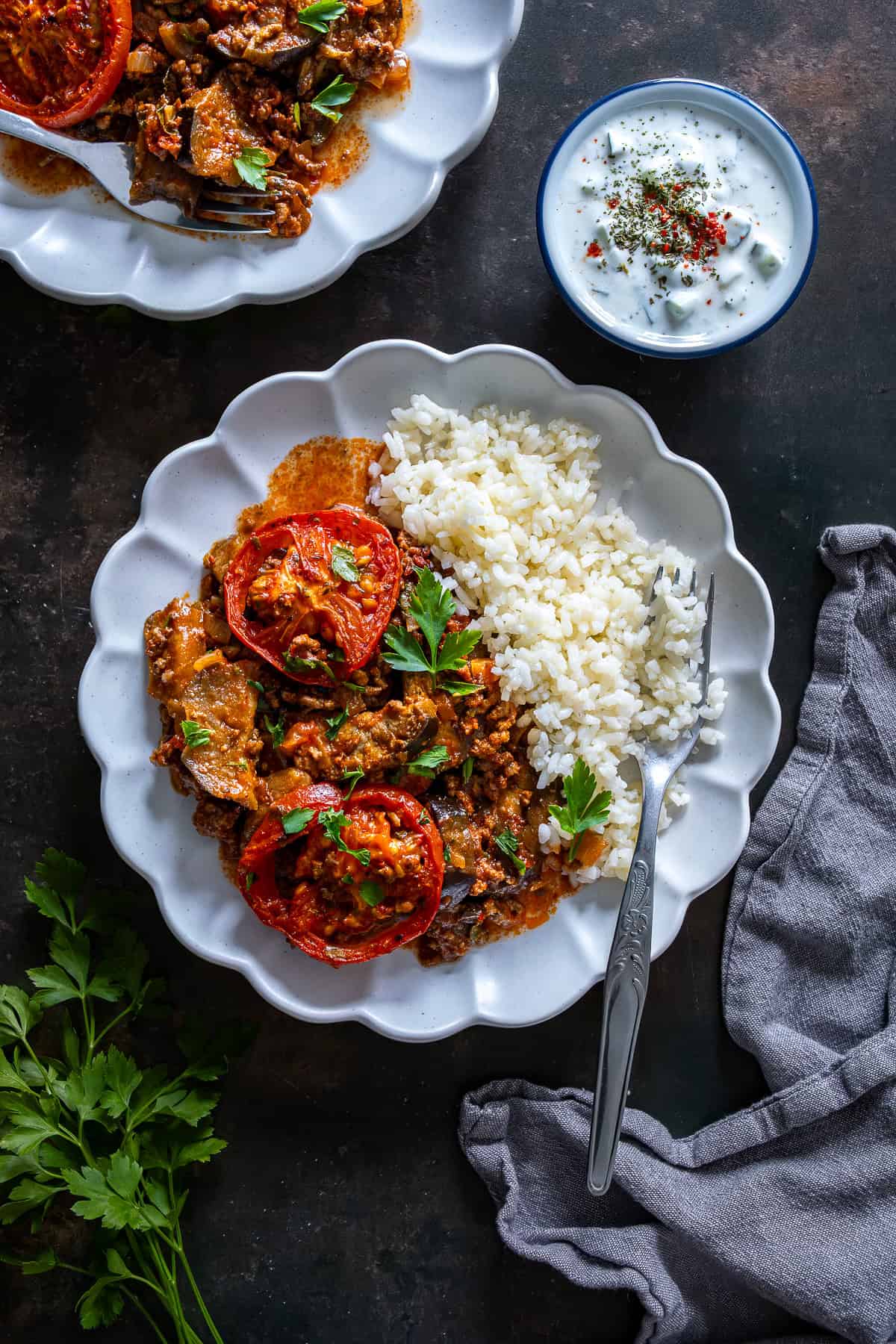
We also love it as a simple main dish on its own, paired with a bowl of plain yogurt and Çoban Salad on the side. Sometimes that’s all you need.
Storage and Reheating
Let the rice cool completely before storing. Transfer it to an airtight container and keep it in the fridge for up to 3 days.
To reheat, sprinkle 1–2 tablespoons of water over the rice. Cover and warm it gently in a pan over low heat, stirring gently a few times.
We recommend reheating only the portion you plan to eat and avoiding reheating the same rice more than once.
Can I Make It Ahead of Time?
Yes, you can absolutely make Turkish rice pilaf ahead of time. It keeps well in the fridge and reheats nicely as described above.
That said, we think it tastes best when it’s freshly made. The texture is lighter and the grains stay at their fluffiest right after cooking and resting.
So we prefer making it close to serving time.
About the Rice–Water Ratio
If you look at different Turkish rice pilaf recipes, you’ll see many different rice-to-water ratios. Some use 2 cups of water for 1 cup of rice. Others use 1½ cups. You’ll even see 1:1 in some cases.
The ratio can change depending on the type and even the brand of rice. That’s why in our recipe we give the measurements in grams and milliliters, so the ratio stays consistent and reliable.
If you don’t have a scale, you can think of it as roughly 1 cup of rice to about 1¼ cups of water as a starting point.
Keep in mind that other factors can also affect the amount of water needed, such as the shape and size of your pan and how low your stove can actually go. We recommend trying it a couple of times and adjusting slightly until you find what works best in your own kitchen.
Our Favorite Rice Dishes
Sign up for the FREE Give Recipe Newsletter to get the new recipes into your inbox!
And stay in touch with us on Facebook, Pinterest, YouTube and Instagram for all the latest updates.
📖 Recipe
Turkish Rice Pilaf
INGREDIENTS
- 300 grams rice Ideally Baldo rice, but use any long grain white rice if you can't find it.
- 2 tablespoons olive oil
- 25 grams butter
- 375 ml boiling water
- 1 teaspoon salt
INSTRUCTIONS
- Rinse the rice in a sieve under running water until the water runs clear. Drain well.
- Heat a wide pan over medium heat (stainless steel or non-stick both work). Add the olive oil, then add the rice. Cook for about 5 minutes, stirring often. At first, the rice will look white and may stick together.
- If you’re using a stainless steel pan, the rice may also stick lightly to the bottom. Don’t scrape it. Wait a little and stir again — it will release as it heats up and the grains will start separating.
- By the end, the rice should look slightly glossy and the grains should be separate. There should be no browning.
- Reduce the heat to low and add the butter. Stir until it melts.
- Carefully pour in the hot water, add the salt, and give it a gentle stir. Since the water is already hot, it will begin simmering quickly. Cover the pan and cook on the lowest heat for 5 minutes.
- After 5 minutes, open the lid and very gently stir. Try not to mash the grains. Cover and cook for another 5 minutes on low heat.
- The rice should have absorbed all the water. If there is still water, continue cooking on low heat. If the water is absorbed but the rice is still too firm, add 1–2 tablespoons of hot water and continue cooking on low until fully absorbed.
- Remove the pan from the heat. Gently stir the rice again, cover loosely (leave the lid slightly ajar), and let it rest for 10 minutes.
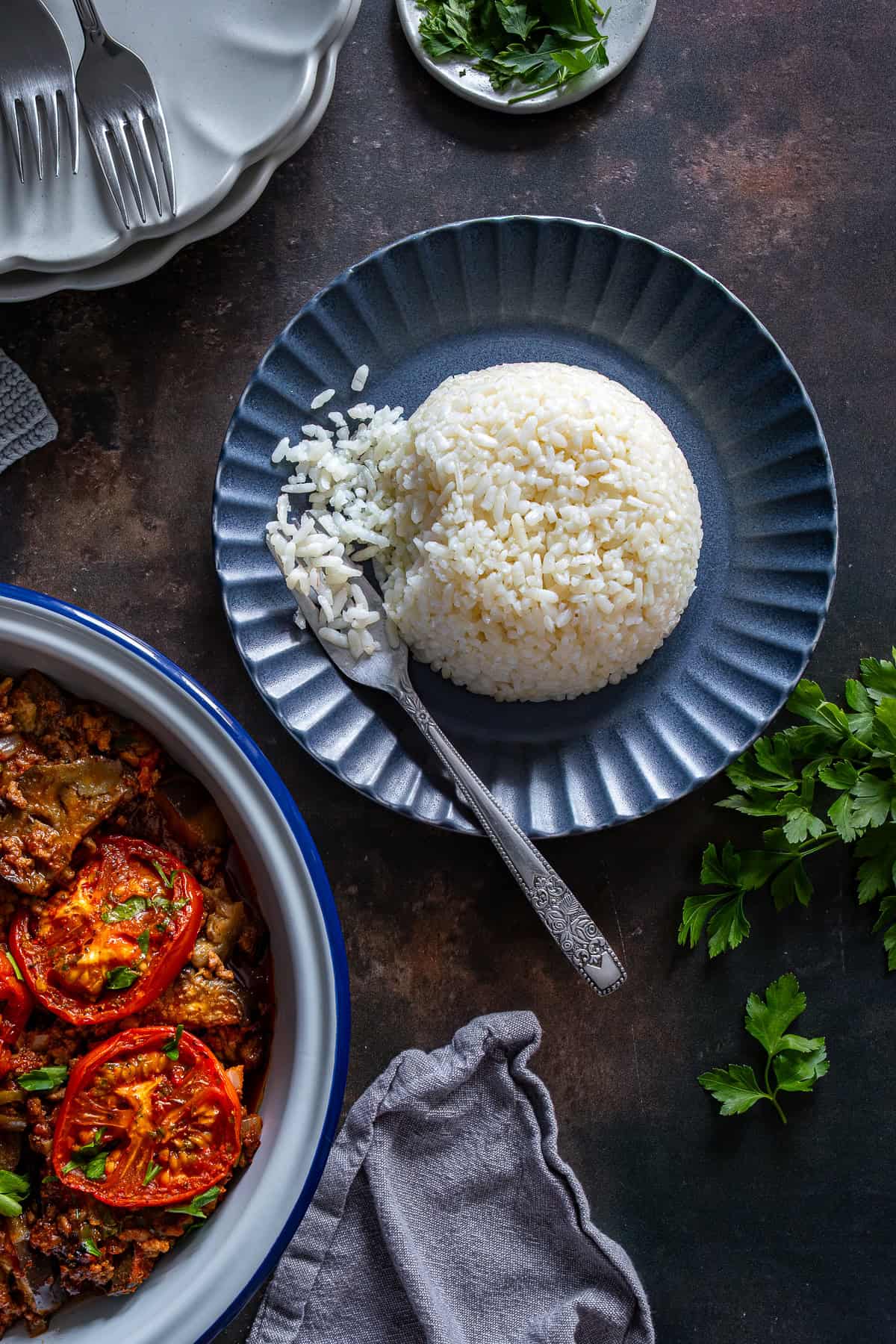
- Before serving, gently lift and fluff the rice from bottom to top. Serve warm.
NOTES
NUTRITION
Nutrition information is automatically calculated, so should only be used as an approximation.
Leave a Reply