

Turkish Cornbread (Mısır Ekmeği) is made only with cornmeal, no flour and no sugar, so it’s not sweet at all. The texture is crumbly and rustic. We usually serve it warm alongside soups and stews, or with a bit of butter and cheese on the side.
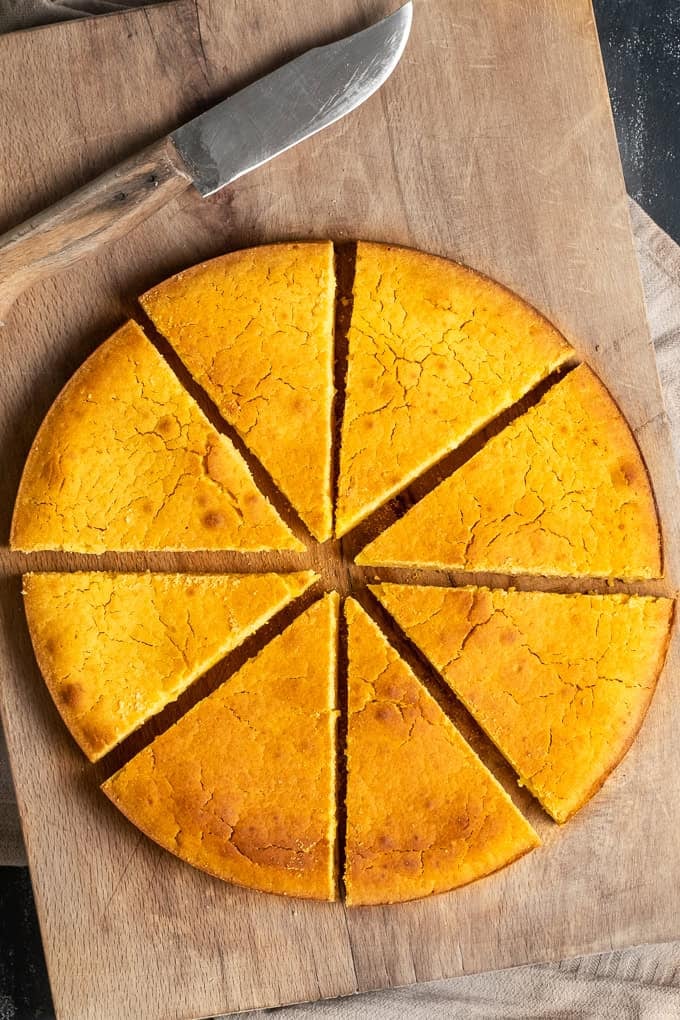
Our favorite way to enjoy Turkish cornbread is with comforting soups like Turkish lentil soup, especially in winter.
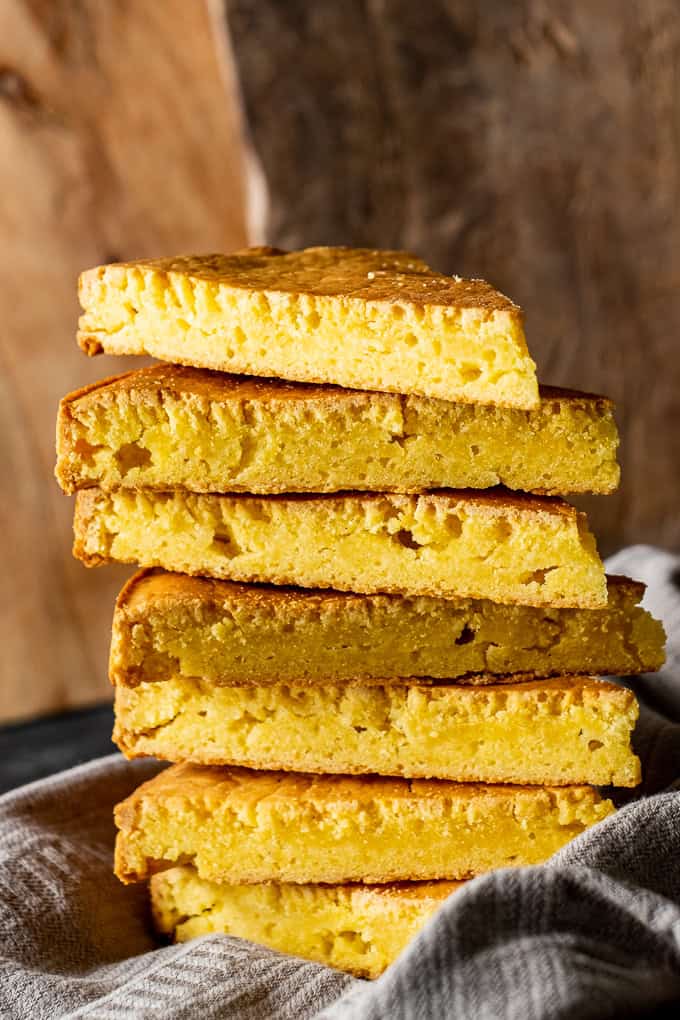
This is a crumbly bread that is perfect on soups. It is so yummy when you spread a little butter on it when it is still warm. This is definitely NOT a kind of sandwich bread, but makes an amazing companion for soups.
Our Turkish cornbread recipe is very easy to make and most of the time goes into the baking part. You can even make this cornbread in advance and freeze it for later use. It's easy, affordable, and delicious; what more could you want?
What is Mısır Ekmeği?
Mısır ekmeği is Turkish cornbread, but it’s quite different from the sweet cornbread you might know. It’s made with cornmeal only, so there’s no flour and no sugar in it.
It has a more rustic, slightly crumbly texture and a deep corn flavor. In Turkey, it’s especially popular in the Black Sea region, where corn is used a lot in everyday cooking.
We usually serve it as a side, not as a snack or dessert. It goes really well with soups, stews, or even just some cheese and butter on the side.
About The Ingredients
You only need a few simple ingredients to make mısır ekmeği, but the way they come together is what gives it that unique texture.
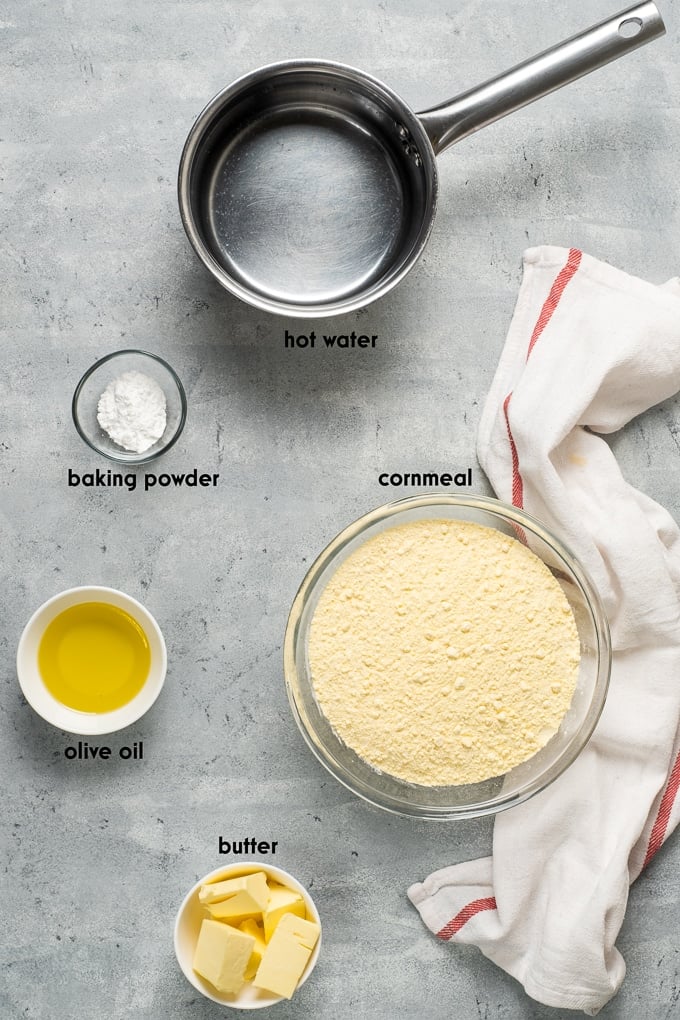
Cornmeal: This is the key ingredient here. We only use cornmeal (no flour at all), which gives the bread its slightly crumbly texture and rich corn flavor.
Butter: Butter adds a nice richness and flavor. It also helps bring everything together and gives the bread that beautiful golden color.
Hot water: Since this recipe uses only cornmeal, it needs to be well hydrated. That’s why we use hot water. It softens the cornmeal before baking, so the texture turns out just right.
What Is Cornmeal?
Cornmeal, corn flour, and cornstarch are often confused, but they’re quite different.
Cornmeal (also called maize flour) is yellow and has a coarse, slightly sandy texture. This is what gives Turkish cornbread its signature crumbly structure, so it’s essential in this recipe.
Corn flour and cornstarch, on the other hand, are very fine and powdery, almost like icing sugar. In the UK, what’s called corn flour is actually what we know as cornstarch in Turkey. These are mainly used for thickening sauces and won’t work for Turkish cornbread. When mixed with water, they turn into a paste rather than a proper batter.
So they’re not a good substitute here.
If you can’t find cornmeal, polenta works well. It’s a coarser type of cornmeal and can be used in equal amounts.
Some recipes mix cornmeal with all-purpose flour to get a softer texture. You can do that too, but we think the slightly crumbly texture is what makes Turkish cornbread special.
How To Make Turkish Cornbread
This Turkish cornbread comes together really quickly. Just a few minutes of prep, then the oven does the rest.
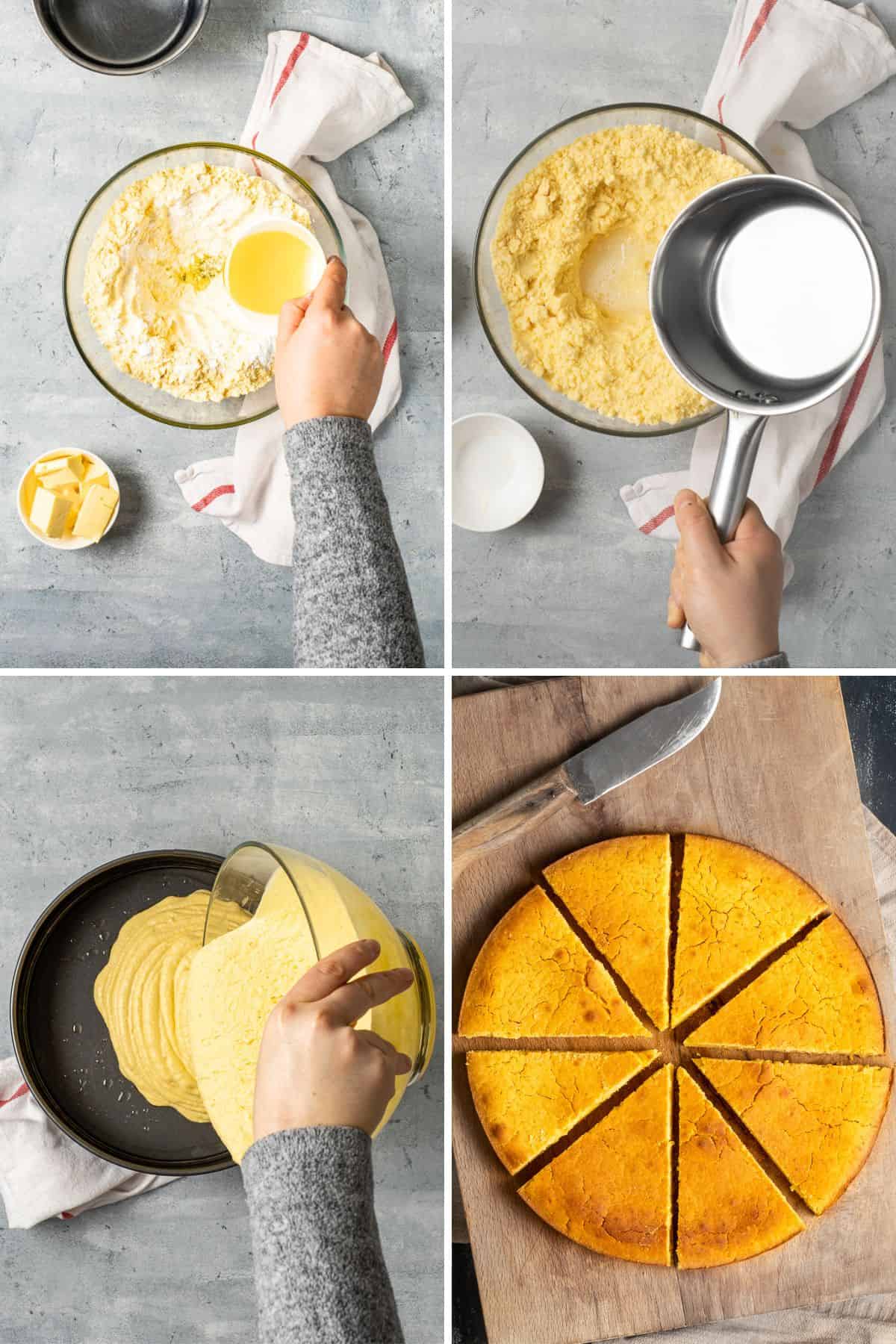
Preheat your oven to 200°C (400°F). Place a 9-inch (about 23 cm) baking pan in the oven so it heats up as well.
In a large bowl, mix the cornmeal, butter, salt, olive oil, and baking powder until combined.
Pour in the boiling hot water and whisk until you get a smooth, thin batter, similar to crepe batter. If it feels too thick, just add a little more water.
Carefully take the hot pan out of the oven and brush it with butter or olive oil. Pour the batter in and bake on the middle rack for about 40 minutes, until golden.
Let it rest for a few minutes before slicing. You can serve this Turkish cornbread warm or at room temperature.
What Can I Substitute For Butter?
Butter is actually a key ingredient in traditional Turkish cornbread. It adds both flavor and that slightly rich texture we love.
If you don’t have it, clotted cream is the closest alternative. It has a similar consistency, so you can use it in equal amounts.
You can also use crème fraîche or buttermilk. Crème fraîche works better because it’s thicker and closer to butter. Buttermilk is much runnier, so it will change the texture more.
If you’re using buttermilk, start with about half the amount and add more gradually until the batter feels right.
Serving Suggestions
We usually serve Turkish cornbread as a side, especially with soups and stews. It’s perfect for dipping into a warm bowl of something comforting. You can pair it with recipes from our Turkish Soups category, or try it with classics like ezogelin soup.
It also goes really well with hearty dishes like Turkish beef stew, where you can use it to soak up all the sauce.
For a simpler option, just spread a little butter on a slice and enjoy it with a glass of Turkish tea. It’s one of those things we often have for breakfast or as a light snack.
You can also serve Turkish cornbread with cheese, olives, or a spoon of yogurt on the side. It works really well as part of a simple Turkish-style breakfast or alongside meze dishes.
Other Turkish Bread Recipes
Sign up for the FREE Give Recipe Newsletter to get the new recipes into your inbox!
And stay in touch with us on Facebook, Pinterest, YouTube and Instagram for all the latest updates.
📖 Recipe

Turkish Cornbread (Mısır Ekmeği)
INGREDIENTS
- 500 g cornmeal
- 150 g butter softened at room temperature
- 1 teaspoon salt
- ¼ cup olive oil
- 2 teaspoons baking powder
- 650 ml water boiling hot
INSTRUCTIONS
- Preheat the oven at 400F/200C and heat the pan (9-inch square or round) you will use in the oven.
- In a mixing bowl, mix together corn flour, softened butter, salt, olive oil and baking powder with a spatula.
- Pour boiling water in it and mix with a hand whisk.
- The mixture should be runny and thin compared to normal bread dough. Like a crepe mixture.
- If the consistency is not runny enough, you can add a little more water.
- Brush the heated pan with melted butter or olive oil and pour the dough mixture into it.
- Bake on the middle shelf of the oven for 40 minutes.
NUTRITION
Nutrition information is automatically calculated, so should only be used as an approximation.
Mandy says
Being from the southern United States, we make sweet cornbread. I did add 1/4 granulated sugar, and 1/4 cup of honey. Turned out fantastic! Thank you for the recipe!
Zerrin & Yusuf says
We are so glad to hear it turned out fantastic with your sweet touch! Adding sugar and honey sounds like a delicious twist. Thanks for sharing your feedback and modifications!
Sawsan says
I’m ready to make this because I have allergy’s to wheat and diary this is perfect for me, thank you. Wanted to ask do you think I could make a sweet type? It doesn’t have to be soft but sweet? Thanks
Best,
Sawsan
Zerrin & Yusuf says
Hi Sawsan,
We normally have it savory and have never tried it sweet. That being said, we don't see a reason for not making it sweet. We think you can use granulated sugar in the dough to sweeten this bread.
Would love to hear how it turns out when you have a chance to try it. Please share it with us!
Cheers!
Mandy says
I added 1/4 cup of sugar, and a 1/4 cup of honey. Turned out great! Not too sweet, and the butter makes it taste rich!
Beth says
Made this for new year's day. Very delicious and simple. Held together well to cut and butter. The texture was slightly mealy for my taste but I see you can add some wheat flour and I may do that next time. Delicious!
Peter says
It is so easy to make, I had to use polenta, it was all crunchy on the outside and excellent for sopping up the sauce.
Zerrin & Yusuf says
Hi Peter,
Glad you enjoyed the recipe. It is a traditional bread that goes really good with soups.
Andrea says
Hi Zerrin and Yusuf, Andrea from Greece here. I love your recipes, so many are my go-to because they taste great and have ingredients that are either in my pantry or easily acquired. Also, they use simple equipment. I ventured this because it was simple and - finally - didn't require an electric mixer. I used polenta because the other alternative was "corn flour" - the texture of regular wheat flour (maybe I should use that?). The bread looked like your picture on the outside. But it was a bit dry and dense, so maybe polenta was too course? Anyway - I've been reheating chunks of it with some moisture (soup) or sauce, butter or cream cheese and it's great! Will definitely make again.
Zerrin & Yusuf says
Hi Andrea,
We are so happy to hear that you are enjoying our recipes. Thank you for your valuable comment!
As for this cornbread recipe, it is an old traditional type of bread which is originally dense and crumbly. And it is often eaten with soups or butter.
If you want, you can use 2 cups cornmeal and 1 cup all purpose flour for a softer texture. Hope this helps.
Cheers!
Andrea says
Thanks both, for the advice! I froze about 1/2 of the bread but won't the next time since I want to eat it every day!
Zerrin & Yusuf says
You are welcome Andrea. Good to hear that! You can keep it in the fridge for up 7-10 days, reheat and enjoy it everyday 🙂
Rebeca says
Such a crusty bread with cornmeal. Love it on my soup!
Yusuf says
Our favorite way to eat this cornbread is in soups too. Yum!